


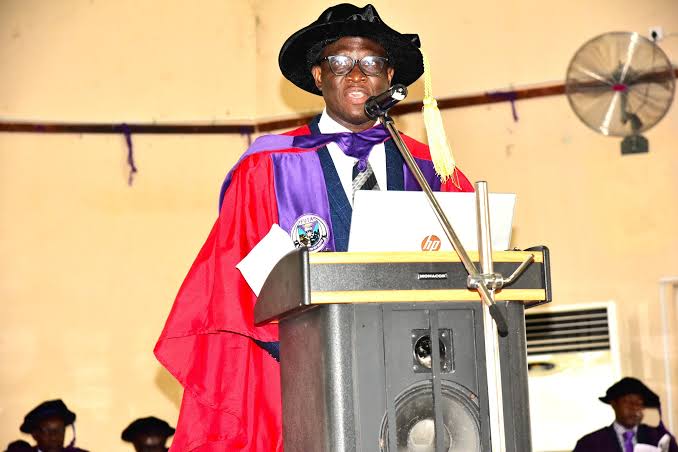
A professor of Quantity Surveying and Procurement Studies at the Federal University of Technology, Akure (FUTA), Prof. Oluwaseyi Awodele, has proposed measures to make Nigeria’s construction industry less risky. He also emphasized that effective risk management strategies are crucial for achieving sustainable development in the sector.
He delivered the 201st Inaugural Lecture at FUTA titled “Integrating Procurement Models, Risk Management, and Stakeholders’ Expectations for Sustainable Development”, held on Tuesday, June 23rd, 2026.
Awodele stated, “The construction industry has been plagued by risks that affect its performance and stakeholder expectations. These risks can be managed, minimized, shared, transferred, or accepted, but not ignored. For sustainable development, an effective risk management process—comprising risk identification, analysis, and response—is essential to deliver value for money.”
On risk factors, he noted that price fluctuations, delays in progress payments by clients, client-initiated variations, delayed settlement of contractual claims, and unforeseen ground conditions are the most significant causes. Other risks include political, economic, social, and environmental factors.
From his perspective as a professional Quantity Surveyor, Awodele explained, “Quantity surveyors possess specialized skills in cost forecasting, contingency planning, contract administration, and value analysis, which are directly relevant to risk identification, quantification, allocation, and mitigation.”
He emphasized that sustainable development in construction and infrastructure projects requires a holistic approach that aligns procurement systems with effective risk management and stakeholder expectations. According to him, traditional procurement methods that focus mainly on cost reduction are insufficient to address modern environmental, economic, and social sustainability challenges.
He explained that modern construction projects face risks such as climate change, inflation, technological disruptions, policy inconsistencies, and supply chain uncertainties. Proactive and integrated management frameworks are vital. “The future of sustainable development depends on how well procurement strategies, risk management techniques, and stakeholder interests are harmonized throughout the project lifecycle,” he said.
Awodele also highlighted that stakeholders—including clients, contractors, communities, regulators, and investors—now demand greater accountability, transparency, environmental responsibility, and value for money. He advocated for collaborative procurement systems, digital technologies, and innovative project delivery methods to improve efficiency, reduce waste, and promote sustainability.
Currently the Director of Academic Planning at FUTA, Awodele stressed the importance of stakeholder engagement in minimizing conflicts, improving decision-making, and building public trust in construction projects.
He identified challenges such as inadequate policy implementation, poor risk allocation, corruption, insufficient technical expertise, and weak institutional frameworks as major obstacles to sustainable development in Nigeria.
He called on government agencies, professional bodies, academic institutions, and the private sector to strengthen collaboration, invest in research and innovation, and build capacity to address industry challenges.
He also proposed establishing a National Construction Industry Development Council (NCIDC) to harmonize policies, foster innovation, and monitor industry performance. Additionally, he urged universities and training institutions, including FUTA, to update their quantity surveying curricula to include project delivery, risk analytics, sustainability economics, stakeholder management, and digital innovation.
As a Fellow of the Nigerian Institute of Quantity Surveyors (NIQS) and past Chairman of its Ondo State Chapter, Awodele expressed optimism that, with the right policies and integrated management approaches, Nigeria could develop resilient and sustainable infrastructure that supports economic growth and improves citizens’ quality of life.
The Vice-Chancellor of FUTA, Professor Adenike Oladiji, who chaired the event, commended Awodele’s scholarly contributions to quantity surveying and sustainable construction management. She described him as a focused academic who has added value to the university through his research and graduates, many of whom are making notable contributions both locally and internationally.
