


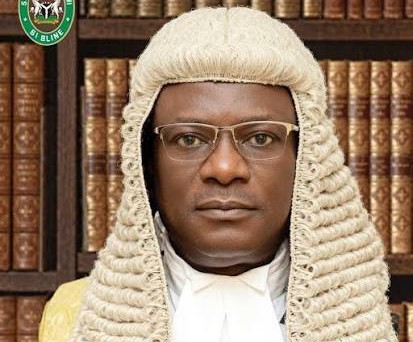
The time has come for journalists and civil society actors to beam a more intense searchlight on the judicial record of Justice Peter Odo Lifu of the Federal High Court, Abuja.
Recent developments have once again raised serious concerns about the conduct of the judge, particularly his ruling on the deregistration of opposition political parties, a decision that has generated considerable controversy within legal and political circles. Such matters deserve rigorous public scrutiny, especially in a democracy where the judiciary serves as the final guardian of justice and the rule of law.
The integrity of the judicial system depends not only on the correctness of judicial decisions but also on public confidence in the impartiality, professionalism, and independence of judges. Whenever questions arise regarding these principles, they should be examined openly and objectively.
This is where the media has a critical role to play.
Investigative journalists should take a closer look at Justice Lifu’s body of work. His previous judgments, court orders, and procedural decisions should be subjected to careful examination to determine whether they consistently align with established legal principles and judicial standards.
Several important questions deserve answers.
How many of his rulings have significantly departed from settled legal precedents?
Have there been recurring patterns in cases involving certain lawyers, companies, political actors, or institutions?
How frequently have cases before him been accelerated or delayed compared to normal judicial timelines?
What is his record regarding the issuance of injunctions, particularly in politically sensitive matters?
How often has he been accused of disregarding procedural rules, and what became of such allegations?
These are legitimate questions in a democratic society. They are not attacks on the judiciary; rather, they are part of the accountability mechanisms necessary to strengthen public institutions.
The objective should not be to vilify any individual judge but to ensure transparency and uphold the highest standards of judicial conduct. Judges wield enormous power over the lives of citizens, businesses, and political institutions. Consequently, their actions must remain open to lawful public scrutiny.
Indeed, Justice Lifu may not be the only judicial officer whose record warrants examination. Across the legal system, there may be others whose decisions and conduct deserve similar attention. The media, legal practitioners, civil society organizations, and citizens all have a responsibility to ensure that judicial authority is exercised with integrity and accountability.
A strong democracy requires a strong judiciary. A strong judiciary, in turn, requires transparency, public confidence, and continuous scrutiny.
The searchlight should not stop with one judge. It should illuminate the entire system.
Only then can Nigerians be assured that justice is being administered fairly, independently, and in accordance with the law.
