


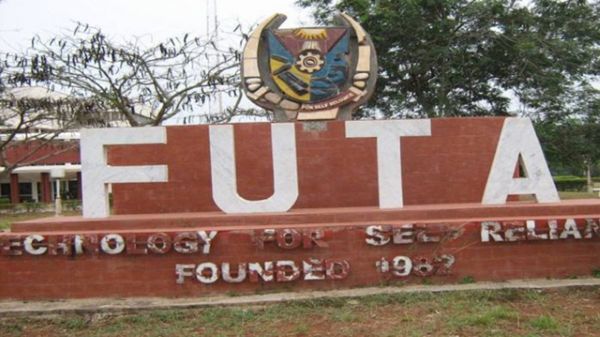
A Professor of Communication Physics at the Federal University of Technology Akure, FUTA , Adekunle Adediji has emphasized the central role of radio propagation in driving Nigeria’s development and strengthening global communication.
According to him, radio technology underpins mobile networks, broadcasting, satellite systems, and nationwide connectivity. It supports digital growth, aviation and maritime safety, emergency response systems, and access to communication for remote communities.
Professor Adediji made the submission while delivering the 192nd Inaugural Lecture of the FUTA held February 10 2026. Titled “Radio and the Firmament: A Marriage of Heaven and Earth,” the lecture examined both the practical and symbolic importance of radio technology. Defining the subject matter , he said ,”Radio is a technology that uses electromagnetic waves to transmit and receive information without the use of wires. It is a type of electromagnetic radiation that allows us to transmit information wirelessly over long distances.”
According to him, “Radio propagation forms the backbone of global communication, It governs how radio waves travel across the Earth and through the atmosphere, enabling wireless transmission of information over long distances. It also allows humans to detect electromagnetic signals from deep space, expand scientific knowledge, and extend communication frontiers.”
Professor Adediji explained that a deep understanding of radio propagation is essential for seamless international communication, facilitating trade, cultural exchange, and scientific collaboration. He noted that radio technology can overcome challenges such as terrain, weather, and interference, while promoting innovation, strengthening Nigeria’s technological independence, and sustaining global competitiveness.
The professor described radio waves as a form of electromagnetic radiation that bridges earthly and heavenly realms, transcending physical boundaries to connect people across vast distances. He defined the firmament as the immense expanse of the universe, with radio waves symbolizing humanity’s link to this vastness. According to him, this “marriage of heaven and earth” highlights humanity’s place within a broader cosmic context and encourages exploration, understanding, and appreciation of the universe’s mysteries. He added that the concept invites reflection on the intersection of technology, spirituality, and humanity’s place in the universe.
He stressed the importance of inspiring future generations to pursue careers in science and technology. Highlighting the role of radio astronomy in education and public engagement, he advocated outreach programs, internships, and fellowships to nurture future radio scientists, meteorologists, and engineers.
In addition, he recommended modernizing university and technical curricula to incorporate communication physics, photonics, and quantum technologies. He emphasized the need for scholarships, fellowships, and professional training to build a highly skilled workforce. He further underscored the value of collaboration between academia, industry, and government through technology hubs, incubators, and public–private partnerships to translate research breakthroughs into practical solutions.
Concluding he said,” It is no gainsaying that without radio communication, business would grind to a halt, banking operations will be hampered, it could be difficult to place orders and air traffic control systems would fail, insecurity will be on the increase. Telecommunication is also a very crucial tool in education, emergency communications and disaster relief services, international diplomacy and so on. Simply put, life without radio communication and telecommunication in particular will be almost unimaginable. No doubt, there has been remarkable improvement in the provision of telecommunication infrastructure in Nigeria through the advent of the Global System for Mobile Communications (GSM).”
He said more grounds needs to be covered. Professor Adediji therefore called for increased funding for research institutions such as NASRDA and urged that their work be aligned with national development priorities in radio science and technology. He also encouraged government support for interdisciplinary research centers that bring together physicists, engineers, computer scientists, and materials scientists to drive innovation.
Chairing the lecture, FUTA Vice-Chancellor, Professor Adenike Oladiji, commended Professor Adediji’s contributions to academia and the scientific community. She described the lecture as thought-provoking and reaffirmed the importance of inaugural lectures in strengthening FUTA’s intellectual culture.
