


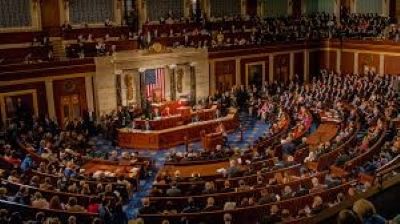
Five United States lawmakers have introduced a bill in Congress seeking sanctions against former Kano State Governor Rabiu Musa Kwankwaso, the Miyetti Allah Cattle Breeders Association of Nigeria (MACBAN), Miyetti Allah Kautal Hore, and alleged Fulani militia groups over claims of religious freedom violations.
The proposed legislation — titled the “Nigeria Religious Freedom and Accountability Act of 2026” — was sponsored by Representatives Chris Smith, Riley Moore, Brian Mast, Mario Diaz-Balart, and Bill Huizenga.
Details of the bill, published on the US Congress website, allege that Kwankwaso is among individuals contributing to the systemic religious persecution of Christians in Nigeria.
If enacted, the measure would require the US Departments of State and Treasury to impose targeted sanctions — including visa bans and asset freezes — on individuals or entities deemed responsible for severe violations of religious freedom under the Global Magnitsky Human Rights Accountability Act.
Part of the bill states that sanctions should apply to, or an explanation be provided for not sanctioning, “Fulani-ethnic nomad militias in Nigeria; Rabiu Musa Kwankwaso; Miyetti Allah Cattle Breeders Association of Nigeria (MACBAN); and Miyetti Allah Kautal Hore.”
The legislation also directs the US Secretary of State to determine whether certain Fulani militia groups meet the criteria for designation as a foreign terrorist organisation.
As of the time of filing this report, Kwankwaso and the organisations named had not responded to the allegations.
The proposal follows months of heightened diplomatic tension after US President Donald Trump redesignated Nigeria as a Country of Particular Concern (CPC) over what he described as persecution of Christians — a position Nigerian authorities have rejected, maintaining that the country upholds religious freedom.
Trump had earlier warned of possible military action if the situation was not addressed. On Christmas Day, the US conducted air strikes in Nigeria targeting terrorist groups — an operation both Washington and Abuja later described as jointly coordinated.
Speaking in Washington last week, Trump said the strikes were ordered to weaken extremist groups responsible for attacks on Christian communities.
Following the tensions, Nigeria stepped up diplomatic engagement with US officials, dispatching a high-level delegation to Washington, while some US lawmakers also visited Nigeria for on-ground assessments.
