



Eleven Nigerian states have emerged as pacesetters in fiscal transparency after achieving full compliance with public finance disclosure indicators in a transparency scorecard tracking subnational accountability standards.
The assessment, built around the States Fiscal Transparency League Table, evaluates the availability and accessibility of key fiscal documents, including approved budgets, citizens’ budgets, budget implementation reports, and audited financial statements. The exercise reflects growing efforts to institutionalise openness in public finance management and sustain reforms introduced under the States Fiscal Transparency, Accountability and Sustainability (SFTAS) programme.
The initiative was designed to maintain momentum after the conclusion of the SFTAS intervention, which incentivised states through performance-based grants to adopt transparency measures and strengthen fiscal discipline.
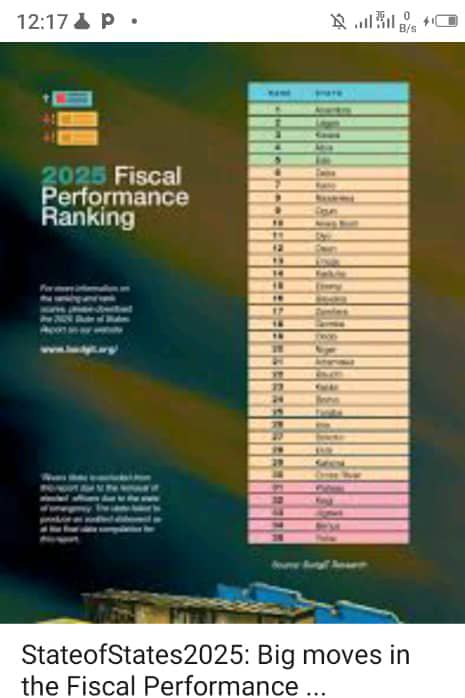
By encouraging the routine publication of financial data, the scorecard aims to deepen accountability, empower citizens to scrutinise government spending, and reinforce prudent resource management.
Findings from the latest review show that eleven states attained full compliance across assessed indicators, demonstrating significant progress in fiscal reporting standards and public disclosure practices. Their performance underscores the impact of policy reforms, institutional adjustments, and digital publication systems that make financial information more accessible to the public.
The states identified as fully compliant are:
- Abia
- Adamawa
- Ekiti
- Kaduna
- Kano
- Kebbi
- Lagos
- Ondo
- Osun
- Plateau
- Yobe
Public finance analysts say the outcome illustrates how structured transparency frameworks can improve governance outcomes by fostering trust, enabling oversight, and promoting responsible budgeting. The reforms are also seen as encouraging healthy competition among subnational governments to meet recognised accountability benchmarks.
Despite the progress recorded by the eleven states, observers emphasise that sustaining transparency gains will require continued political will, institutional consistency, and independent monitoring. They note that the publication of fiscal data should be routine and timely, rather than driven solely by incentive programmes or external assessments.
The transparency scorecard, therefore, serves not just as a ranking exercise but as a governance instrument aimed at consolidating reforms, strengthening fiscal credibility, and advancing accountability across Nigeria’s public finance ecosystem.
