


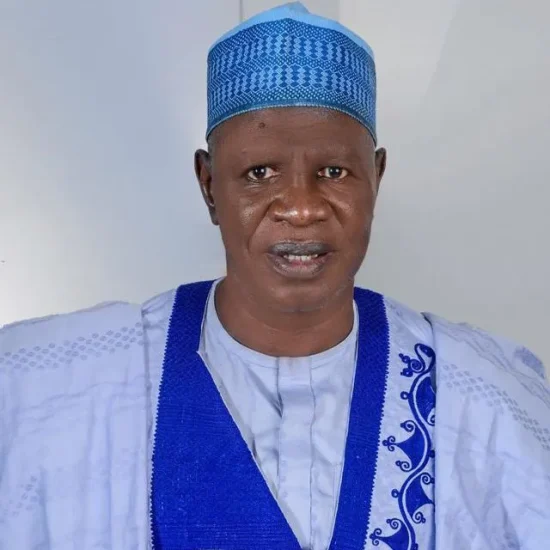
In my November 2024 article, I posed the question of whether Alhaji Yayale’s name would be written in gold for accepting two of the most unenviable assignments in Nigeria’s public policy space—leading the government delegation to resolve the over-decade-long FGN-ASUU crisis and serving as the pro-chancellor of the Ahmadu Bello University (ABU) Zaria Governing Council. It is on record that, some years ago, key personalities who held the same jobs at different times did not complete their terms without denting their credibility, either because they were unable to meet the expectations of their principals or because stakeholders were dissatisfied. Both jobs were herculean, arduous, and frustrating, requiring skilful technocrats with impeccable character with ability to squeeze water out of stone. With the benefit of hindsight, the answer to my poser is more affirmative than cautious: Yayale Ahmed became the square peg in a square hole and proved to be the perfect man for the job. Under his watch, ABU Zaria had a smooth transition with a new Vice Chancellor, Prof Adamu Ahmed, a right honorable gentleman, smoothly raising the university to a higher level without rancor, to the admiration of all and sundry.
Then came the historic event of the agreement’s unveiling between the Federal Government and ASUU on January 14, 2026. When describing the roles of Yayale Ahmed, ASUU President, Prof. Chris Piwuna could not hide his emotion; with his eyes widely open, almost beating his chest, he stated three times, “Tell Alhaji Yayale Ahmed, he will go to heaven,” underscoring Yayale as the principal pillar upon which mutual trust, honesty, and sincerity of purpose were built for the contending parties. The event eradicated desperation and restiveness, replacing them with hope and a brighter future for the public universities. For many of us who have lived our adult lives and worked within the Nigerian university system, that moment carried a deeper resonance: It symbolized not triumph but the possibility—however fragile—of restoring dialogue in a system that has, for years, been defined by mistrust. Yayale, I doff my cap!
Our public universities have endured decades of instability that has gradually been normalized. Academic calendars are repeatedly disrupted, research agendas fractured, and students inducted into an educational culture where prolonged strikes are the norm rather than the exception. This condition is not the product of a single policy failure or a single administration, but the cumulative outcome of unresolved structural contradictions in the funding, governance, and moral economy of higher education. The persistent conflicts between the state and the academic community reflect deeper questions about how the country values knowledge, intellectual labor, and the university as a national institution.
Successive administrations (from Obasanjo, through Yar’Adua and Jonathan, to Buhari) sought to manage the crisis through committees, negotiations, renegotiations, memoranda of understanding, and policy pronouncements. Many of these efforts were led by distinguished academics and administrators who produced thoughtful, detailed reports diagnosing the system’s problems and proposing workable solutions, but most of which never translated into sustained policy action. They were overtaken by elections, political transitions, competing national priorities, fiscal anxieties, or bureaucratic inertia, leaving a university system trapped in an exhausting loop of endless negotiations without closure.
The progress recorded in the agreement did not occur by accident; it was the product of Yayale’s disciplined leadership, institutional memory, and uncommon patience in steering a process that had stalled for years. This achievement does not require myth-making, but it does warrant public acknowledgment. The negotiations that culminated in the January 2025 agreement did not begin on a blank slate. Accumulated disappointment, hardened positions, and widespread skepticism shaped them. Any attempt to resolve such a conflict required more than technical expertise; it demanded credibility across institutional divides that have long resisted reconciliation. Previous negotiation efforts did not fail for lack of intelligence or goodwill, as many were led by individuals of impeccable academic and professional standing.
By stabilizing a fractured negotiation and restoring credibility to dialogue, Yayale laid the groundwork for further reform to stand a realistic chance. In a system where stalemate had become the norm, breaking that inertia is itself a significant accomplishment. While Nigeria’s university crisis remains institutional rather than personal, it is important to recognize that individuals still matter in moments of institutional paralysis. Effective mediation in the university system requires an understanding of policy constraints, sensitivity to academic culture, authority tempered by humility and empathy, and an anchoring in institutional memory.
The more demanding task now lies ahead—in faithful implementation, sustained engagement, and a collective commitment by all parties to place the long-term health of the university system above short-term calculations.
Alhaji Yayale Ahmed’s background positioned him, perhaps unexpectedly, for such a role. A career civil servant who rose to become Head of the Civil Service of the Federation and later Secretary to the Government of the Federation, he embodies the institutional logic of the Nigerian state. Yet he is also a product of the public university system and someone familiar with its traditions, tensions, and intellectual ethos. This dual identity—bureaucrat and university alumnus—proved crucial in a negotiation process that demanded both firmness and restraint.
Born in 1952 and long retired from frontline public service, Yayale Ahmed did not need to accept the responsibility of leading the Federal Government’s negotiation team with ASUU, because the task was politically sensitive, technically complex, and emotionally draining. It had frustrated many before him; hence, that he accepted it at a stage of life when most public servants have withdrawn into quiet retirement speaks to a lingering sense of institutional duty rather than personal ambition. Those who followed the negotiation process closely observed an approach marked by patience and procedural discipline, with no rhetorical grandstanding or attempts to score political points. Instead, there was sustained engagement with contentious issues, an acknowledgement of legitimate grievances, and a sober articulation of government constraints. In an environment where mistrust had become reflexive, this posture mattered. He neither dismissed academic concerns nor trivialised fiscal realities, but instead sought to keep both sides at the table.
As a member of ASUU and someone who has spent decades within the university system and now bears responsibility for institutional leadership, I am acutely aware of how rare such balanced mediation is. Universities are not ordinary bureaucratic organizations; they are communities governed by norms of collegiality, debate, and intellectual autonomy. Conversely, government operates within political, fiscal, and administrative constraints that academics do not always fully appreciate. Bridging this divide requires more than negotiation skills; it requires institutional empathy.
The true significance of the 2025 agreement, therefore, lies not in its text alone, but mostly in its potential to rebuild trust; for trust, once broken, is not restored by ceremony or rhetoric, but by consistency and follow-through. For the first time in many years, however, there is at least a negotiated framework within which that trust might gradually be rebuilt—President Tinubu has the political will to do so. May God guide him.
From the perspective of university governance and leadership, this moment matters deeply. Industrial instability undermines planning, delays reforms, and weakens institutional morale. Vice-Chancellors and principal officers often mediate between government directives and staff grievances, with limited room to maneuver. In earlier reflections on university governance, I have argued that leadership in such institutions is as much moral as administrative, because prolonged strikes do not merely halt teaching; they normalize dysfunction and erode the university’s sense of purpose. A stable academic calendar, by contrast, enables a university to plan research cycles, attract international collaborations, and hold itself accountable to global standards. It also allows students to experience education as a continuous intellectual journey rather than a series of disruptions. In this sense, the importance of the current agreement extends beyond labor peace and touches the university’s core mission as a national institution.
Hence, the government must honor its commitments, and ASUU must remain constructively engaged. University administrators must translate improved conditions into renewed academic productivity, ethical leadership, and institutional reform. Behind these policy and negotiation abstractions are human stories too often overlooked: academics balancing teaching, research, and personal survival; students whose lives are repeatedly put on hold; administrators managing complex institutions amid relentless uncertainty. Yayale Ahmed was not negotiating figures alone; he was mediating expectations, frustrations, and hopes accumulated over many years of disappointment.
For the first time in many years, the relationship between the Nigerian state and its universities was renegotiated within a framework of commitment rather than confrontation. Thank you, President Ahmed Bola Tinubu and your able ministers, thank you, Yayale Ahmed and his team, and thank you, ASUU leadership and patient followers. May we see everlasting peace on our campuses, amen.
