


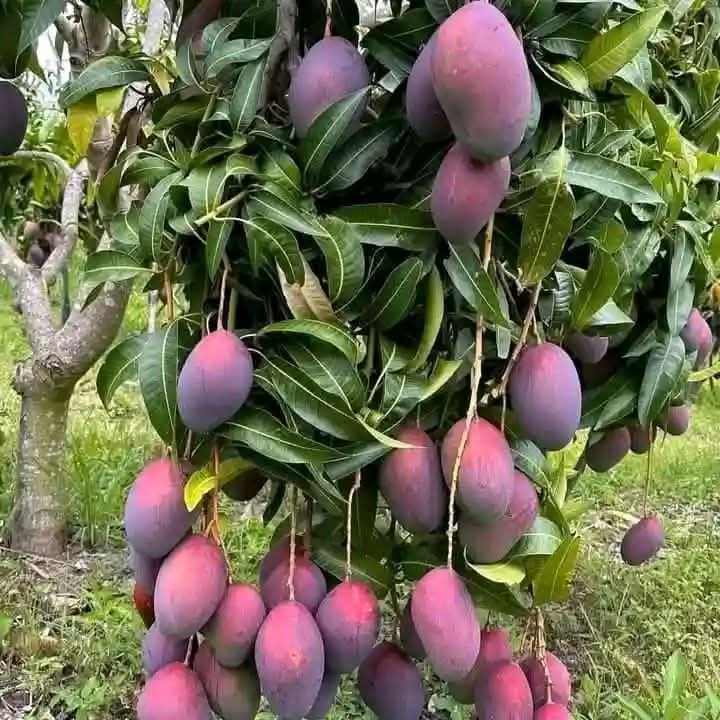
Mango farming offers significant economic potential, and its success begins with selecting appropriate varieties suited to local growing conditions and market requirements. Options such as Apple Mango are preferred for fresh consumption due to their sweetness and juiciness, while Kent and Tommy Atkins are ideal for export markets because of their long shelf life. High-yielding and disease-resistant varieties like Ngowe and Boribo further enhance productivity and reduce production risks.
Proper land preparation and soil management play a critical role in establishing a strong mango orchard. Mango trees thrive in well-drained sandy loam soils with a pH range of 5.5–7.5, conditions that support healthy root development. Deep plowing facilitates water infiltration and root penetration, while avoiding waterlogged areas helps prevent root rot and related disorders that can severely affect tree health.
Planting techniques are also essential for long-term orchard performance. Spacing must be adjusted according to the growth habit of the selected variety—wider spacing (8m × 8m) for large varieties and closer spacing (5m × 5m) for dwarf types. Planting holes of 60cm³ filled with topsoil and compost provide the ideal environment for young seedlings. Consistent watering, especially twice per week during establishment, ensures strong root formation and early plant vigor.
Nutrient management and irrigation strategies significantly influence tree growth and fruiting potential. The application of well-rotted manure and balanced NPK fertilizers supports vegetative development and enhances flowering. During dry seasons, drip irrigation provides steady moisture, ensuring uniform fruit set and reducing stress that could negatively impact yield quantity and quality.
Finally, effective pest and disease management combined with proper harvesting practices is vital for maintaining high fruit standards. Fruit flies should be controlled through traps and neem-based interventions, while fungal diseases like anthracnose and powdery mildew require copper and sulfur treatments. Mango fruits reach maturity 4–5 months after flowering, and careful harvesting—followed by hot water treatment for export-quality produce—helps preserve fruit integrity and extend shelf life.
Source: Agronommie
