


The Federal Government says achieving Universal Health Coverage (UHC) is not only a health priority but also an economic strategy capable of improving productivity and driving inclusive national development.
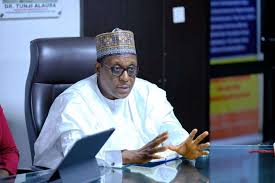
The Coordinating Minister of Health and Social Welfare, Prof. Muhammad Pate, made the statement on Friday in Abuja at a media conference commemorating the 2025 UHC Day.
Marked globally on Dec. 12, the 2025 theme is: “Unaffordable health costs? We’re sick of it!”
According to Pate, UHC is a strategic imperative embedded within Nigeria’s broader economic development aspirations.
He said political prioritisation of health was evident in President Bola Tinubu’s commitment to improving outcomes.
“It is a national economic strategy.
“Health is key to human capital, children learning well, teachers teaching, the military defending the country, and trade and investment thriving.
“Resources allocated to health have increased over the last three years,” he said.
Pate said the 2025 UHC Day theme reflected the daily struggles faced by millions worldwide, noting that many Nigerians were pushed into poverty due to illness and high healthcare costs.
He emphasised the president’s stance that no Nigerian should have to choose between healthcare and their family’s wellbeing.
“The government’s vision is clear: families should not have to choose between paying for healthcare and buying food for their children,” he said.
To this end, Pate highlighted decisive steps under the Nigeria Health Sector Renewal Investment Initiative (NHSRII) to ensure Nigerians no longer face the painful choice between healthcare and survival needs.
He described NHSRII as a shift to “one plan, one budget, one conversation,” noting rising government investment, improved state-level leadership, direct facility financing, and a quadrupling of primary healthcare utilisation over three years.
Pate also cited major advances in local manufacturing, including the groundbreaking of West Africa’s largest dual-active ingredient mosquito net factory in Edo State.
“By 2026, nets will be produced here in Nigeria, proving local production is now a reality,” he said.
He added that citizens’ confidence in the health system was increasing, with surveys showing improved trust in government handling of health emergencies and ongoing reforms, although affordability remained a pressing challenge.
“We are not anywhere near declaring victory, but we are changing the trajectory, which for many years had remained stagnant,” Pate said.
Dr Pavel Ursu, WHO Representative to Nigeria, said that globally, families still faced the impossible choice of seeking healthcare or meeting basic needs, describing the burden as “very heavy.”
Ursu acknowledged positive signals in Nigeria, including expanding service coverage and improving financial protection, but warned that “financial protection remains our most stubborn challenge.”
He commended Nigeria for championing the 2025 World Health Assembly resolution on global health financing, calling the country’s reforms “remarkable,” and urged increased investment, particularly in prepaid domestic resources to reduce out-of-pocket payments.
Ursu also hailed Nigeria’s new accountability measures, including tracking pooled resources, monitoring out-of-pocket spending, and linking data to outcomes, describing them as “impact-focused policymaking.”
On UHC Day, he said the global health community renewed its shared promise of “health for all, leaving no one behind.”
“For the United Nations Population Fund (UNFPA), UHC is a fundamental human right, with investments in health directly shaping national development.”
Dr Oluwatosin Kolade, UNFPA Sexual and Reproductive Health Specialist, said Nigerians deserved a system where “every woman, man, and child had access to quality health services without financial hardship.”
“When we invest in health, we invest in a prosperous future,” Kolade added, urging accelerated efforts to end unmet family planning needs, preventable maternal deaths, and gender-based violence.
The News Agency of Nigeria (NAN) reports that UHC Day is marked annually to promote equitable access to quality healthcare without financial hardship.
