


Seated on a wooden chair in her family compound, 19-year-old Jamie Adamu, a single mother of two, recounts how she was sent out of school after her teacher discovered she was pregnant.
By Martha Agas, News Agency of Nigeria (NAN)
Jamie, from Numan in Adamawa, had her first daughter at 15 and her second at 17.
She left school when she became pregnant with her first child and has not returned since, though she still dreams of going back.
“I want to be a lawyer so that I can help people, ‘’she said.
Now a food seller, Adamu says the proceeds from her small business are barely enough to care for herself and her daughters.
Yet, determined to break the cycle of girls dropping out of school, Adamu vows to ensure her daughters get an education, which she believes will secure their future and ultimately lift the entire family.
Ella Markus, 18, from Numan too, relives how much she loved school, the laughter with friends, the lessons, the hope that education could change her story.
But her dream was cut short in her final year of Junior Secondary School when she discovered she was pregnant.
In Kano, the story is similar with Halima Abdullahi from Gabasawa Local Government, who got married at 18 while in JSS3, with three children now, it has become more difficult for her to return to school.
These are typical stories of young girls whose education is cut short by teenage pregnancy and early marriage.
They face financial constraints in accessing education, in addition to structural barriers.
These issues are among the priorities the Malala Fund is addressing with its recent injection of 1.7 million dollar in new funding to get more girls into school.
With nearly 5 million adolescent girls out of school in Nigeria, the fund aims to advance its priorities on girls’ education in Nigeria.
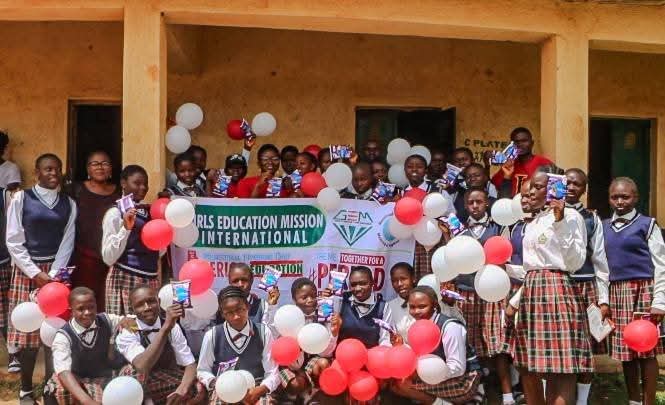
These priorities include ensuring that married and pregnant girls return to school, increasing education financing to meet girls’ needs and using education as a policy solution to end child marriage.
But while the girl-child continues to face cultural, financial and institutional constraints that limit access to opportunities, experts say the bigger monster of insecurity is further threatening their access to education.
In a 2024 report by Amnesty International, over 1,700 children were abducted by terrorist since 2014 including 17 mass school abductions in the past six years.
Terrorists, over the past decade have made school abduction a brisk business and mostly girls seem to be the target.
Reports of mass abduction of girls began on the night of April 14, 2014, 276 schoolgirls, were abducted by BokoHaram insurgents from their hostel in Chibok, a major town in Borno.
While some of the girls managed to escape on transit, several others were taken into captivity.
Over a decade after, many of them are still being held hostage; some have been rescued while some escaped from their forced home in the Sambisa forest.
Also, in the evening of February 19, 2018, 110 schoolgirls aged were abducted by the Boko Haram terrorist group from the Government Girls’ Science and Technical College (GGSTC) in Dapchi of Yobe.
Out of the 110 girls, 107 were reported to be released in the same year.
While these rescue efforts were commended by some stakeholders, nonetheless, these two major incidents exposed the increased vulnerability of schoolchildren, particularly girls to insecurity.
Analysts warn that this is disturbing especially in northern Nigeria, given the prevalent social and cultural realities which inhibit girl-child education and have kept many children out of school.
They say it pushes many girls out of school, heightens the risk of early marriage and widens the already troubling gender gap in education.
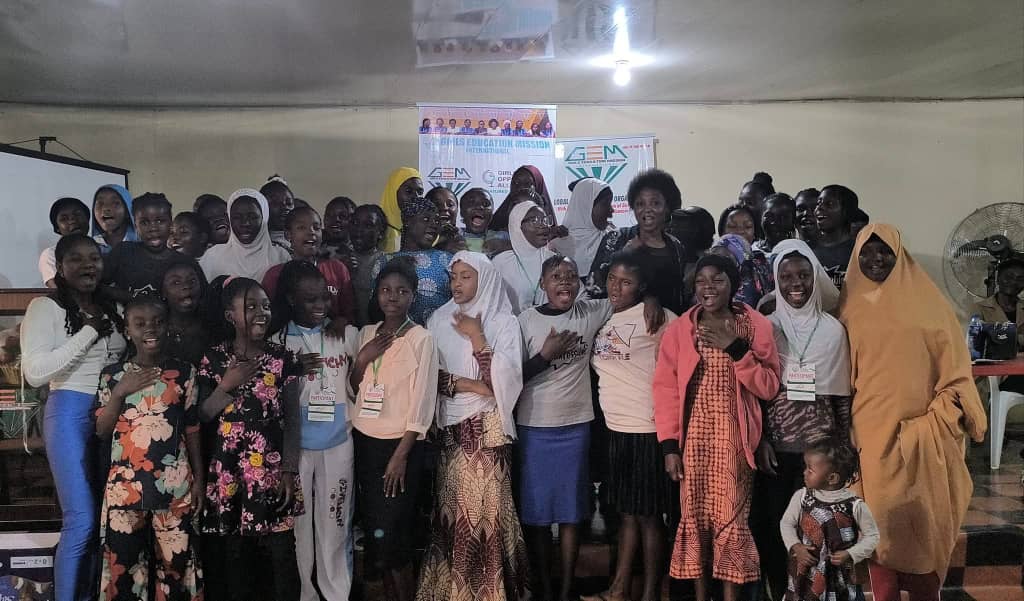
For instance, when Hadiza Isah’s school in Gombi LGA of Adamawa was attacked during her first year of senior secondary school, it left deep emotional scars.
Even years after returning to her community, the 18-year-old, says that after much reflection, she chose marriage as a better option than continuing her education.
This situation, analysts say, also threatens Nigeria’s ambition to achieve SDG 4, which calls for inclusive and equitable quality education by 2030, while dreams of girls to break cycle of poverty through education could be bleak.
Meanwhile, after the Chibok attack, the Safe School Initiative was unveiled in 2014 to make schools safer, especially in conflict-affected areas, but experts decry that it has been stalled by poor implementation and underfunding.
In 2019, the then President, Muhammadu Buhari, signed the Safe Schools Declaration (SSD) ratification document, signaling Nigeria’s commitment to the SSD.
The SSD is a global intergovernmental political initiative that allows countries to express support for protecting students, teachers, schools, and universities from attacks during armed conflicts.
Analysts argue that this move could strengthen the framework of the National Safe Schools Initiative by aligning Nigeria’s domestic programme with international standards for school protection.
This was followed by the development of a formal policy: the National Policy on Safety, Security, and Violence-Free Schools (NPSSVFS).
In spite of these measures in addition to counter terrorism operations, community engagements and deployment of security agencies forces to schools, another girl’s school was hit.
On Nov. 17, terrorists attacked the Government Girls Comprehensive Secondary School in Maga, Kebbi, abducting 24 schoolgirls while the school’s vice-principal was killed during the attack.
Stakeholders both local and international condemned the act.
The Executive Director of Girls Education Mission International (GEM), Mrs Keturah Shammah, says the consequences of these abductions are devastating for the Nigeria child, whose foundation of hope and future is no longer a guarantee.
“For our girls in particular, going to school has become an act of courage, defiance in the face of danger.
“Every classroom emptied by fear is a future stolen, a dream deferred and a generation threatened,’’ she said.
On the Kebbi incident, she said the attack on innocent girls was an attack on learning, on progress and on every effort being made to keep girls in school.
According to her, a nation where children cannot learn safely is a nation at risk.
Echoing her view, Mrs Funmi Para-Mallam, a Professor of Gender and Development Studies at the National Institute of Policy and Strategic Studies (NIPSS), expressed concern on the abduction of students in some Northern states.
According to her, the situation is creating new barriers and making it even harder for girls to pursue their education and fulfill their potential.
To Para-Mallam, the current situation presents a convenient argument for parents to have one more genuine excuse to not send their girls to school.
But even with this development, some experts argue not all hope is lost, as the country can address the situation headlong with strong political will alongside proactive security measures.
One of these measures is community policing.
A security expert, Dr Abdullahi Jabi, underscored the importance of community policing in curbing the menace and involving communities in the security architecture of their areas through shared solutions.
Jabi posited that when communities worked alongside law enforcement, school protection became a shared responsibility, combining local knowledge with formal security measures to eliminate potential threats.
He said that tackling terrorism required more than security measures.
According to him, it starts with addressing the root causes, such as poverty, and taking steps to shield young people from being influenced by radical ideologies promoted by certain religious leaders.
While government measures have recorded some level of success, stakeholders say that more political will is required to achieve further progress as well as execute strategies into action effectively.
Also, organisations such as UNICEF have urged the government, partners, and the international community to take decisive action to strengthen law enforcement and security measures to protect educational institutions and communities from attacks and abductions.
In all, UNICEF wants measures put in place to ensure the continuity of education and learning when schools are shut through multiple learning pathways–radio and TV programmes and through digital platforms like the Nigeria Learning Passport.
As Amnesty International says, schools should be places of safety and no child should have to choose between education and their life. (NANFeatures)
