


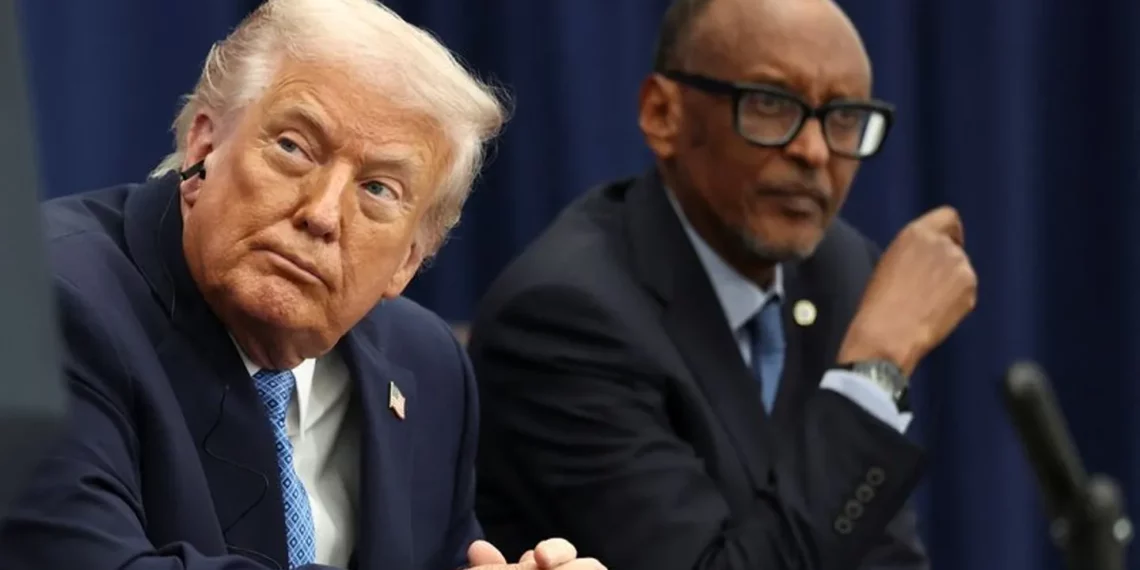
The United States has agreed a $228 million health funding deal with Rwanda, marking a shift in Washington’s approach to development support and expanding Kigali’s investment in domestic healthcare. The US State Department said the agreement is the second to be signed under President Donald Trump’s ‘America First Global Health Strategy’, following a similar arrangement with Kenya earlier this week.
Announced in September, the strategy aims to promote country-led health systems and reduce reliance on overseas assistance. The State Department said the Rwanda partnership sets out ‘a comprehensive vision to save lives, strengthen Rwanda’s health system,’ while contributing to US national security by limiting the spread of infectious diseases.
Under the package, the US plans to provide up to $158 million over several years, while Rwanda will increase its own health spending by $70 million as external support is gradually reduced
Rwanda steps up health investment
The State Department said the US contribution will target HIV/AIDS, malaria and other infectious diseases, alongside disease surveillance and outbreak response. The funding is designed to strengthen early warning systems in a region where cross-border health threats pose ongoing risks.
Rwanda’s pledged investment marks a transition towards assuming greater financial responsibility for its health sector. The State Department said the commitment demonstrates Rwanda’s move ‘toward self-reliance’, a core principle in the administration’s aid approach.
Oliver Nduhungirehe, Rwanda’s foreign minister, said the deal reflects the government’s ambition to build ‘a self-reliant, adaptive, and technology-enabled health system’. He signed the agreement in Washington with senior US officials.
Tech-driven healthcare delivery grows
The agreement will build on existing innovation programmes, including a medical drone network operated by Zipline. The California-based company partners with Rwanda to deliver blood products and medicines to remote hospitals, reducing delivery times and supporting emergency care.
According to the State Department, the new funding will support expansion of the network and other digital tools for health delivery. Zipline’s work is seen as a model for improving access in rural communities where transport infrastructure remains limited.
Officials said supporting technology-enabled services can accelerate emergency response capacity, scale up vaccine distribution and improve reliability across supply chains.
Health diplomacy aligned with peace push
The deal was announced a day after Rwanda’s President Paul Kagame and Democratic Republic of the Congo President Felix Tshisekedi reaffirmed their backing for a US-brokered plans to end conflict in eastern Congo. Washington has sought to link public health cooperation with broader diplomatic engagement in the region.
US officials say a stronger, more resilient health system in Rwanda can support regional stability, while improved disease control helps reduce global risks. The State Department said the agreement would ‘help make America safer’ by strengthening capacity to detect and contain outbreaks early.
