


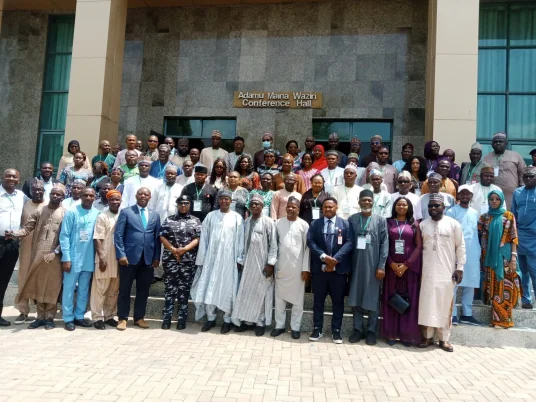
The Federal Government has begun training epidemiological and veterinary public health officers across the country to enhance their capacity in preventing, detecting, and responding to animal health emergencies.
The initiative is being implemented in collaboration with the Livestock Productivity and Resilience Support Project (L-PRES) and the Food and Agriculture Organization (FAO).
Minister of Livestock Development, Idi Maiha, announced this on Tuesday in Abuja at the opening of the training organized by L-PRES, a World Bank-supported project, in partnership with the FAO.
The programme, tagged “Good Emergency Management Practices in Animal Disease Response, Prevention and Control for Federal and State Epidemiology Officers in Nigeria,” aims to build a stronger and more coordinated response system for livestock health.
Maiha said the training would enable participants to adopt new technologies and knowledge that enhance planning, surveillance, and outbreak reporting.
“What is important in animal health is not just investigation but the speed of reporting and response,” he said.
“Once there is an outbreak in one state, other states are threatened. Therefore, we must all be on the same page and platforms to manage transboundary diseases and animal movement.”
The minister added that the training would equip officers with the competence to investigate and respond swiftly to outbreaks across the country.
Dr. Sanusi Abubakar, National Project Coordinator of L-PRES, said the training was designed to strengthen Nigeria’s capacity to anticipate, prevent, detect, and respond to animal health emergencies.
He explained that the Good Emergency Management Practices (GEMP) framework, adopted globally, promotes structured and proactive emergency preparedness and response.
Abubakar said the workshop would help institutionalize a robust and resilient veterinary public health system aligned with international standards set by the FAO, the World Organization for Animal Health (WOAH), and the World Health Organization (WHO) under the One Health strategy.
“We acknowledge that many veterinary professionals at both federal and state levels have not had the opportunity to fully engage with the latest best practices in emergency management.
“This workshop addresses that gap by enhancing their technical capacity to design, implement, and evaluate emergency preparedness plans tailored to Nigeria’s context,” he said.
He added that the collaboration with FAO would leverage the organization’s technical expertise to strengthen coordination, improve risk assessment, and ensure strategic contingency planning.
“With this partnership, we will be better positioned to safeguard both animal and human health in Nigeria,” Abubakar said.
