


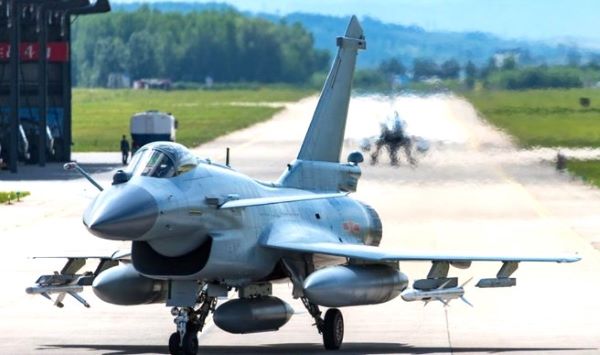
Iran has confirmed the delivery of 40 Chinese J-10C multirole fighter jets, marking the country’s most substantial airpower upgrade in decades, in a shift in regional military dynamics.
The acquisition, which was announced by Iranian state media on Tuesday, July 1, underscores growing military ties between Tehran and Beijing, while signalling frustration over delayed Russian arms deliveries and increasing defiance toward Western powers.
“Our skies are no longer vulnerable,” declared Brigadier General Hamid Vahedi, commander of the Islamic Republic of Iran Air Force (IRIAF), during a televised ceremony unveiling the jets. “With the arrival of these aircraft, we send a clear message: Iran is ready to defend its sovereignty and respond decisively to any aggression.”
A strategic pivot from Russia to China
For years, Iran had relied on Russia for its post-embargo military modernization plans, particularly the acquisition of Su-35 fighter jets following the expiration of UN arms restrictions in 2020. However, prolonged delays—largely due to Russia’s domestic military demands stemming from the war in Ukraine—prompted Iran to seek alternative suppliers.
Defense officials say negotiations with China began quietly in late 2024 and quickly culminated in the rapid delivery of 40 Chengdu J-10C aircraft over the past month.
The J-10C is considered one of China’s most advanced fourth-generation-plus fighter jets. Equipped with active electronically scanned array (AESA) radar, precision strike capabilities, and modern electronic warfare systems, the aircraft is viewed as a credible match for many Western-made fighters.
Message to regional rivals
The timing of the delivery comes amid heightened tensions in the Middle East, following a series of airstrikes—blamed on Israel and the United States—targeting Iranian assets in Syria and western Iran.
Iranian officials say the new jets are part of an effort to restore “strategic balance” in the region.
“Let our enemies be warned,” General Vahedi said. “The Islamic Republic does not seek war, but we are fully prepared for it.”
While officials from Israel and the U.S. Department of Defense declined to comment, regional analysts have noted that the acquisition could embolden Iran’s military posture, particularly in strategic flashpoints like the Persian Gulf, Syria, and Iraq.
A new chapter in China-Iran ties
The jet delivery is also being seen as a milestone in the evolving China-Iran strategic partnership. The two countries signed a 25-year cooperation agreement in 2021, aimed at deepening economic and military collaboration.
Although Beijing has not officially commented on the transaction, the move signals one of its most direct military exports to Iran in over a decade, made possible by the expiration of UN sanctions and a shifting global power structure.
Sources close to Iran’s military have reported the presence of Chinese advisors at multiple IRIAF bases in recent weeks, though details regarding training and maintenance support remain undisclosed.
Regional implications
Iran’s air force remains modest compared to the fleets of U.S.-aligned Gulf states, such as Saudi Arabia and the UAE, which operate cutting-edge platforms like the F-35 and Eurofighter Typhoon. However, the addition of 40 J-10Cs narrows the technological gap and may trigger a new round of regional military build-up.
While Iran has not revealed the financial terms of the deal, the acquisition marks a turning point in its defense strategy—signaling both a deeper partnership with China and a renewed effort to project power amid growing instability in the region.
Military observers now await whether Iran will integrate the new jets into joint exercises with China or deploy them in strategic theaters like the Strait of Hormuz, where tensions with Western naval forces remain high.
