


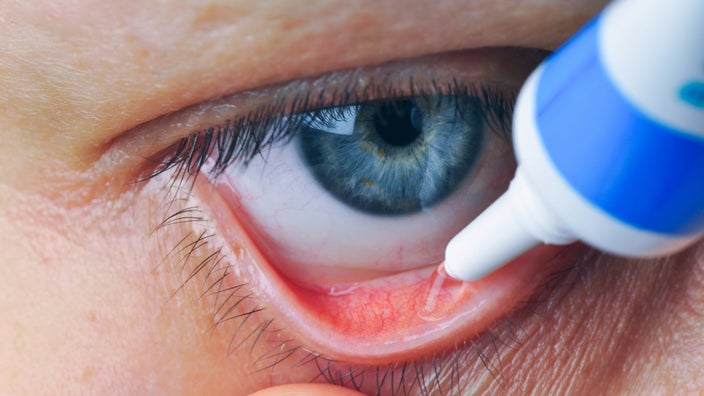
When people take medications for certain conditions, like blood pressure or allergies, they don’t often think about eye side effects. But some medications can cause side effects that affect the eyes, from mild dryness to severe inflammation. Your eyes are relatively small but have a rich blood supply, and that combination makes them vulnerable to side effects from medications.
Key takeaways:
- Medications people take for certain health conditions can affect vision and eye health.
- Some medications can cause blurred vision, eye pain, redness, or double vision.
- If you develop eye symptoms from a medication, your healthcare professional may need to adjust your dose or recommend a new medication.
These side effects vary — and may involve any part of the eye, from the cornea in the front of your eye to the retina and optic nerve in the back of your eye. Let’s take a look at some commonly prescribed medications that can affect your eye health.
1. Alendronate (Fosamax)
Alendronate (Fosamax) belongs to a class of medications called “bisphosphonates.” Alendronate can treat osteoporosis, and it can lead to inflammation in the front, middle, and back part of the eye. Symptoms of inflammation in the eye include:
- Blurred vision
- Light sensitivity (photophobia)
- Eye pain
- Eye redness
2. Topiramate (Topamax)
Topiramate (Topamax) can treat many conditions, including seizures, migraine headaches, and mood disorders. Topiramate can cause acute glaucoma, an eye condition that damages the optic nerve. People often experience eye pain, headache, and blurred vision. There are also reports of mydriasis (dilated pupil), acute myopia (sudden nearsightedness), and other rare eye complications.
3. Isotretinoin (Accutane)
Isotretinoin (Accutane, Absorica) is an oral pill that treats acne. A common side effect of isotretinoin is dry eye. Isotretinoin can also cause:
- Inflammation of the conjunctiva and eyelid (blepharoconjunctivitis)
- Light sensitivity (photophobia)
- Swelling of the optic nerve (papilledema)
4. Amiodarone (Cordarone)
ALSO READ We can fund healthcare despite USAID’s exit – Pate
Amiodarone (Cordarone) is a medication that treats irregular heartbeats, like atrial fibrillation. The risk of developing an eye condition goes up if you’re taking a higher dose of amiodarone. Eye complications are very common, even at lower doses, so people who take amiodarone should get regular eye exams.
Vortex keratopathy is one of the most common complications of amiodarone use. More than 70% of people experience this side effect. Vortex keratopathy causes a swirl-like pattern to appear on the cornea (the clear, front part of the eye). Some people don’t experience vision changes from it, while others notice halos around lights.
A more serious side effect from amiodarone is optic nerve damage. The optic nerve connects the eye and the brain so you can see. Damage to the optic nerve can lead to permanent vision loss.
5. Tamsulosin (Flomax)
Tamsulosin (Flomax) helps people urinate when they have an enlarged prostate (benign prostatic hypertrophy) or prostate cancer. If you’re taking tamsulosin and you need cataract surgery, talk with your eye doctor. Tamsulosin puts you at risk of developing intraoperative floppy iris syndrome (IFIS).
In one study, more than half of people taking tamsulosin developed IFIS during cataract surgery. Only 2% of people who didn’t take tamsulosin developed the condition. It’s not clear why, but even if you stop taking tamsulosin before surgery, you’re still at high risk of developing IFIS. So you and your eye doctor will need to decide if cataract surgery is right for you.
6. Sildenafil (Viagra)
Sildenafil (Viagra) treats erectile dysfunction (ED). Some people experience changes in color perception after starting sildenafil. You may notice that things look like they’re tinted blue. This does go away if you stop taking the medication.
Another rare, serious side effect is damage to the optic nerve. This can cause permanent vision loss. The risk of developing optic nerve damage goes up if you’re taking a higher dose of sildenafil.
Tadalafil (Cialis) and vardenafil (Levitra) can also cause these eye symptoms.
7. Tamoxifen
Tamoxifen is an anti-estrogen medication that can treat ovarian and breast cancer. It can lead to to several eye problems, including:
- Retinal deposits
- Cornea clouding
- Swelling of the macula (macular edema)
Since these symptoms can lead to permanent vision loss, people who take tamoxifen should get regular eye exams.
8. Chlorpromazine (Thorazine)
Chlorpromazine (Thorazine) is an antipsychotic medication that can treat hallucinations and paranoia. Chlorpromazine can cause:
- Pigment changes of the cornea, eyelids, and conjunctiva (white part of the eye)
- Dry eye
- Blurry vision
- Retinal damage (retinal degeneration)
Thioridazine (Mellaril) is a similar antipsychotic that can also cause these symptoms.
9. Ethambutol (Myambutol or EMB)
Ethambutol is a medication that treats tuberculosis. It can cause:
- Changes in color perception
- Decreased peripheral vision
- Inflammation and damage of the optic nerve
10. Hydroxychloroquine (Plaquenil)
Hydroxychloroquine (Plaquenil) treats rheumatoid arthritis, lupus, and other autoimmune disorders. This medication can cause cloudiness in the cornea, which affects your ability to see clearly.
Hydroxychloroquine is also toxic to the retina. Damage to the retina causes permanent vision loss. The risk of developing retinal damage is higher for people taking higher doses of hydroxychloroquine. People who have been taking the medication for a long time are also at higher risk. So be sure to get regular eye exams while taking the medication.
11. Prednisone
Prednisone and other steroids can treat many medical conditions, including eye conditions like uveitis. But some people can develop elevated eye pressure while taking this medication. This causes steroid-induced glaucoma, which can lead to permanent vision loss over time. But, if caught early, steroid-induced glaucoma can be reversed. So be sure to see an eye doctor right away if you develop blurred vision or eye pain while taking steroids.
12. Diphenhydramine (Benadryl)
Diphenhydramine (Benadryl) is an over-the-counter (OTC) antihistamine that relieves seasonal allergy symptoms. Benadryl can cause dry eye and trouble seeing up close (because it makes your pupils get bigger).
A serious side effect some people develop is acute angle-closure glaucoma, which is a medical emergency. Acute angle-closure glaucoma causes permanent vision loss if it’s not treated right away. When taking diphenhydramine, seek emergency medical care if you develop:
- Blurry vision
- Headache
- Severe eye pain
- Vomiting
- Halos in your vision
13. Cidofovir (Vistide)
Cidofovir (Vistide) treats cytomegaloviral (CMV) retinitis, a viral infection of the retina. Even though it treats a serious eye condition, it can also cause a different problem in the eye — uveitis. Uveitis causes eye pain, redness, and vision changes. If you take cidofovir, be sure to get regular eye exams to make sure you’re not developing uveitis.
14. Digoxin/digitalis (Lanoxin)
Digoxin (Lanoxin), or digitalis, helps treat many heart conditions. But it can cause vision changes, including:
- Double vision
- Blurry vision
- Light sensitivity
- Changes in color perception (yellow tint to vision)
These vision changes usually go away when you stop taking the medication.
15. Fingolimod (Gilenya)
Fingolimod (Gilenya) is a newer medication that treats multiple sclerosis. It can cause macular edema, or swelling in the back of the eye. Symptoms of macular edema include:
- Blurred central vision
- Shadows in vision
- Blank spots in the vision
- Changes in color perception (colors may look washed out or muted, making them harder to tell apart)
People taking fingolimod should get regular eye exams.
16. Rifampin (Rifadin)
Rifampin (Rifadin) is another medication that treats tuberculosis and other infections. Its most well-known side effect is turning urine orange. But it’s not just urine that changes color. Rifampin makes all bodily fluids look orange-red, including tears. While this won’t affect vision, it will stain contact lenses. This makes everything look orange when you’re wearing the stained lenses.
The color of your tears will go back to normal once you stop taking the medication. But you might want to switch to daily, disposable lenses or glasses while taking rifampin.
17. Doxycycline (Vibramycin)
Doxycycline (Vibramycin) is an antibiotic that treats many types of infections and helps treat other medical conditions, like acne. People who take doxycycline for a long time can develop secondary intracranial hypertension also known as pseudotumor cerebri. This causes an increase in the pressure inside the brain, which leads to:
- Blurred vision
- Double vision
- Headaches
Tetracycline and minocycline are similar antibiotics that can also cause intracranial hypertension.
Medications that can affect your vision without harming your eyes
The medications above can directly affect your eye health. But some medications can indirectly cause temporary vision changes. They don’t affect the eyes directly. Instead, they can cause other side effects and those side effects can affect your vision. Here are some examples.
Medications that lower blood pressure can cause blurry vision
Some people report experiencing blurry vision when they start taking blood pressure medications or when they increase their dose. It’s not clear why this happens. This might occur because the body is adjusting to a lower blood pressure since people also tend to experience headaches and lightheadedness, too.
Some of these blood pressure medications may also affect your blood sugar. If your blood sugar levels drop, you can also experience symptoms of hypoglycemia, which include headaches and blurry vision.
People have reported blurry vision while taking:
- Metoprolol (Lopressor)
- Lisinopril (Zestril)
- Losartan (Cozaar)
- Diovan (Valsartan)
Talk with your primary care provider if you experience vision changes while taking blood pressure medications. You may need to adjust your dose.
Medications that affect your mood can lead to blurry vision
Some people have reported blurry vision while taking medications that help treat depression and anxiety. It’s not clear why vision changes happen with these medications. Some of these medications can make you feel more tired so the blurry vision may be linked to that.
- Fluoxetine (Prozac)
- Alprazolam (Xanax)
- Paroxetine (Paxil)
- Venlafaxine (Effexor)
- Bupropion (Wellbutrin)
Talk with your primary care provider if you experience vision changes while taking these medications. You may need to adjust your dose or try a different medication.
What should youThe bottom line
People don’t always connect their vision changes to their medications. But medications are a common cause of vision changes. There are far more than 17 medications that can lead to vision changes and double vision.
If you ever develop a new change in your vision or double vision, see an eye doctor right away. Make sure you tell your eye doctor about all of the medications you’re taking, including OTC supplements. do if you develop vision changes or double vision while taking one of these medications?
If you’re taking any of these medications and you develop vision changes, double vision, or other eye symptoms — call an eye doctor right away. Early treatment can protect your vision. Your eye doctor will also help you safely taper or stop your medication.
By Nishika Reddy, MD, an attending physician at the University of Utah. She provides comprehensive and cornea medical care at the Moran Eye Center and serves as clinical assistant professor.
