

• Home
  • Agric
  • Sci & Tech
  • Health
  • Environment
  • Hausa News
  • More
    • Business/Banking & Finance
    • POLITICS
    • Entertainments & Sports
    • International
    • Investigation
    • Law & Human Rights
    • Africa
    • ACCOUNTABILITY/CORRUPTION
    • Hassan Gimba
    • Column
    • Prof. Jibrin Ibrahim
    • Prof. M.K. Othman
    • Defense/Security
    • Education
    • Energy/Electricity
    • Entertainment/Arts & Sports
    • Society and Lifestyle
    • Food & Agriculture
    • Health & Healthy Living
    • International News
    • Interviews
    • Investigation/Fact-Check
    • LAW & HUMAN RIGHTS
    • Oil & Gas/Mineral Resources
    • PRESS FREEDOM/JOURNALISM/PR
    • General News
    • Presidency
  • About Us
    • Contact Us
    • Board Of Advisory
    • Privacy Policy
    • Ethics Policy
    • Teamwork And Collaboration Policy
    • Fact-Checking Policy
    • Advertising
  • Media OutReach Newswire
    • Wire News
  • The Stories
Facebook Twitter Instagram
Trending
  • Nigeria’s neem advantage: Unlocking a strategic bioeconomy industry for climate, agriculture and industrial growth, Dr Fakunle Aremu
  • NAFDAC holds workshop on medicine safety in Karu
  • AFAN predicts drop in food prices after fertiliser distribution
  • IBB university secures ABU approval for medical students clinical training
  • Edo state reaffirms commitment to fight drug abuse
  • PAAU student arrested for alleged forced cult initiation
  • Africa’s first social justice improv festival opens in Abuja
  • Umahi orders temporary halt on Ibadan-Ife-Ilesa road work
Facebook Twitter Instagram YouTube
AsheNewsAsheNews
  • Home
  • Agric

    Nigeria’s neem advantage: Unlocking a strategic bioeconomy industry for climate, agriculture and industrial growth, Dr Fakunle Aremu

    June 22, 2026

    AFAN predicts drop in food prices after fertiliser distribution

    June 22, 2026

    Northern Nigeria’s poultry economy: Unlocking a multi-billion dollar investment opportunity across the value chain, By Dr. Fakunle Aremu

    June 19, 2026

    Association trains farmers on agroforestry, carbon opportunities

    June 18, 2026

    IWMI, IFPRI link Kano farmers to solar irrigation support

    June 17, 2026
  • Sci & Tech

    ALTON supports CBN’s local data hosting mandate

    June 20, 2026

    NDPC seeks INEC data records over breach allegations

    June 20, 2026

    SGF urges Galaxy Backbone to boost cybersecurity, broadband

    June 20, 2026

    Experts urge AI, satellite data to build safer, more sustainable cities at FUTA symposium

    June 19, 2026

    Anambra disburses N80m to 80 startups for tech growth

    June 19, 2026
  • Health

    NAFDAC holds workshop on medicine safety in Karu

    June 22, 2026

    Expert urges focused use of N10bn for Ebola preparedness

    June 22, 2026

    From Sokoto to Bulgaria: Dr. Dange’s mission to transform pediatric care

    June 21, 2026

    Nigeria’s Fathers face silent mental health crisis

    June 21, 2026

    NGO promotes menstrual hygiene in Benue schools

    June 20, 2026
  • Environment

    Floods, Windstorm devastate Ebonyi farmlands, shops

    June 22, 2026

    Progress on Lagos-Calabar road celebrated

    June 22, 2026

    Sanitation concerns at Lagos market

    June 21, 2026

    Lagos envoy defends waste enforcement efforts

    June 20, 2026

    Tinubu: Abuja crime hideouts disappearing

    June 20, 2026
  • Hausa News

    UNA signs MoU to launch air Bissau in Guinea-Bissau

    June 15, 2026

    Otti plans 250-room 5-star hotel in Umuahia

    April 11, 2026

    Anti-quackery task force seals 4 fake hospitals in Rivers

    August 29, 2025

    [BIDIYO] Yadda na lashe gasa ta duniya a fannin Ingilishi – Rukayya ‘yar shekara 17

    August 6, 2025

    A Saka Baki, A Sasanta Saɓani Tsakanin ‘Yanjarida Da Liman, Daga Muhammad Sajo

    May 21, 2025
  • More
    1. Business/Banking & Finance
    2. POLITICS
    3. Entertainments & Sports
    4. International
    5. Investigation
    6. Law & Human Rights
    7. Africa
    8. ACCOUNTABILITY/CORRUPTION
    9. Hassan Gimba
    10. Column
    11. Prof. Jibrin Ibrahim
    12. Prof. M.K. Othman
    13. Defense/Security
    14. Education
    15. Energy/Electricity
    16. Entertainment/Arts & Sports
    17. Society and Lifestyle
    18. Food & Agriculture
    19. Health & Healthy Living
    20. International News
    21. Interviews
    22. Investigation/Fact-Check
    23. LAW & HUMAN RIGHTS
    24. Oil & Gas/Mineral Resources
    25. PRESS FREEDOM/JOURNALISM/PR
    26. General News
    27. Presidency
    Featured
    Recent

    Nigeria’s neem advantage: Unlocking a strategic bioeconomy industry for climate, agriculture and industrial growth, Dr Fakunle Aremu

    June 22, 2026

    NAFDAC holds workshop on medicine safety in Karu

    June 22, 2026

    AFAN predicts drop in food prices after fertiliser distribution

    June 22, 2026
  • About Us
    1. Contact Us
    2. Board Of Advisory
    3. Privacy Policy
    4. Ethics Policy
    5. Teamwork And Collaboration Policy
    6. Fact-Checking Policy
    7. Advertising
    Featured
    Recent

    Nigeria’s neem advantage: Unlocking a strategic bioeconomy industry for climate, agriculture and industrial growth, Dr Fakunle Aremu

    June 22, 2026

    NAFDAC holds workshop on medicine safety in Karu

    June 22, 2026

    AFAN predicts drop in food prices after fertiliser distribution

    June 22, 2026
  • Media OutReach Newswire
    • Wire News
  • The Stories
AsheNewsAsheNews
Home»Environment/Climate Change»Stakeholders demand speedy passage of bill to protect pangolins
Environment/Climate Change

Stakeholders demand speedy passage of bill to protect pangolins

EditorBy EditorFebruary 15, 2025Updated:February 15, 2025No Comments4 Mins Read
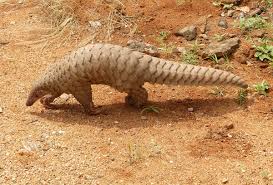
Pangolin
Share
Facebook Twitter LinkedIn Pinterest Email


Wild Africa, a non-governmental organisation (NGO), has called for the speedy passage of the bill to protect Pangolins, which is pending before the National Assembly.

According to the NGO, the bill if passed will prevent them from going into extinction

The NGO also urged support for ongoing efforts to update the national wildlife legislation to combat wildlife trafficking.

This is contained in a statement issued by Wild Africa Nigeria Representative, Festus Iyorah on the occasion of Pengolin Day, on Saturday in Lagos.

Iyorah noted that pangolins were protected by both national and international laws, including the 2016 ban on international commercial trade.

According to him, the high demand for their scales used in ‘traditional medicine, especially in Asia and their meat eaten as a delicacy, is driving them to extinction.

He said that Nigeria had emerged as a global export hub and a prominent player in the supply of pangolin scales primarily to Asia.

He added that Nigeria was linked to 55 high rate of pangolin scales seized globally between 2016 and 2019.

Iyorah quoted Dr Mark Ofua, Wild Africa’s West Africa Spokesperson as saying: “it is not too late to change the narrative and move Nigeria from its current status as a major trafficking hub to become one of Africa’s strongest protectors of pangolins.

“It is our collective responsibility to achieve this task.

“No action is too small when it comes to protecting pangolins, and we must all work together to discourage illegal bush meat trade and support new laws to combat wildlife trafficking.”

Iyorah said that as part of efforts to raise awareness about pangolins, Wild Africa was using a combination of radio, TV, billboards and public service announcements.

He added that the campaign would feature influential Nigerian ambassadors such as 2Baba, Emanuella, and Ali Baba to highlight threats facing pangolins and their crucial role in the ecosystem.

“On its part, Nigeria has taken significant steps to combat the illegal trade of pangolin scales through legislative measures and enforcement.

“In early 2024, Nigeria introduced the Endangered Species Conservation and Protection Bill, which recently passed second reading.

“If enacted, the bill would impose harsher penalties for trafficking in illegal wildlife products such as pangolin scales and deter wildlife crime.

“Seizures of pangolin scales and other illegal wildlife products, as well as prosecutions of such cases, are also on the rise,” he said.

He noted that in December 2024, the Nigeria Customs Service (NCS) arrested a suspected pangolin scale broker and confiscated 2.179 tonnes of pangolin scales, representing approximately 1,100 pangolins.

“Since July 2021, the NCS and its partners have conducted 16 operations, 35 arrests and 12 convictions, seizing 21,582 tonnes of pangolin scales,” Iyorah said.

He said that in spite of these successes, pangolin population remain at risk, particularly with the demand for their scales in Asian countries like China, where the scales were falsely believed to have medicinal properties.

He said that in its latest submission to the 78th Meeting of the UN CITES Standing Committee, China proposed a 90 per cent reduction in pharmaceutical and hospital use of pangolin scales by 2026.

He added that China also proposed a 50 per cent drop in overall medicinal use of pangolin scales, with an annual consumption quota of one metric tonne.

“While this represents significant progress, conservationists worry that even a one-tonne quota can still fuel illegal trafficking, further endangering the species,” Iyorah said.

He said that Pangolins remained underappreciated and under protected and were in urgent need of global attention and support.

“On World Pangolin Day, Wild Africa urges the Nigerian public to join the fight against poaching by reporting illegal wildlife trade and supporting local conservation projects,” Iyorah added.

Pangolins play a huge role in maintaining a balance in biodiversity as taking of pangolins from their wild homes poses a serious threat to biodiversity and the health of their habitats.

Pangolin diet consists of ants, termites, crickets, flies, and other insect species; these animals help prevent the overpopulation of insects and protect forests from termite destruction.

It is estimated that just one pangolin consumes about 70 million ants and termites per year—when you think about the illegal trade of pangolins, imagine the hundreds of millions of extra bugs crawling around.

There is an economic impact, too, as it is estimated that pangolins save us millions of dollars per year by preventing damage from pests.

Pangolins also benefit the soil in which they burrow. By digging holes in the ground, they support the turnover of organic matter and aeration.

NAN

Pangolin Wild Africa
Share. Facebook Twitter Pinterest LinkedIn WhatsApp Reddit Tumblr Email
Editor
  • Website

Related Posts

Floods, Windstorm devastate Ebonyi farmlands, shops

June 22, 2026

Progress on Lagos-Calabar road celebrated

June 22, 2026

Sanitation concerns at Lagos market

June 21, 2026

Leave A Reply Cancel Reply

Nigeria’s neem advantage: Unlocking a strategic bioeconomy industry for climate, agriculture and industrial growth, Dr Fakunle Aremu

June 22, 2026

NAFDAC holds workshop on medicine safety in Karu

June 22, 2026

AFAN predicts drop in food prices after fertiliser distribution

June 22, 2026

IBB university secures ABU approval for medical students clinical training

June 22, 2026
About Us
About Us

ASHENEWS (AsheNewsDaily.com), published by PenPlus Online Media Publishers, is an independent online newspaper. We report development news, especially on Agriculture, Science, Health and Environment as they affect the under-reported rural and urban poor.

We also conduct investigations, especially in the areas of ASHE, as well as other general interests, including corruption, human rights, illicit financial flows, and politics.

Contact Info:
  • 1st floor, Dogon Daji House, No. 5, Maiduguri Road, Sokoto
  • +234(0)7031140009
  • ashenewsdaily@gmail.com
Facebook Twitter Instagram Pinterest
© 2026 All Rights Reserved. ASHENEWS Daily Designed & Managed By DeedsTech

Type above and press Enter to search. Press Esc to cancel.