


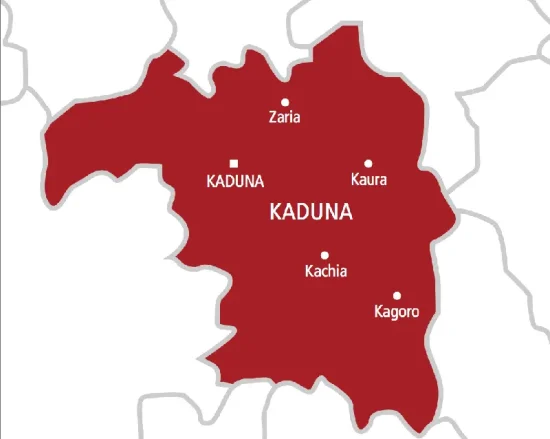
The Kaduna State Nutrition Officer (SNO), Ramatu Musa, says a total of 30,089 children across all the 23 local government areas in the state were successfully cured of ‘Severe Acute Malnutrition (SAM) in 2025′.
The News Agency of Nigeria (NAN) reports that this feat was achieved through the stete’s Integrated Management of Acute Malnutrition (IMAM) services.
Musa, however, said a total of 60,193 children with SAM were admitted across the 23 LGAs of the state in 2025
The SNO, represented by Jibril Isah, stated this on Tuesday in Kaduna, while presenting the State of “Nutrition in Kaduna’ at a one-day meeting with the wife of the Governor and spouses of the 23 LGAs Chairmen.
The one-day meeting was organised to strengthen advocacy, leadership commitment and resource mobilisation for effective nutrition interventions at the grassroots.
Musa said that Nigeria recorded a worsening malnutrition trend between 2018 and 2023–2024, with stunting rising from 37 to 40 per cent, wasting from seven to eight per cent and underweight from 22 to 27 per cent, while overweight declined from two to one per cent.
She, however, said that Kaduna state, with a stunting rate of 40.7 per cent according to the 2023/2024 National Demographic and Health Survey, performed best in the North-West.
It outperformed neighbouring states, though the burden of malnutrition remained high and required sustained investment.
She explained that stunting in the state declined from 48.1 to 40.7 per cent, showing progress in reducing chronic malnutrition, while wasting increased from 4.8 to 5.9 per cent and underweight rose from 22.1 to 24.7 per cent.
This, she said indicated worsening acute malnutrition and overall deterioration in children’s nutritional status.
The SNO said that IMAM interventions focused on early identification through regular screening, treatment and rehabilitation of children with SAM in specialised centres, and community engagement through awareness campaigns and support groups.
She identified major challenges including low activity of nutrition steering committees chaired by wives of local government chairmen and inadequate funding for nutrition activities at state and LGA levels.
Others were the lack of ownership and commitment to community nutrition services by some LGAs, and inadequate IMAM coverage, with only about 64 per cent of wards providing services.
She recommended strengthening LGA steering committees through enhanced technical support and regular meetings, improving leadership engagement through performance reviews and nutrition scorecards, securing dedicated state and LGA nutrition financing, and scaling up IMAM services to uncovered wards.
Earlier, the state’s Commissioner of Planning and Budget Commission, Mr. Mukhtar Ahmed, said that the meeting was convened to update the knowledge and skills of the spouses on advocacy and resource mobilisation, increase their understanding of the burden of malnutrition among children.
Ahmed, equally said that the meeting was to clarify their roles in combating malnutrition and secure their commitment to prioritising nutrition as part of human capital development.
He said that sustainable nutrition impact was best achieved when communities were fully engaged, noting that wives of political leaders were uniquely positioned to influence households and champion nutrition within grassroots governance structures.
Ahmed said that the programme was designed to be practical and action-oriented, providing participants with updated information on the nutrition situation in Kaduna state and clearly outlining their responsibilities in addressing malnutrition at community level.
He said that the governor had given strong attention to human capital development, stressing that progress could only be achieved with well-nourished children, which explained the emphasis on tackling malnutrition at early stages of child growth.
The commissioner cited the procurement of 12,000 cartons of Ready-to-Use Therapeutic Food (RUTF) by the state government, with 1,000 cartons already delivered, describing it as a demonstration of commitment to improving nutrition outcomes.
He said that the Planning and Budget Commission remained committed to coordinating and supporting nutrition initiatives and acknowledged the support of development partners including ANRiN Project, UNICEF, CS-SUNN, Alive and Thrive, GAIN and others.
Also, the Commissioner for Health, Hajiya Umma Ahmed, reiterated the importance of the meeting, saying the governor’s passion for the health and wellbeing of Kaduna residents was evident in deliberate efforts to address malnutrition.
She said that the allocation of N1.1 billion to malnutrition interventions underscored the state’s resolve to ensure that no woman died during childbirth and no child died before the age of five from preventable causes linked to malnutrition.
The commissioner called on the spouses to support the first lady, the governor and the Ministry of Health to ensure that RUTF reached the intended beneficiaries, warning against diversion and misuse of the commodities at community level.
She said that local governments were critical to addressing malnutrition, noting that accountability rested with leadership at that level to ensure effective delivery of nutrition services.
The state’s Commissioner for Youths Development, Gloria Ibrahim, said that the fight against malnutrition was a collective responsibility, stressing that communities must revive shared caregiving values to protect children.
She said that malnutrition should not be mentioned in Kaduna state, given the commitment shown by the governor and his wife, and urged the spouses to enlighten both women and men in their LGAs on proper child nutrition practices.
Presenting on the roles and responsibilities of the wife of the governor and spouses of LGA chairmen, the Project Manager of Accelerating Nutrition Results in Nigeria (ANRIN) 2.0, Dr Zainab Muhammad-Idris, said that malnutrition remained a major public health and development challenge that undermined child survival, learning outcomes, productivity and economic growth.
Muhammad-Idris said that political leadership at state and LGA levels was a proven game-changer, describing the spouses as trusted voices with the ability to influence social norms, mobilise communities and bridge the gap between policy and households.
She said that the wife of the governor was expected to champion nutrition at the highest political level, advocate for dedicated nutrition budget lines, mobilise resources and partnerships, support the State Nutrition Council, lead statewide advocacy campaigns and promote breastfeeding and maternal nutrition.
She said that spouses of LGA chairmen were expected to mobilise wards and communities, strengthen linkages with primary healthcare facilities, promote growth monitoring, antenatal care and infant and young child feeding practices, support IMAM referrals and follow-up, work with traditional and faith leaders and provide feedback on service gaps.
She highlighted priority actions to including early initiation and exclusive breastfeeding, appropriate complementary feeding, maternal nutrition, routine growth monitoring, vitamin A supplementation, deworming, early detection and treatment of acute malnutrition and nutrition-sensitive WASH actions.
She also outlined effective community-level actions such as establishing mothers’ support groups, organising nutrition dialogues and cooking demonstrations, promoting local food production, encouraging male engagement, using local media and strengthening monitoring, accountability and sustainability mechanisms.
On advocacy and resource mobilisation, the State Coordinator of Civil Society Scaling Up Nutrition in Nigeria (CS-SUNN), Ms Jessica Bartholomew, presented the Child Nutrition Fund and six months paid maternity leave as unique opportunities to improve nutrition outcomes.
She said that Kaduna State had mobilised over N2.9 billion in blended financing between 2023 and 2025 through strong political leadership, partner alignment and results-based investment.
Bartholomew commended the state for improvements in malnutrition indices, adoption of six months paid maternity leave and commitment to the Child Nutrition Fund for procurement of nutrition commodities.
Responding, the wife of the governor, Hajiya Hafsat Uba-Sani, pledged sustained support for nutrition programmes in Kaduna State, assuring stakeholders of continued advocacy, collaboration and community engagement to improve the wellbeing of women and children across all local government areas.
