


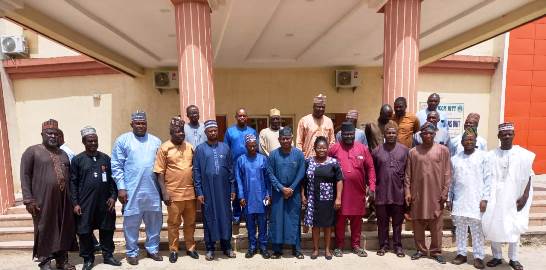
The National Centre for Technology Management (NACETEM) has said that sustained policy dialogue and stakeholder engagement—rather than premature regulation—are crucial to Nigeria’s responsible adoption of artificial intelligence (AI).
The Director-General of NACETEM, Dr Olushola Odusanya, stated this on Tuesday during an interview with reporters.
He said any future legislation on artificial intelligence should evolve from existing national policies and align with international best practices.
According to Odusanya, Nigeria’s current AI policy has undergone several iterations and is expected to gradually transition into law and practical implementation.
He noted that no country has fully mastered artificial intelligence due to its rapidly evolving nature, making continuous dialogue and learning essential.
Odusanya warned that imposing rigid regulations without adequate understanding of the technology could limit Nigeria’s participation in the global data-driven economy.
He explained that AI should be viewed in the same way computers and calculators were initially perceived—technologies that once faced resistance but later became indispensable tools for learning and productivity.
“Encouraging AI fluency will help Nigerians see the technology as an enabler rather than a threat, particularly in the education sector,” he said.
Odusanya recalled that Nigeria’s first major AI intervention was a NACETEM-led policy dialogue that brought together key stakeholders to discuss responsible and beneficial uses of artificial intelligence.
He said the initiative focused on understanding the technology rather than regulating it outright.
According to him, the dialogue laid the foundation for subsequent initiatives, including a prompt engineering forum and the establishment of an AI ecosystem.
He explained that the ecosystem operates on a subscription model, connecting users to global innovation networks while addressing AI-related challenges.
Odusanya added that although the platform is globally connected, the data of Nigerian users remain domiciled in the country in line with existing laws.
He described this as a practical outcome of earlier policy engagements.
The expert noted that artificial intelligence would be central to future global economic growth and development.
He urged Nigeria to sustain regular policy dialogues to generate original knowledge and remain competitive in the rapidly evolving global AI landscape.
