


For decades, neuroscience and artificial intelligence ran on parallel tracks – one seeking to decode the mysteries of the biological brain, the other striving to build intelligent machines. Today, those tracks have collided.
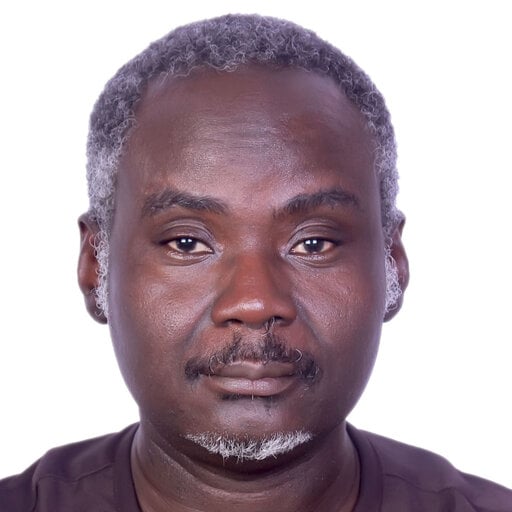
Following a rigorous five-day intensive training program aimed at introducing young researchers to the frontier of Neuro-AI, ASHENEWS sat down with the Coordinator of Smartbrains Neuroscience School, Lead Facilitator and renowned Neuroscientist, Professor Barnabas Danborno to unpack this rapidly evolving field.
From mitigating climate change with brain-inspired microchips to the promise of personalized neuromedicine, the conversation revealed how merging mind and machine could redefine healthcare, especially here in Nigeria.
Here is the exclusive interview:
ASHENEWS: Let’s start with the five-day training that just concluded. What is the ultimate goal, and what do you expect from the participants moving forward?
Danborno: As I stated during the opening ceremony, the core objective is to introduce students to this emerging trend in neuroscience. We want to expose them to the foundational ideas so they can return to their respective institutions and build upon them.
Over the past week, they’ve learned from various experts and seen the practical applications of this technology. Our expectation is that they will use this foundation to advance their own research and careers.
ASHENEWS: Neuro-AI is rapidly becoming a dominant research area. What exactly does this convergence of fields aim to achieve?
Danborno: This field represents the true merging of neuroscience and artificial intelligence. Today, there is a powerful synchrony between the two, with each bringing a unique contribution. While traditional neuroscience knowledge is foundational, we are enhancing that research using modern tech.
AI is now a household name. As I demonstrated in my recent lecture on using AI to classify neurodegenerative conditions, bringing these two fields together dramatically enhances both our understanding of the brain and our clinical applications.
ASHENEWS: In what specific ways can AI help scientists better understand how the brain works?
Danborno: Fundamentally, AI itself relies heavily on biomimicry – it is designed to mimic biological entities. In this case, it mimics the human brain. AI developers are creating technologies that perform tasks previously thought to require human intelligence.
By deploying these systems, scientists can analyze complex neural data, accelerate teaching and learning, and achieve faster breakthroughs in brain research.
ASHENEWS: Flipping that around: could insights from brain research lead to smarter, more human-like AI systems?
Danborno: Absolutely. In fact, that’s how it started. In 1957, Frank Rosenblatt pioneered the concept of the artificial neural network by comparing it directly to the biological neuron. Understanding the human brain is the key to building smarter systems.
A perfect example is energy consumption. Current AI models consume massive amounts of power, which indirectly contributes to climate change. The human brain, however, is incredibly powerful yet runs on almost no energy. This realization birthed neuromorphic computing.
Today, tech companies are designing processors – like specialized CPUs and GPUs – that mimic the brain’s architecture to operate with high efficiency and incredibly low energy consumption.
ASHENEWS: Despite its promise, many people still fear or resist AI. What are the most common misconceptions about neural AI?
Danborno: The fear is mostly based on myths. People naturally resist change because they are comfortable with the status quo; AI isn’t the first technology to face this kind of pushback. The most common misconception is that AI will entirely replace humans.
People need to relax, as AI is here to stay as a tool. The honest truth is this: AI may not replace people, but people who use AI will eventually replace those who do not.
ASHENEWS: Looking at the local context, how should developing countries like Nigeria approach investment in neuroscience research and innovation?
Danborno: We first need a national appreciation for the importance of the brain – it is what fundamentally makes us who we are. If the government grasps this, they will not hesitate to support the field.
The United Nations recognized this when it helped establish the International Brain Research Organization (IBRO) to lobby countries to fund brain research. Unfortunately, in Nigeria, many critical areas, including neuroscience, lack adequate funding. If our government truly recognizes that human capital starts with the brain, they will actively encourage and fund this vital research.
ASHENEWS: What advice would you give to young scientists who are intimidated but interested in entering computational neuroscience?
Danborno: I often share the story of a colleague who recently transitioned into computational neuroscience. She initially found it much harder than she anticipated. My advice to her – and to any young scientist – is that encountering difficult challenges is normal.
When you are confronted with complex ideas, it’s easy to feel overwhelmed. But with persistence and applied pressure, you will eventually discover that your initial fears were unfounded. You can cope. I strongly encourage them to sustain their ambition and push through the initial learning curve.
ASHENEWS: Finally, where do you see Neuro-AI in the next five to ten years?
Danborno: Mental health and nervous system disorders remain some of our greatest medical challenges. Historically, ancient civilizations like the Egyptians believed the mind resided in the heart, only realizing the brain’s role when head injuries altered behavior. We are still uncovering the brain’s secrets.
In the next decade, Neuro-AI will take over how we handle these conditions. We are entering an era of personalized neuromedicine. Conditions like blindness or neurodegenerative diseases will be diagnosed incredibly early. AI will help us develop specific, individualized treatment protocols.
You will see widespread use of wearables and advanced technologies working seamlessly to mitigate and prevent neurological disorders before they even develop.
ASHENEWS: Thank you very much for your time and insights.
