


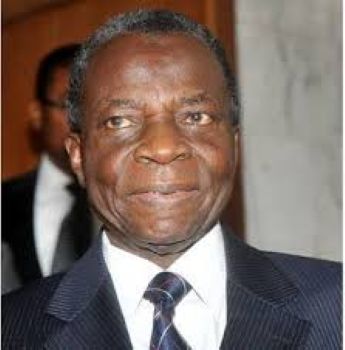
Former President of the Court of Appeal, Ayo Salami, has questioned the legal basis for the participation of Peter Obi in the 2023 presidential election, arguing that his candidacy under the Labour Party (LP) was inconsistent with constitutional and electoral provisions.
Speaking with journalists in Ilorin on Tuesday, Salami anchored his position on party membership requirements and the constitutional prohibition of independent candidacy.
Under Nigeria’s legal framework, particularly provisions of the 1999 Constitution (as amended) and the Electoral Act, a candidate must be duly sponsored by a political party and be a recognised member of that party. Salami argued that by the time Obi defected from the Peoples Democratic Party (PDP) after its presidential primary, the Labour Party had already submitted its membership register to the Independent National Electoral Commission (INEC).
“Once a political party submits its register, that document becomes the authoritative record of its membership for electoral purposes,” he said.
He contended that Obi’s absence from that register at the material time raises a fundamental question of qualification, stressing that Nigeria’s constitution does not recognise independent candidates.
“How did he become a candidate if he was not on the party’s register at the relevant time?” Salami queried, framing the issue as one of legal competence rather than political controversy.
The retired jurist drew a parallel with developments in Kano State, where he said questions had also arisen over party membership documentation involving a governor elected on the New Nigeria Peoples Party (NNPP) platform, who later defected to the All Progressives Congress (APC).
According to him, the issuance of a membership card without corresponding inclusion in a party’s official register undermines the legal integrity of party sponsorship.
“The register is the primary evidence of membership. The card derives its validity from it,” he said, noting that both the tribunal and the appellate court had expressed reservations in similar disputes.
Beyond the electoral issue, Salami raised broader concerns about the quality of judicial decision-making in Nigeria, attributing some controversial rulings to gaps in legal training and analytical rigour among members of the bench.
He maintained that not all flawed judgments are products of corruption or inducement, but may instead reflect deficiencies in legal reasoning and judicial preparedness.
“At times, when you read certain judgments—even at the highest level—you are left questioning the depth of legal analysis applied,” he said.
Salami’s remarks add to ongoing debates within Nigeria’s legal and political circles over party discipline, candidate eligibility, and the need for stricter adherence to constitutional standards in the electoral process.
