


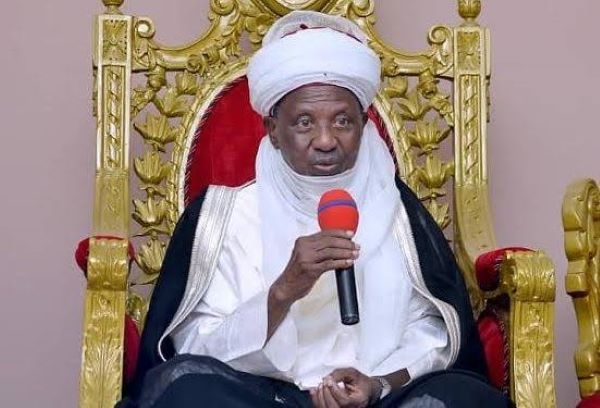
The Supreme Court of Nigeria has ended the long-running legal battle over the Gwandu Emirate by setting aside the judgments that reinstated Al-Mustapha Jokolo as the 19th Emir of Gwandu. In its ruling delivered on Wednesday, June 4, 2025, the apex court declared that Jokolo failed to exhaust necessary administrative procedures before heading to court, thereby rendering his suit incompetent from the outset.
In a split decision of three to two, the Supreme Court held that Jokolo violated Section 5(4) of the Kebbi State Chiefs (Appointment and Deposition) Law, which mandates that any aggrieved party must first submit a formal complaint to the Governor of the state before seeking judicial redress in chieftaincy matters.
Delivering the lead judgment, Justice Emmanuel Agim ruled that the trial court lacked jurisdiction to entertain Jokolo’s suit, as the statutory requirement of notifying the governor was not met. “This suit was filed prematurely without first presenting a complaint to the governor as stipulated by law,” Agim stated. “The High Court judge deprived the court of jurisdiction by proceeding without adherence to this requirement.”
The background: A prolonged royal dispute
Al-Mustapha Jokolo was appointed the 19th Emir of Gwandu in 1995. However, in June 2005, his reign was cut short when he was abruptly deposed by the then-Governor of Kebbi State, Adamu Aliero, under controversial circumstances that sparked widespread debate over the legality and political undertones of the action.
Jokolo, refusing to accept the decision, approached the Kebbi State High Court seeking his reinstatement. In 2014, the court ruled in his favour and declared his deposition unlawful. The judgment was subsequently upheld by the Court of Appeal in Sokoto in 2016, which also ordered his reinstatement.
During the legal battle, Muhammadu Ilyasu-Bashar, a retired Army officer and former military administrator, was appointed as the new Emir of Gwandu in 2005. He has remained in office despite the rulings in favour of Jokolo, owing to the state’s appeal.
The Kebbi State Government, along with Emir Ilyasu-Bashar, escalated the matter to the Supreme Court, arguing that the lower courts erred in law and that Jokolo’s suit lacked procedural merit.
Supreme Court’s verdict: Procedure over substance
The apex court’s majority ruling focused strictly on procedural compliance, not the merit of the deposition. The judges emphasized that failure to serve a pre-action notice on the Governor—a mandatory administrative step—meant that the entire case was initiated in breach of the law.
As a result, the Supreme Court nullified the decisions of the trial court and the Court of Appeal, effectively ratifying the continued reign of Ilyasu-Bashar as the legitimate Emir of Gwandu. No order was made regarding costs.
The judgment consolidated four appeals and two cross-appeals, with all parties agreeing that the verdict on the principal appeal would apply to the rest.
Dissenting view: Minority judgment raises questions
In a dissenting minority judgment, Justice Ibrahim Salami held a contrary view, arguing that the decisions of the lower courts should be upheld. He contended that while procedures are important, the rule of law must guide the governor’s powers, and Jokolo was denied justice through procedural technicality.
His dissent added a layer of complexity to the matter, reflecting how chieftaincy disputes in Nigeria often straddle legal, political, and cultural lines.
Implications and legacy
The Supreme Court’s ruling has brought finality to a 20-year-old royal tussle that has seen the throne of Gwandu become a flashpoint of legal and political contention in Kebbi State.
Observers say the decision underscores the importance of administrative procedures in chieftaincy matters and reflects the judiciary’s growing emphasis on strict adherence to due process—even in sensitive traditional leadership cases.
For Emir Muhammadu Ilyasu-Bashar, the ruling is a strong reaffirmation of his legitimacy. For Jokolo, it is a legal defeat rooted not in the question of rightful leadership but in procedural oversight—a detail that will likely be debated by legal scholars and traditional institutions for years to come.
