


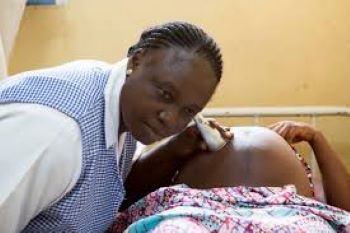
The World Health Organization (WHO) on Wednesday released new guidance to support countries in adopting and expanding midwifery-led models of care.
These models position midwives as the primary care providers for women and newborns throughout pregnancy, childbirth, and the postnatal period.
According to WHO, the guidance promotes strong communication and partnership between women and midwives, offering proven health benefits.
“Women who receive care from trusted midwives are statistically more likely to experience healthy vaginal births and report higher satisfaction with services,” the organization stated.
WHO’s Director for Maternal, Newborn, Child and Adolescent Health and Ageing, Dr. Anshu Banerjee described investing in midwifery models as one of the most effective global strategies for improving maternal and newborn outcomes.
“These approaches improve outcomes, maximize resources, and can be adapted to all countries,” he said.
“Crucially, they also enhance women’s and families’ experiences of care.”
Despite global progress, Banerjee noted that maternal and newborn deaths remain unacceptably high, especially in low-income and fragile settings.
WHO estimates that universal access to skilled midwives could prevent over 60% of maternal and newborn deaths—potentially saving 4.3 million lives annually by 2035.
“Midwifery models focus on informed choice, respectful communication, and non-invasive techniques—such as mobility during labour, breathing guidance, varied birthing positions, and emotional support,” he explained.
While life-saving when medically required, procedures like caesarean sections are often overused.
“In some countries, caesarean rates now exceed 50%, suggesting high rates of medically unnecessary procedures,” Banerjee said.
WHO Midwifery Expert and lead author of the new guidance, Ms. Ulrika Loi emphasized that skilled midwives help women trust their bodies and actively participate in their care.
“Investing in midwifery not only improves outcomes but ensures personalised, respectful, and empowering care,” she said.
The guidance provides practical tools and global case studies to help countries transition to midwifery-led models of care. It calls for strong political will, strategic planning, and sustained funding.
It also highlights the need for high-quality education and regulation aligned with global standards—enabling midwives to practice autonomously and deliver evidence-based care.
Effective implementation requires collaboration among midwives, doctors, and nurses.
“In the event of complications, midwives must be empowered to work in integrated teams to ensure quality, multidisciplinary care,” WHO stated.
Despite progress, WHO highlighted persistent gaps: millions of women still give birth without skilled assistance, and one-third do not receive even half of the organization’s recommended eight antenatal check-ups.
“Progress in reducing maternal and newborn deaths has stagnated since 2016,” Loi noted.
The Chief Executive of the International Confederation of Midwives, Anna Ugglas underscored the necessity of midwifery-led care in today’s healthcare landscape.
“In an increasingly medicalised world, midwifery offers a person-centred, evidence-based approach that respects the physiological process of birth, restores dignity to maternity care, and ensures safety for mothers and newborns,” she said.
The guidance outlines adaptable models, including:
- Continuity of Care: A known midwife or team supports a woman through pregnancy, birth, and postpartum.
- Midwife-led Birth Centres: Facilities for low-risk births that may also offer antenatal, postnatal, and family planning services.
- Community-based Care: Mobile or local services delivering care in communities.
- Private Practice: Independent midwifery services integrated into national health systems through proper regulation.
