


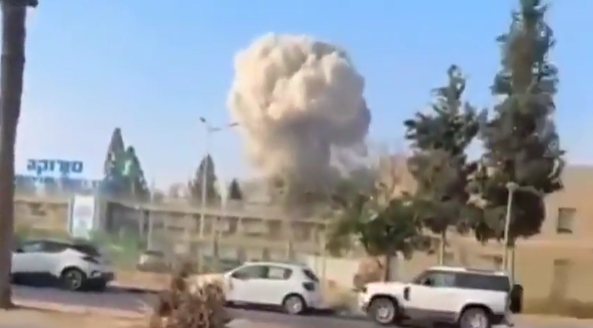
The World Health Organization (WHO) has strongly condemned Thursday’s missile strike by Iran on Soroka Medical Center in Beersheba, southern Israel — the only major hospital in the region — which left the 1,200-bed facility severely damaged and partially inoperable.
WHO Director-General Dr. Tedros Adhanom Ghebreyesus expressed deep concern in a post on X, revealing that the attack injured dozens of patients, forced the evacuation of 250 others, and caused major structural and operational disruptions.
“This morning’s attack on Soroka Medical Center resulted in dozens of patients being injured, some severely… and damage to the facility, leaving it only partially functional,” Tedros said.
The missile, reportedly carrying 400 kilograms of explosives, struck a surgical wing of the hospital, sending a large plume of smoke into the sky and causing widespread destruction, including collapsed walls, shattered windows, and hundreds of damaged computers and medical devices.
Thanks to preemptive precautions, patients had been moved to underground shelters, including those in the targeted wing, just a day earlier — a decision credited with limiting casualties. Around 40 people were treated for mostly minor injuries.
Soroka Medical Center serves over one million residents in southern Israel, including 250,000 Bedouin citizens of the Negev.
Israel protests delayed WHO response
Earlier Thursday, Israel’s Ambassador to Geneva, Daniel Meron, criticized the WHO’s delayed response, posting a video in front of the agency’s headquarters asking, “Where is the condemnation of WHO?”
“This is not a military site. It is a civilian hospital… the Iranians are targeting civilian sites repeatedly,” Meron said, accusing WHO of selective silence and contrasting its delayed reaction to Iran’s attack with its past statements condemning Israeli strikes in Gaza.
In a carefully worded response posted nearly 12 hours later, Tedros acknowledged Iranian losses as well. He cited the deaths of three Iranian Red Crescent Society health workers, reportedly killed in an Israeli airstrike on Tehran, and noted damage to a hospital in Kermanshah, which injured 15 people, including patients and staff.
“We call on all parties to protect health facilities, health personnel, and patients at all times,” Tedros said, concluding with his oft-repeated phrase: “The best medicine is peace.”
Civilians trapped between bombardments
The Soroka hospital strike was part of one of the largest missile volleys to breach Israel’s air defense system since hostilities erupted. Multiple other strikes in the Tel Aviv-area towns of Holon and Ramat Gan damaged residential buildings and left dozens injured, six critically.
According to the New York-based Center for Human Rights in Iran, some 639 Iranians have died since the war began on June 13, following Israel’s surprise attack on Iran’s nuclear facilities. Iran has since launched daily missile barrages at Israeli cities. At least 24 Israelis have been killed in the attacks, many by missiles that evaded the Iron Dome defense system.
More than 35,000 Israeli homes have been damaged so far, with 1,000 families displaced on Thursday alone due to high-rise damage from the latest half-ton missile strikes. In Iran, widespread displacement has also been reported, as hundreds of thousands flee Tehran and other key locations targeted by Israeli strikes.
Human rights organizations have called for an immediate ceasefire, warning of the mounting humanitarian toll on civilians in both countries.
