


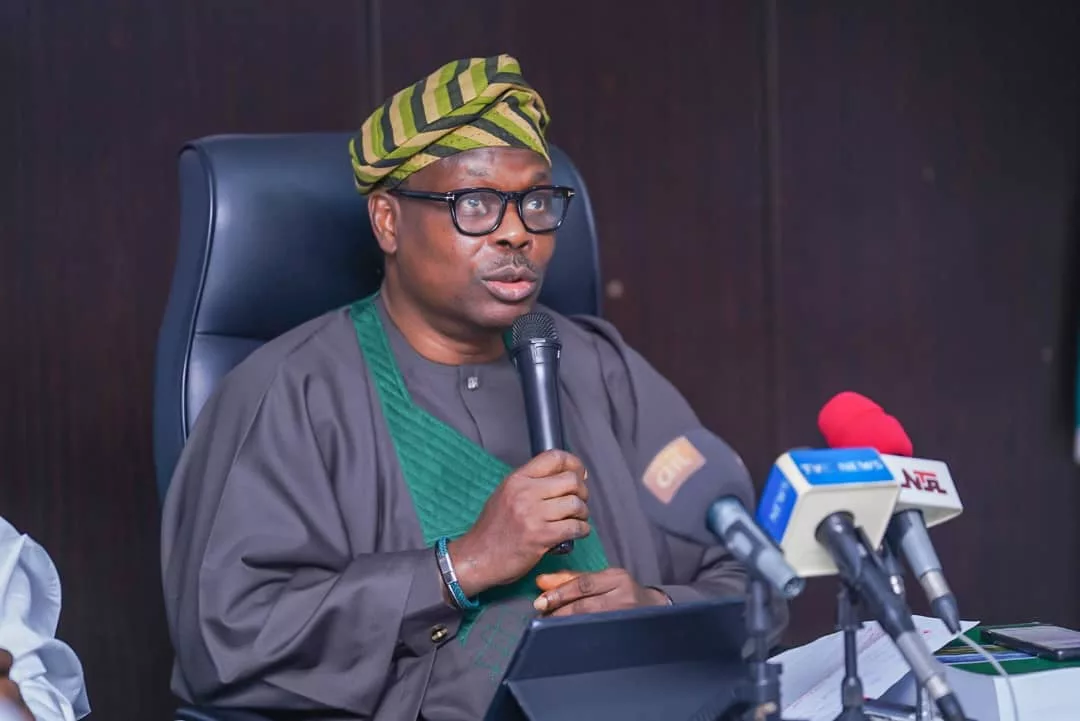
The Minister of State for Health and Social Welfare, Dr Iziaq Salako, has stated that weak partnerships and the absence of structured training programmes are undermining hospital equipment maintenance, resulting in rapid deterioration.
Represented by his Special Assistant, Dr Babatunde Akinyemi, Salako made the remark on Tuesday at the opening of a five-day capacity-building workshop for biomedical engineers in Abuja.
The programme was organized by the Federal Ministry of Health and Social Welfare in collaboration with Healthy Living Communications Ltd and the College of Biomedical Engineering and Technology.
It underscores the government’s commitment to building strong partnerships and strengthening technical capacity for healthcare equipment maintenance.
Salako emphasized that biomedical engineers play a vital role in ensuring medical devices used for diagnosis, treatment, and patient monitoring remain functional.
Their importance, he noted, became even more evident during and after the COVID-19 pandemic, as even the most advanced equipment becomes underutilized or completely dysfunctional without skilled maintenance.
The workshop aims to refresh engineers’ skills and equip them to protect the country’s growing inventory of health assets.
Among ongoing interventions, Salako listed upgrades to biomedical engineering schools, continuous staff retraining, development of a national maintenance framework, and a nationwide audit of high-end equipment.
“These efforts are part of the Health Sector Renewal Investment Initiative to strengthen infrastructure, advance digitization, and build workforce capacity,” he said.
He expressed hope that participants would acquire the competencies needed to maintain critical devices and return to their institutions as change agents capable of significantly reducing equipment downtime.
Salako urged Chief Medical Directors and heads of biomedical units to ensure that the knowledge gained is disseminated to other technical staff.
He assured that the ministry would continue creating an enabling environment to bring biomedical engineering practices in Nigeria up to global standards.
The Director of Hospital Services, Dr Abisola Adegoke (represented by Mrs Francisca Okafor, Director of Regulatory School Division), stated that equipment can only fulfill its purpose when properly installed, maintained, and protected.
“This training serves as a reminder to biomedical engineers of their critical responsibilities. Equipment is only as effective as the professionals who maintain and operate it,” she said.
Adegoke stressed that government investments in modern medical equipment must be matched with robust technical capacity and sustainable maintenance systems.
The chief trainer, Dr Awafung Adie, said the future of Nigeria’s healthcare system depends in part on the quality of biomedical engineers being developed today.
He urged biomedical personnel to evolve “from mere equipment repairers to healthcare technology managers, innovators, and leaders.”
Adie noted that the programme directly tackles challenges such as prolonged equipment downtime, poor maintenance culture, inadequate manpower, and heavy reliance on foreign technical support.
Chief Emmanuel Oriakhi, CEO of Healthy Living Communications Ltd, revealed that the idea for the programme had been nurtured for over ten years.
He said hospital visits had shown numerous pieces of equipment that could have remained functional but were abandoned due to lack of routine maintenance and insufficient knowledge updates.
He emphasised that biomedical practitioners must continually upgrade their skills to keep pace with rapidly evolving medical devices.
Mr Dominiek Viaene, CEO of PROTEX Healthcare, said his company had invested heavily in Nigeria to improve maintenance culture and treatment outcomes.
He highlighted the stark difference in dialysis survival rates between Nigeria and Europe, despite the use of similar machines and consumables.
“There must be something wrong—it could be in maintenance practices or in the way procedures are carried out,” he said.
Viaene warned that unsafe practices, such as disabling safety detectors, put patients’ lives at risk.
He reaffirmed the company’s commitment to supporting regular training and stressed that “together, we are much stronger than individual initiatives.”
He called for sustained collaboration among government, hospitals, and biomedical engineers to achieve lasting improvements in the health sector.
