


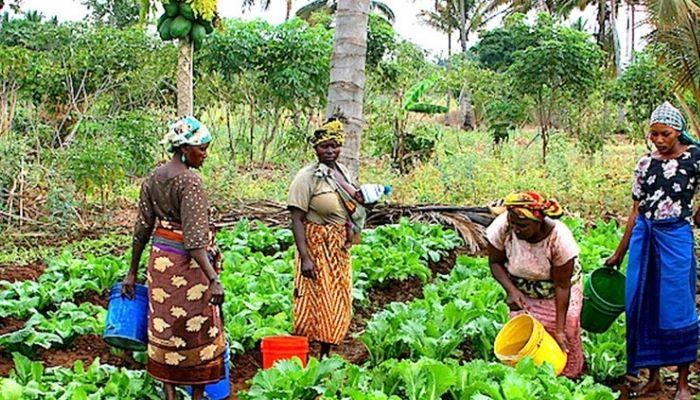
The Small-Scale Women Farmers Organization in Nigeria (SWOFON) has reaffirmed its commitment to strengthening community support systems against gender-based violence (GBV) and promoting gender-inclusive agricultural policies to protect and empower women farmers.
The organization made the pledge on Monday in Abuja at a Stakeholders’ Engagement and Community Dialogue on “Orange the Farms,” held to mark the 2025 16 Days of Activism Against Gender-Based Violence.
The dialogue was organized by SWOFON FCT in collaboration with ActionAid.
Mrs. Hajara Ramson, Programme Officer at SWOFON, said the engagement aimed to raise awareness on GBV within agricultural spaces, promote gender equity in access to resources, and mobilize collective action towards safer and more inclusive farming environments.
Ramson described women farmers as the backbone of food production, noting that many still face discrimination, unequal access to resources, harassment, and unsafe working conditions.
“Violence against them is not only a violation of their rights; it is a direct threat to food security, family well-being, and national development,” she said.
She stressed that protecting smallholder women farmers from GBV was essential to achieving gender equality, economic inclusion, and sustainable agricultural development.
“When women farmers are safe, our farms grow. When they thrive, our communities flourish. Let us use these 16 days and beyond to speak up, support survivors, challenge harmful norms, and build a future where every woman farmer can work free from violence,” she added.
Ramson said the 2025 campaign provided an opportunity to stand with smallholder women farmers whose voices, dignity, and potential had been undermined by various forms of violence—physical, economic, emotional, and even digital.
She noted that GBV remained one of the most pervasive human rights violations globally, with severe impacts on women’s dignity, productivity, and economic stability.
According to her, smallholder women farmers in rural and semi-urban communities in the FCT face multiple forms of discrimination, including limited access to land and productive resources, domestic and workplace abuse, economic exploitation, and social exclusion that deepens poverty.
Mrs. Comfort Sunday, Chairperson of SWOFON FCT, decried the increasing cases of GBV affecting women, especially unequal access to farmland and lack of control over farm proceeds.
“Some husbands deny their wives access to farmland while giving the same land to other women outside their households. Even when a husband gives a woman land, once he notices she is recording good harvests, he may chase her away. Some men even seize farm proceeds or monitor how the earnings are spent,” she said.
Mr. Ibrahim Shafa, Secretary of the All Farmers Association of Nigeria (AFAN), FCT Chapter, said many women suffer GBV but remain silent due to fear or lack of support.
“A woman works tirelessly on the farm, returns home exhausted, and the husband begins to bully her. Men need to be sensitize on the ills of GBV and how to prevent it,” he said.
SWOFON Programme Coordinator, Ms. Ogechi Okebugwu, said the organization had created five-member groups across all Area Councils in the FCT to ensure effective reporting of GBV cases.
“This initiative targets smallholder women farmers and children, while also engaging men and community leaders to address harmful practices. Men also need awareness—they have daughters too. Nobody wants their child to suffer abuse in marriage,” she said.
