


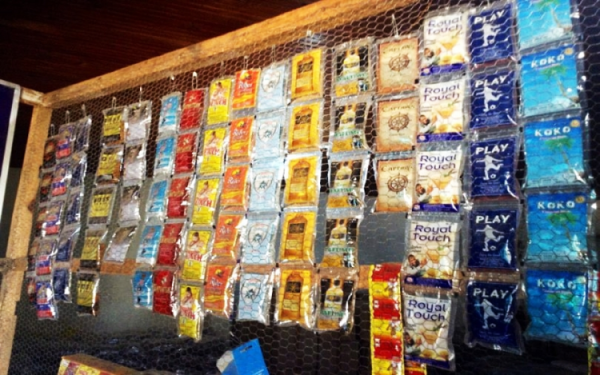
A Professor of Sociology, Samuel Oluranti, has decried the growing impact of alcohol misuse on children and youths in Nigeria, calling for urgent action to reverse the trend.
Oluranti, a professor in the Faculty of Social Sciences at Lagos State University (LASU), made the call in an interview with reporters on Tuesday in Lagos.
He lamented that the proliferation of high-alcohol-content beverages packaged in sachets and small PET bottles had made such products easily accessible, affordable and easy to conceal, thereby encouraging widespread misuse and addiction among minors.
According to him, the products also promote drug abuse due to their ease of use and availability.
Oluranti, who is also a consultant and researcher, described the indiscriminate consumption of alcohol across society, regardless of age, as a serious public health menace requiring urgent attention.
He blamed rising insecurity, kidnapping, rape, violence and other social vices in the country partly on alcohol misuse and drug abuse, noting that more than 80 per cent of mental health cases were linked to substance abuse.
“The adverse effects of alcohol and drug abuse on the Nigerian economy are enormous, and more stringent measures are required to curb the menace.
“This public health challenge has been linked to increased cases of domestic violence, road accidents, school dropouts and other social vices across communities.
“It gradually destroys one’s future. An addict may be dying in instalments, as the effects are often not immediately visible,” he said.
Emphasising the need for stronger regulation, Oluranti urged the National Agency for Food and Drug Administration and Control (NAFDAC) to ensure strict enforcement of its ban on the sale of alcoholic beverages in sachets.
He recalled that NAFDAC recently announced plans to enforce a total ban on the production and sale of alcoholic drinks in sachets and small-volume PET or glass bottles below 200 milliliters by December 2025.
While acknowledging that full implementation might take time, Oluranti advised the agency to deploy its personnel to communities and remote areas where the sale and consumption of alcohol were widespread.
“If enforcement officers do not compromise, and offenders are arrested in line with the law and guidelines, alcohol consumption and abuse will gradually reduce,” he said.
The professor also blamed parents and relatives for children’s and teenagers’ exposure to alcohol, noting that some parents sent minors to purchase alcohol or left such drinks within their reach.
He urged parents to desist from such practices and take responsibility for instilling good morals and values in their children.
