


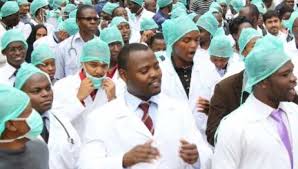
Patients seeking care at public health facilities in Lagos have expressed frustration as the strike by the Joint Health Sector Unions (JOHESU) entered its third week in the state.
The patients, who spoke in separate interviews with reporters on Wednesday, urged the Lagos State Government to meet the union’s demands to enable the resumption of full services at public hospitals.
Reporters checked General Hospital, Gbagada; Ikorodu General Hospital; General Hospital, Odan, Lagos; and Randle General Hospital revealed that the strike had severely disrupted clinical services.
Only doctors and nurses were seen attending to patients, mainly in emergency units, while most other services were suspended.
Mr Daniel Okoh, a relative of a patient at General Hospital, Gbagada, said patients’ files were not retrieved, as many were turned away and asked to return when the strike ends.
Okoh expressed concern that recurring industrial actions in the health sector could worsen morbidity and mortality among patients.
Similarly, Mrs Christina Essiet lamented that her daughter’s scheduled appointment at Ikorodu General Hospital was affected by the strike, adding that she might resort to herbal remedies.
“We waited for a long time to see a doctor, but they are overwhelmed attending to emergency cases, and I cannot afford treatment at a private hospital.
“A good Samaritan gave me money for transport, and I will use the remaining change to buy herbs. I appeal to the government to dialogue with the union for a quick resolution,” she said.
A health worker, who pleaded anonymity, told reporters that the strike had resulted in a shortage of blood in laboratories across the state.
“The medical laboratory scientists responsible for screening donated blood are on strike, and this shortage exposes patients who need blood transfusions to serious danger,” the source said.
The worker added that following several road accidents recorded in the state last week, hospitals had to appeal to the public for blood donations, only to face challenges in screening the blood due to the absence of professionals.
“One of the accident victims was a JOHESU member who cried for help, forcing some members to intervene.
“Things should not get to this stage in the health sector. The government must rise to its responsibility by doing the right thing for all professionals,” the source added.
Mr Toba Odumosu, Secretary of the National Association of Nigerian Nurses and Midwives (NANNM), Lagos State Branch, said the JOHESU strike had placed immense pressure on nurses who were struggling to fill the gaps created by the industrial action.
“The services of all health workers are required for the effective functioning of hospitals. We appeal to the government to engage the union in dialogue,” Odumosu said.
Reacting, the Secretary of the JOHESU Lagos State Council, Mr Adegboyega Kabiawu, said the strike was not merely in solidarity with the union’s national body, stressing that there were unresolved local issues with the Lagos State Government.
“We communicated these local issues to the relevant government agencies and made it clear that if our demands were met, we would not embark on a strike in Lagos.
“However, the government ignored us, and our position is that the strike will continue until our demands are addressed,” Kabiawu said.
He listed the demands to include the domestication of consultancy pharmacy, which he described as a Federal Government directive already adopted by some states.
According to him, the Lagos State Government acceded to the request in 2018 but later withdrew the circular following opposition from some medical practitioners.
“Lagos should not be different from other states. Consultancy pharmacy is being practiced in other states and in federal institutions such as Lagos University Teaching Hospital (LUTH), Federal Medical Centre, Ebute Metta, and the National Orthopaedic Hospital, Igbobi, without disrupting healthcare delivery,” he said.
Kabiawu also cited the creation of directories of medical laboratory services, pending since 2014, improved staff welfare, provision of staff buses, and payment of retention allowances as part of the union’s demands.
“There is inequity in the payment of retention allowances. Doctors and nurses are paid, while other health professionals in the same system are excluded.
“There are also calculation errors in the allowances paid to our members. All these issues were presented to the government, but none has been addressed,” he said.
He disclosed that JOHESU members constitute about 85 per cent of health workers at state and federal levels, urging the government to meet the demands to ensure smooth healthcare delivery.
NAN reports that JOHESU began its strike in Lagos on Dec. 2, following a nationwide strike by its national body that commenced on Nov. 15 over unresolved disputes with the Federal Government.
JOHESU is an umbrella union for health professionals, including pharmacists, physiotherapists, dieticians, medical laboratory scientists, optometrists and radiographers.
Other members include dental therapists, medical physicists, health information managers, clinical psychologists and medical social workers, cutting across tertiary, secondary and primary healthcare facilities.
