


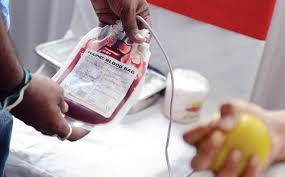
Stakeholders have called on the media to intensify advocacy for regular voluntary blood donation to address Nigeria’s critical blood supply shortage and save the lives of mothers, children, and emergency patients.
The appeal was made during the National Media Stakeholders meeting held on Monday in Abuja, as part of the 2025 National Blood Donor Day celebrations organized by the National Blood Service Agency (NBSA).
Themed “From Headlines to Lifelines: Media Advocacy for Voluntary Blood Donation,” the event highlighted the importance of human-centred reporting to inspire citizens to donate blood voluntarily, consistently, and safely across the country.
Prof. Muhammad Pate, Minister of Health and Social Welfare, urged media organizations to integrate voluntary blood donation campaigns into editorial calendars, humanitarian reporting, human-interest features, and ongoing programming to strengthen Nigeria’s blood donation ecosystem.
Represented by Salaudeen Jimoh, Director of Hospital Services, the minister noted that the country’s severe shortage of voluntary blood donations places mothers, children, accident victims, and chronic patients at life-threatening risk. He stressed that solutions depend on citizens stepping forward to donate safely and consistently while emphasizing the media’s vital role in informing, educating, and building trust in communities.
“Let this advocacy go beyond routine messaging, becoming a sustained national movement that embeds blood donation stories across radio, TV, online platforms, and community-level networks,” Pate said. He also called for engagement with youth groups, faith-based organizations, market associations, gender advocates, and grassroots networks to make voluntary blood donation part of Nigeria’s cultural practice.
Prof. Saleh Yuguda, Director General of NBSA, said Nigeria requires 1.8 to 2.0 million blood units annually but currently collects only 500,000 units, meeting just 25–30 per cent of national medical and emergency needs. The shortfall forces hospitals to rely on emergency replacement or paid donors, often compromising blood safety and reliability.
Yuguda noted that shortages affect trauma care, maternal and child health, surgeries, cancer treatments, and chronic conditions like anemia. He urged journalists to focus on solution-driven reporting and feature donor stories to inspire action.
Other speakers, including Jibril Ndace, Director General of Voice of Nigeria, and Grace Ike, Chairman of the Nigerian Union of Journalists (NUJ), FCT Council, emphasized the media’s role in saving lives, correcting misconceptions, and promoting voluntary donation as a national priority.
Activities during the celebration included the launch of the Media Blood Donation Challenge 2025, unveiling of the NBSA Digital Media Toolkit for Journalists, donor storytelling sessions, and panel discussions to enhance awareness and engagement.
