


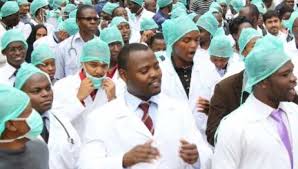
The Nigerian Medical Association (NMA) has condemned the joint ultimatum issued by the Nigerian Labour Congress (NLC) and the Trade Union Congress (TUC) over the ongoing strike by the Joint Health Sector Unions (JOHESU).
The NLC and TUC had given the Federal Government a 14-day ultimatum, starting from January 23, to implement the 2021 report of a Technical Committee on adjustments to the Consolidated Health Salary Structure (CONHESS). The unions also threatened to mobilize a nationwide strike across both public and private health sectors if the government failed to act.
Speaking at a news briefing in Gusau on Monday, NMA National Publicity Secretary, Dr. Mannir Bature, described the ultimatum as unnecessary.
Bature said the NMA was particularly concerned about issuing public ultimatums on matters that require careful verification, technical understanding, and institutional engagement.
“We urge the TUC and NLC to exercise caution, restraint, and responsibility in their public communications, especially on sensitive salary structure issues, so as not to misinform workers or the general public,” he said.
The NMA also rejected claims by the unions that the Federal Government “upgraded” the Consolidated Medical Salary Structure (CONMESS) in 2014.
“The statements and insinuations credited to the TUC and NLC alleging an ‘upgrade’ of CONMESS in 2014 are misleading and capable of fueling industrial tension in the health sector,” Bature said.
He clarified that there was no upgrade of CONMESS. “What occurred was a correction of long-standing errors and distortions in the application of the CONMESS framework, which had persisted despite clear approvals and established public service guidelines. Portraying this correction as preferential treatment is therefore misleading, inaccurate, and risks creating unnecessary tension within the health sector,” he added.
Bature warned that such narratives could provoke avoidable inter-professional discord at a time when unity and collaboration are critically needed to address systemic challenges in Nigeria’s health system.
He urged the Federal Government to remain focused on the ongoing Collective Bargaining Agreement (CBA) process, describing it as the appropriate, lawful, and structured platform for addressing remuneration, welfare, and industrial concerns in the health sector.
“The health sector requires comprehensive engagement, good-faith negotiations, respect for existing agreements, and adherence to clearly defined professional roles and responsibilities,” Bature said.
He reaffirmed the NMA’s commitment to constructive dialogue, transparency, and inter-professional harmony, promising that the association will continue to engage responsibly with government and labor institutions in the overall interest of healthcare workers and Nigerians.
