


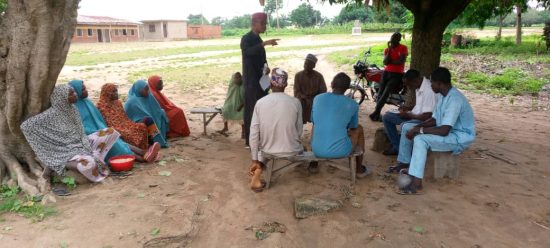
Improved community participation and stronger accountability mechanisms are transforming healthcare delivery at the Primary Health Care Centre (PHC), Nikuchi, under the Community-Led Monitoring (CLM) Project of the Association of Civil Society for Malaria, Immunisation and Nutrition (ACOMIN).
By Anna Moses
The initiative, implemented across 13 states, including Niger State, focuses on malaria prevention, immunisation, and nutrition through community-driven strategies such as advocacy visits, focus group discussions, client exit interviews, and follow-ups.
In Niger State, the project is being executed in ten Local Government Areas (LGAs) through twenty Community-Based Organizations (CBOs). The Hurting Hearts Foundation (HHF) oversees implementation in the Nikuchi axis, where the Community Accountability Team (CAT) has become instrumental in driving change.
During a recent monitoring visit, ACOMIN National Officer, Ojo Isaac Opinmoye, met with Aminu Lawal, the second-in-charge of the Nikuchi PHC, to evaluate collaboration between health workers and the CAT. Lawal explained that the team routinely engages clients to assess the availability of free malaria commodities and monitor service quality.

He noted that CAT’s advocacy had resolved several issues at the facility, including the repair of a leaking roof after engagement with the Dagachi Yamma of Nikuchi, and the improvement of security through the intervention of the Hakimi, which led to the deployment of two vigilante personnel to safeguard the centre.
Lawal further mentioned that CAT’s advocacy prompted renewed attention to an abandoned borehole project initiated by the Sustainable Development Goals (SDGs) office in 2022. Following their intervention, the SDGs office contacted the Hakimi and assured the community that the project would resume once funding was available.
Speaking after the assessment, Opinmoye described Nikuchi’s model as proof that citizen participation strengthens healthcare systems.
He emphasised ACOMIN’s commitment to ensuring that communities continue to take ownership of their health facilities, adding that the collaboration between the PHC, CAT, and local leaders demonstrates how grassroots involvement can improve access to quality healthcare.
