


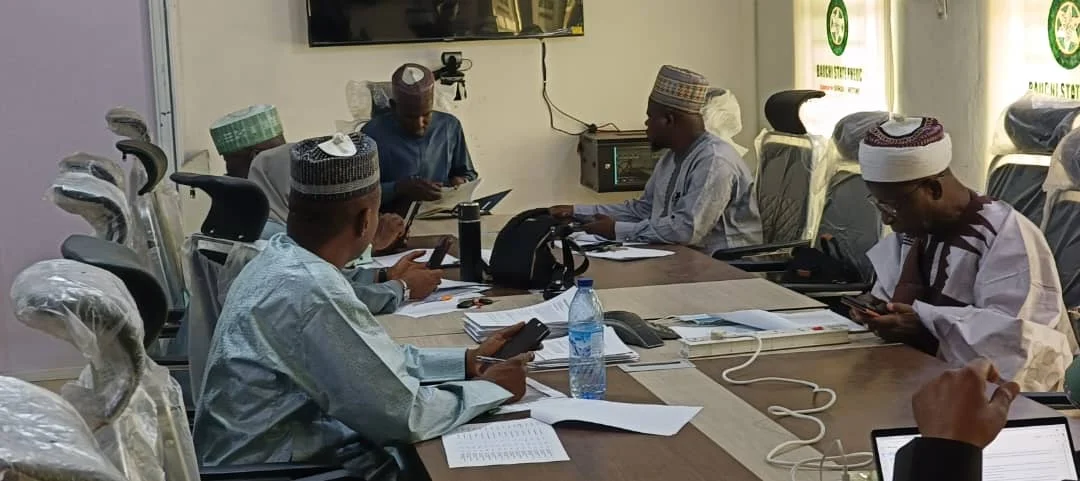
The Bauchi State Government on Tuesday screened 60 candidates for the implementation of Cohort 2.0 of the National Health Fellowship Programme in the state.
The exercise, conducted by the Ministry of Health and Social Welfare, marked the final phase of the recruitment process.
Mr Ibrahim Mohammed, Sector-Wide Approach (SWAp) Consultant, said the screening aimed to assess the competence of shortlisted candidates and validate their credentials.
He explained that the application portal had been opened several months ago by the Federal Ministry of Health and Social Welfare, in collaboration with the National SWAp Coordination Office. Applicants were initially screened online before being invited for the physical interview.
“This is the last phase of the recruitment process. The physical interview allows us to assess candidates’ competencies and confirm their documents before final selection, after which successful candidates will be deployed to their respective local government areas,” Mohammed said.
He noted that three candidates had been shortlisted from each of the state’s 20 local government areas (LGAs), with one fellow to be selected from each LGA, following the arrangement adopted during the previous cohort.
On the role of the health fellows, Mohammed explained that the programme was designed to groom young health leaders to serve as a link between communities and health facilities, improving health outcomes at the grassroots level.
He described the National Health Fellowship Programme as an innovation of the Coordinating Minister of Health and Social Welfare, Prof. Ali Pate, highlighting its impact in Bauchi State.
“We have examples from past fellows, including one who developed a digital accountability application now being considered for statewide adoption, and another in Borno State who introduced a community-based health insurance model using farm produce to reduce out-of-pocket healthcare expenses,” he said.
Mohammed added that the interviews were conducted independently by different panels and uploaded in real time to a national dashboard, where successful candidates were automatically selected based on average assessment scores.
Candidates were assessed across four key thematic areas: motivation, leadership and initiative, collaboration and teamwork, and ethics, with ethics emphasized as critical in the health sector.
Abdullahi Marafa, a member of the interview panel representing the traditional institution, described the exercise as successful and capable of positively impacting communities and the health system.
“When the successful candidates are deployed, every local government will benefit directly. This will help ensure that health policies, including those aligned with World Health Organization (WHO) standards, reach every part of the state,” Marafa said.
He advised the fellows to be diligent, committed, and community-oriented in carrying out their duties.
“You should not limit yourselves to office work alone. You must go into the field, visit communities, and supervise health activities directly, especially in rural areas where misconceptions about health policies still exist,” he said.
Marafa added that close engagement with communities would build trust, improve understanding, and enhance the acceptance of health policies across Bauchi State.
