


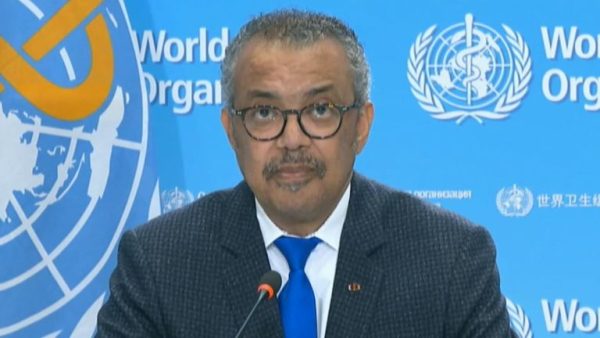
The World Health Organization (WHO) has expressed regret over the United States’ formal withdrawal from the global health body, warning that the decision makes “both the United States and the world less safe.”
In a statement, WHO acknowledged the longstanding contributions of the U.S. as a founding member, citing its role in major public health achievements, including the eradication of smallpox and progress against polio, HIV, Ebola, malaria, tuberculosis and other infectious diseases.
The U.S. completed its withdrawal on Thursday, following an executive order issued by President Donald Trump on January 20, 2025, his first day in office.
“WHO therefore regrets the United States’ notification of withdrawal from WHO – a decision that makes both the United States and the world less safe,” the agency said.
WHO noted that the notification would be рассмотрed by its Executive Board at a meeting beginning February 2, and later by the World Health Assembly in May 2026.
Responding to U.S. claims that the organization had “trashed and tarnished” its reputation and compromised its independence, WHO rejected the, insisting it had always engaged the United States in good faith and with full respect for its sovereignty.
One of the main reasons cited by Washington for the withdrawal was what it described as WHO’s failures during the COVID-19 pandemic, including alleged obstruction of timely information sharing and concealment of mistakes.
WHO defended its record, saying it acted quickly and transparently throughout the crisis.
“While no organization or government got everything right, WHO stands by its response to this unprecedented global health crisis,” the statement said.
The agency stressed that it recommended masks, vaccines and physical distancing, but never mandated lockdowns, mask use or vaccination, noting that such decisions were made by sovereign governments.
WHO said it first sought information from China on December 31, 2019, after reports of pneumonia of unknown cause in Wuhan, and activated its emergency incident management system the same day. By January 11, 2020, when China reported its first death, WHO had already alerted the world and issued guidance.
When COVID-19 was declared a Public Health Emergency of International Concern on January 30, 2020, fewer than 100 cases had been reported outside China and no deaths recorded.
The organization said subsequent reviews of its performance had led to reforms aimed at strengthening pandemic preparedness and response worldwide.
Rejecting U.S. claims that it had pursued a politicized agenda hostile to American interests, WHO said it remains impartial and governed by its 194 Member States.
The agency highlighted the adoption in 2025 of the WHO Pandemic Agreement and ongoing negotiations on a Pathogen Access and Benefit Sharing system to improve early detection and equitable access to vaccines and treatments.
WHO said it hoped the United States would eventually return to active participation.
“WHO remains steadfastly committed to working with all countries in pursuit of its core mission: the highest attainable standard of health as a fundamental right for all people,” the statement added.
