


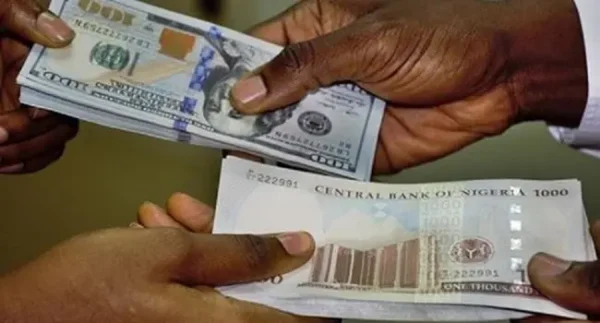
The naira extended its gains against the United States dollar during midweek trading, buoyed by sustained momentum in the official foreign exchange market and a broad-based weakening of the greenback.
At the Nigerian Foreign Exchange Market (NFEM), the local currency closed at about N1,400.66 per dollar, marking a monthly high and consolidating on gains recorded earlier in the week. This followed a strong previous session where the naira settled at N1,401.2/$, underscoring a steady appreciation trend since the start of the week.
In contrast, movements in the parallel market remained relatively subdued despite the official market’s rapid gains. As of January 27, rates at Lagos Bureau De Change (BDC) markets ranged between N1,475/$ and N1,490/$, with average buying and selling rates at N1,480/$ and N1,490/$, respectively. Analysts noted a narrowing premium and reduced volatility, even as the gap between official and parallel rates persists.
Market watchers attributed the improved parallel market sentiment to enhanced foreign exchange liquidity and ongoing regulatory reforms by the Central Bank of Nigeria (CBN). In recent sessions, the naira has posted daily gains of between 0.1% and 0.36%, maintaining the positive momentum it built in 2025, when it recorded a decade-high performance of 7–9% appreciation against the dollar.
Globally, the naira’s strength has been supported by a sharp decline in the US dollar. The greenback came under renewed pressure following comments by US President Donald Trump, who said he was unconcerned about the dollar’s falling value. Speaking during a press conference in Iowa, Trump described the dollar’s decline as “great,” remarks that coincided with the currency sliding to its weakest level since early 2022.
Following the comments, the dollar index fell by as much as 1.2%, reflecting growing investor unease over the secondary effects of Trump’s trade policies and broader fiscal outlook. Concerns over rising US debt levels have also weighed on sentiment, despite reassurances from Treasury Secretary Scott Bessent, who described the dollar as an asset like any other.
Analysts say the dollar’s slide has been compounded by the Japanese yen’s sharp rebound, as traders position for possible intervention to defend the Japanese currency. More broadly, Trump’s policy posture—ranging from pressure on the US Federal Reserve and deficit-driven tax cuts to geopolitical rhetoric—has unsettled investors and allies alike.
The dollar’s weakness has persisted despite rising US bond yields and expectations that the Federal Reserve may pause interest rate cuts. Trump’s repeated calls for lower interest rates have added further pressure, driving investors toward alternative stores of value such as gold, which has surged to record highs, and emerging-market assets, now attracting strong inflows amid a gradual rotation out of US holdings.
