


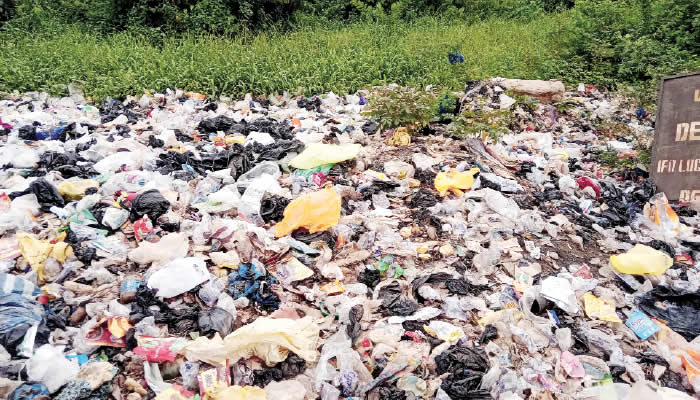
The Gombe State Government has built more than 200 waste collection centres across Gombe metropolis and other urban areas to tackle indiscriminate dumping, an official said on Tuesday.
Dr Umaru Musa, head of the Sanitation Department at the Gombe State Environmental Sanitation and Protection Agency, said this in an interview with reporters in Gombe.
Musa said the centres would help maintain environmental cleanliness and curb the spread of germs that could cause diseases and outbreaks.
He said they were built near major roads to make it easier for residents to dispose of waste, rather than dump it in gutters and gullies, causing blockages.
Such blockages, he said, could lead to flooding during the rainy season and create conditions for pests and disease vectors to thrive.
“In terms of waste collection, the agency has established more than 200 waste collection centres across Gombe metropolis and other urban areas in the state.
“One of the major benefits is reducing rodents and disease vectors, including mosquitoes, houseflies, cockroaches and other pests, as well as rats, which can contribute to the transmission of diseases,” he said.
Musa said the state was engaging private stakeholders through public-private partnerships (PPPs) to strengthen waste management.
He said private organisations such as Cosmopolitan were responsible for daily environmental sanitation and desilting drains in Gombe metropolis and other urban communities.
Musa added that the agency also provided liquid-waste management services. The government operated waste evacuation equipment, including a gulley emptier, while private operators provided similar services.
He said the government subsidised some services to make them more accessible, because sanitation was an essential public service rather than a profit-making venture.
According to Musa, designated areas at the waste disposal site were used for solid and liquid waste, allowing recyclable and reusable materials to be recovered.
He added that the state government was developing a partnership model to create a more structured system for managing liquid waste, particularly faecal sludge.
The government had provided land for a facility known as “waste-to-wealth” to improve faecal sludge management, he said.
Musa said Gombe, an agrarian state, could benefit if faecal sludge was properly treated and converted into organic fertiliser, giving farmers an alternative way to improve soil health.
He said the project was supported through the Sustainable Urban and Rural Water Supply, Sanitation and Hygiene (SURWASH) programme, which aims to ensure liquid waste is properly treated and converted into useful products, including organic fertiliser.
Musa said the initiative would improve the management of both solid and liquid waste across the state.
He urged residents to support the government’s waste-management efforts by disposing of their rubbish at collection centres.
