


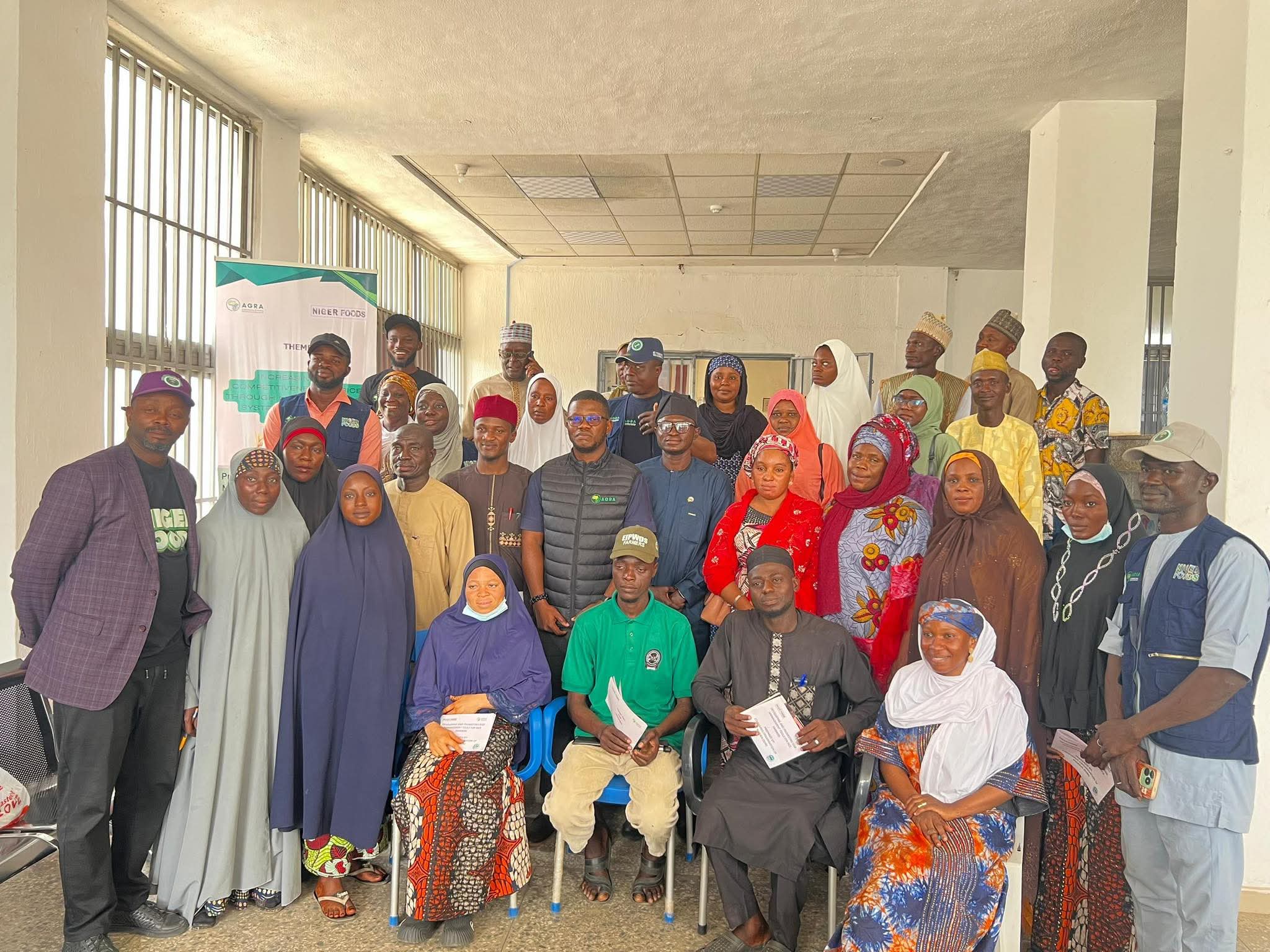
Concerns over food safety and the need to improve the quality of rice produced in Niger State have prompted a strategic collaboration between the Standards Organisation of Nigeria SON, Niger Foods, and AGRA.
By Anna Moses
This collaboration is aimed at helping farmers produce safer, cleaner, and more competitive rice while increasing productivity across the value chain.
At a one-day training held at Niger Foods office in Minna, stakeholders introduced rice growers to a Risk Assessment System for Rice Production based on the internationally recognised Hazard Analysis and Critical Control Point HACCP system.
The training aligns with the Codex Alimentarius Food Hygiene standards developed by the Joint FAO/WHO Food Standards Programme.
The programme emphasised the need for farmers to identify and prevent potential hazards, whether microbiological, chemical, or physical, throughout the rice production process.
Trainers explained that HACCP helps detect critical control points where problems can occur and guides farmers on the steps required to reduce or eliminate risks that could compromise food safety or quality.
The initiative is part of efforts by the Niger State Government to modernise agriculture and position the state’s rice as a premium product capable of competing in international markets.
Officials say strengthening food safety practices will not only boost consumer confidence but also support the state’s ambition to build a sustainable and export-ready rice industry.
Representative of SON, Adamu Mohammed Aminu and Sanusi Yusuf, described the collaboration as a significant milestone in improving quality assurance within the state’s rice sector. He reaffirmed SON’s commitment to providing farmers with the skills and tools needed to meet national and global standards.
Participants also received hands on demonstrations on using moisture meters, weighing scales, and other essential equipment that support accurate measurements, reduce post-harvest losses, and ensure better market compliance.
