


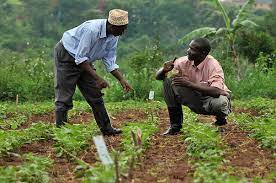
Sasakawa Africa Association Nigeria (SAA Nigeria) has commenced the distribution of vital farm inputs to 9,000 smallholder farmers across six Nigerian states for the 2025 wet season.
The inputs, which include certified seeds, fertilizers, and agrochemicals, are being distributed in Kano, Jigawa, Gombe, Nasarawa, Benue, and Kwara states.
The intervention, funded by The Nippon Foundation (TNF), is expected to indirectly benefit an additional 45,000 farmers through peer learning and community-based platforms.
“This exercise is part of our 2025 wet season initiative aimed at ensuring food security, increasing household incomes, and promoting climate-smart agriculture,” said Mr. Moses Nongoatse, Communication Officer of SAA Nigeria, in a statement issued Saturday in Lafia.
To prepare the ground for the rollout, SAA Nigeria trained 116 frontline extension workers across the participating states in regenerative agriculture and other good agronomic practices through a pre-season Training-of-Trainers (ToT) program.
These trained agents are now cascading knowledge to farmers at the grassroots.
At the heart of the intervention are 360 community demonstration plots established in 90 rural communities. Dubbed Farmer Learning Platforms (FLPs), these “living classrooms” showcase best practices in regenerative agriculture such as intercropping, Urea Deep Placement (UDP), mulching, relay cropping, integrated weed and pest control, and soil fertility management.
“Our mission has always been about equipping farmers with both the right tools and the right knowledge,” said Dr. Godwin Atser, Country Director of SAA Nigeria.
“Over the past 30 years, we’ve worked alongside smallholder farmers to increase their yields through practical, hands-on innovations.”
Dr. Atser highlighted significant yield improvements made possible through Sasakawa’s interventions: maize yields have risen from 1.9 to 5.5 metric tons per hectare, while rice yields increased from 1.8 to 6 metric tons.
Soybean and cowpea production also saw jumps from 0.6 to 2.5 metric tons per hectare—thanks to the fusion of improved inputs and community-led learning.
SAA’s Technical Coordinator for Regenerative Agriculture, Dr. Bello Shehu emphasized the importance of following the association’s protocols for demonstration plots.
He encouraged farmers to engage fully with SAA’s extension officers to deepen their understanding of regenerative practices and build long-term resilience to climate shocks.
The intervention has been widely welcomed by state agricultural leaders.
In Gombe State, Commissioner for Agriculture, Animal Husbandry, and Cooperatives, Dr. Barnabas Mallet, praised SAA for its consistent commitment to farmer welfare.
“Their training and timely input support have positively impacted nutrition, food security, and rural economies,” he said.
Similarly, the Kano State Agricultural and Rural Development Authority (KNARDA), through SAA’s State Coordinator Mr. Kassim Safiyyanu, commended the early distribution strategy. “It encourages early planting, which is crucial for optimal yield,” he noted.
SAA State Coordinator for Nasarawa, Mrs. Salome Sabo described the intervention as “timely and strategic,” adding that it empowers farmers to plan better and embrace productivity-boosting innovations. “This isn’t just about distributing farm inputs—it’s a demonstration of leadership and commitment to rural transformation,” she said.
With the 2025 farming season underway, Sasakawa’s timely intervention reaffirms its role as a key player in advancing agricultural innovation, food security, and climate-smart farming across Nigeria.
