


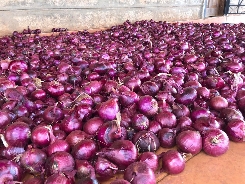
The price of onions in major markets across Lagos State has recorded a significant increase, with bulk sellers reporting up to a 44 per cent rise in the cost per bag.
Traders attributed the hike largely to rising transportation costs from major production hubs in northern Nigeria.
Market stakeholders, who spoke with reporters in Lagos, said the price surge has affected both vendors and consumers as the festive season approaches.
A bulk onion trader at Mile 12 Market, Mr Muhammad Kililu, said the cost of a bag of onions had increased sharply.
“We used to sell a bag of onions for between ₦70,000 and ₦90,000, but it now sells for between ₦100,000 and ₦130,000, depending on the size,” he said.
Kililu attributed the price jump to higher logistics costs.
“Transportation costs from the North to Lagos have increased significantly, and this has contributed to the price rise,” he said.
The surge in wholesale prices has also squeezed retail profit margins.
A retail trader, Mrs Olurotimi Abimbola, who buys from Mile 12 Market, said the rising costs have made her business increasingly difficult.
“I used to buy onions and sell them for ₦50 each. Now, I buy them at ₦75 and sell at ₦100.
“It is becoming unsustainable, but there is little choice,” she lamented.
Consumers, however, expressed mixed reactions to the development.
One buyer, Mrs Olayemi Janet, said she was not surprised by the increase.
“December is an off-season for onions, and I am prepared for the price hike. The economic situation in the country is not helping,” she said.
Another buyer, Mrs Oladipupo Oseni, expressed frustration over reduced purchasing power and storage challenges.
“Onions cannot be stored for long. I can only buy what I need for a few days.
“If I could store them properly, I would buy in bulk when prices are lower,” she said.
Oseni added that many households face difficulties cushioning price fluctuations through bulk purchases.
Market stakeholders expressed concern that the current price hike is unsustainable for small-scale businesses, warning that the situation could worsen as consumer demand typically rises during the festive period.
