


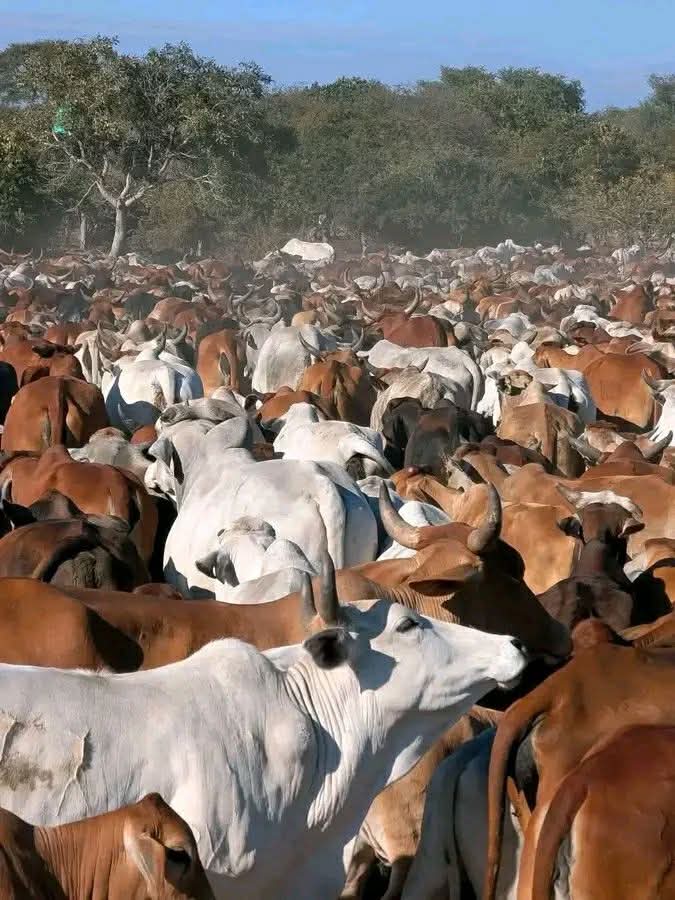
The Minister of Livestock Development, Idi Maiha, has emphasized that Nigeria is prioritizing food security, global competitiveness, and the transformation of its livestock sector.
Speaking at the 2025 Animal Science Meeting and Industry Exposition in Abuja on Tuesday, Maiha said that transforming the sector in Nigeria would have positive ripple effects across Africa and beyond.
“To achieve sector development and global competitiveness, we must first improve our animal breeds while preserving their genetic heritage,” he said.
Maiha acknowledged existing challenges but highlighted the sector’s potential to compete globally through collaboration, partnerships, and innovative local solutions. He also noted that Nigeria’s livestock sector, valued at approximately 30 trillion Naira, currently contributes less than three per cent to the nation’s GDP.
He challenged animal scientists and other stakeholders to use the platform to “ask the tough questions and deliver the right answers.”
Simeon Ohwofa, President of the Nigerian Institute of Animal Science (NIAS), said the institute has matured in training and producing qualified professionals for the livestock industry.
The institute currently has 2,936 Registered Animal Scientists (RAS) and 154 Associate Animal Scientists (AAS), including 127 Fellows. At the event, 252 new RAS and five AAS were inducted after rigorous training, deemed worthy in both character and competence to represent the profession.
“We stand at a time when animal agriculture is central to our nation’s quest for nutritional security, economic resilience, employment generation, and agricultural transformation,” Ohwofa said. “The establishment of the Ministry of Livestock Development aligns Nigeria with global best practices in recognising the livestock sector as a critical economic pillar.”
Keynote speaker Dr. Tunde Amole, speaking on the theme, “Transforming Nigeria’s Livestock Sector for Economic Growth and Global Competitiveness,” said solutions must be the focus. He noted that livestock contributes about 40 per cent of agricultural GDP globally, but investment in Nigeria remains low.
Amole highlighted challenges faced by small and medium-sized livestock producers, including low productivity due to limited access to knowledge, technologies, and input services, poor infrastructure, climate change impacts, and environmental concerns from intensive production systems.
He proposed six strategic pillars for sector transformation:
- Productivity improvement
- Feed and fodder security
- Infrastructure, markets, and value chain development
- Financing, inclusion, and investment mobilisation
- Policy, governance, and data systems
- Climate resilience, sustainability, and peacebuilding
“Nobody solves challenges by celebrating them. We need to champion solutions, which is why the creation of this ministry is essential,” Amole added.
Some inductees expressed eagerness to contribute to national livestock development. Dr. Fisayo Ogunsola said: “I hope to collaborate in my field to find solutions to challenges in animal science and livestock production. Our breeds should be able to compete in the global market.”
Mrs. Nimota Motunrayo, an animal nutritionist from Lagos, said membership in the institute would allow her to share knowledge and collaborate with fellow professionals.
NIAS, which commenced operations in 2008, regulates all matters of animal husbandry in Nigeria, including professional practice and industry standards.
