


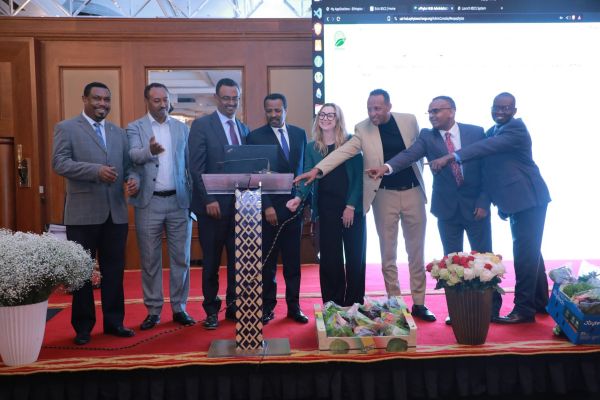
Ethiopian farmers and exporters can now apply for, receive, and send phytosanitary certificates entirely online following the launch of the country’s fully operational Integrated Export and Import Certification System (IEICS), popularly known as the e-Phyto system.
The digital transition from paper-based to online certification is expected to drastically reduce clearance times, lower administrative costs, and ease market access for agricultural products destined for regional and international markets.
Fully integrated with the International Plant Protection Convention (IPPC) e-Phyto hub, the system enables certificates to be transmitted directly to importing countries. This eliminates the need for physical document exchange, curbs fraud, and reduces the carbon footprint associated with courier services and manual processing. Exporters have already reported smoother clearance, especially for perishable goods such as fruits and vegetables.
EU Acting Head of Cooperation, Ms Beatrice Neri, said:
“The EU is proud to see the system in action. This is a practical, high-impact change for Ethiopia’s agricultural trade. By digitising certification, we are helping farmers and exporters meet global market standards, reduce waste, and move goods more efficiently across borders. The e-Phyto system will strengthen Ethiopia’s role in regional and global trade, creating more opportunities and sustainable growth for communities.”
AFD Country Director for Ethiopia, Louis-Antoine Souchet, added:
“The launch of the e-Phyto system marks a significant milestone in modernising Ethiopia’s agricultural trade. It offers farmers and exporters a dependable tool that strengthens competitiveness while supporting sustainable economic growth.”
EAA Deputy Director and Head of the Ethiopian National Plant Protection Organisation (NPPO), Dr Wondale Habtamu, noted:
“The e-Phyto system is now a reality for our farmers and exporters. They no longer have to travel with paper documents or wait days for approval. This is a practical change that is making trade faster, more transparent, and more reliable.”
TMA Country Director for Ethiopia, Ewnetu Taye Chufa, added:
“With the system now live, the benefits are immediate — fewer delays, faster market entry, and better prospects for smallholder farmers to reach high-value markets.”
Agriculture remains the backbone of Ethiopia’s economy, contributing 34.87% of GDP and employing over 62% of the workforce (World Bank, 2024; AfDB, 2023). With smallholders responsible for 95% of agricultural output (FAO, 2023), the platform offers direct benefits to rural communities seeking greater access to domestic and international markets.
Anchored within the Horn of Africa Initiative and aligned with the EU’s Global Gateway Strategy, the project forms part of a broader effort to deepen regional economic integration, enhance resilience, and attract investment in both infrastructure and human capital.
The e-Phyto system stands as a cornerstone of Ethiopia’s trade modernisation agenda — strengthening competitiveness, ensuring compliance with international standards, and creating more secure income opportunities for rural households whose livelihoods depend on agricultural exports.
