


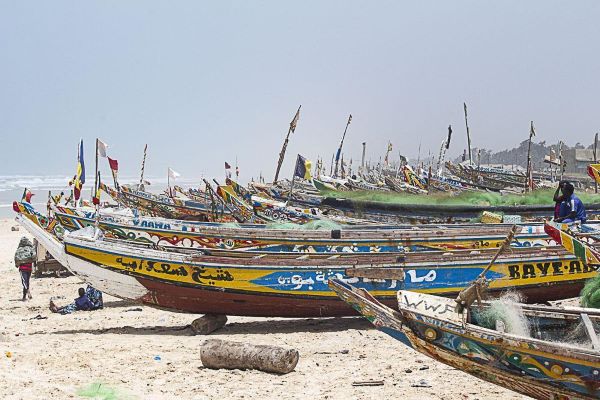
Der Samba, a former fisherman from Senegal, cannot shed the nightmare memories of his two previous attempts to reach Europe: the dozens of friends and strangers on the crowded little boat who died before his eyes. The bodies he had to throw into the sea. The terror and humiliation of being stripped naked by officials in Morocco and told to walk out of the desert on his own.
By Nana Mohammed
But Samba, 27, is ready to try again. Now back in his mother’s tiny house in his hometown of Fass Boye, Samba is plotting his third attempted escape. “I’m a sufferer, that is all I will say,” he explained in Wolof, Senegal’s most widely spoken language. “I will never give up on my dream to get to Spain, as long as I’m alive.”
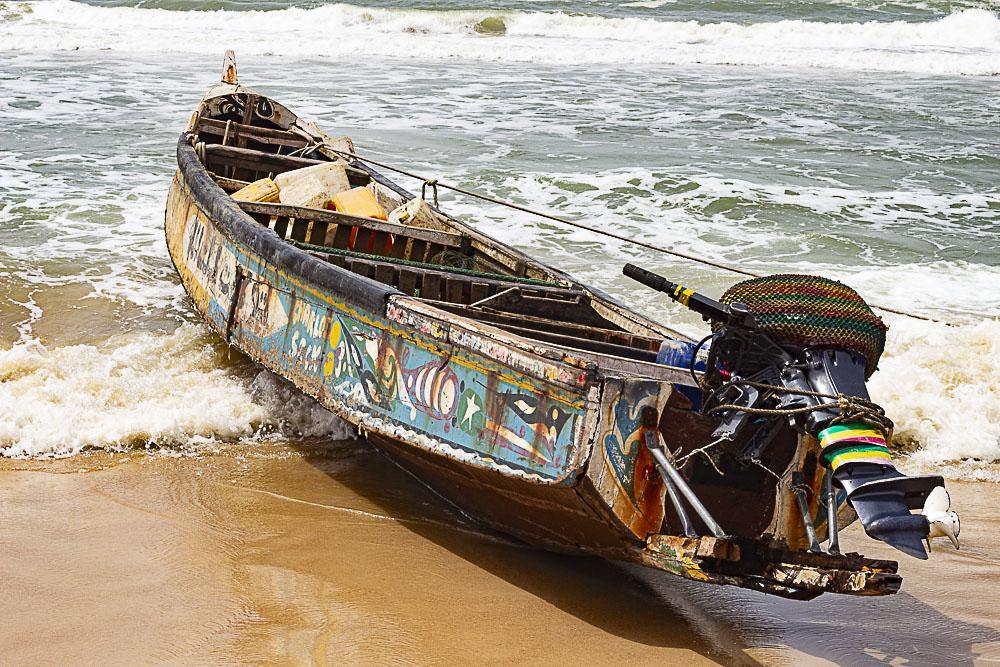
In some ways, Samba’s story is like millions of other would-be migrants desperate to reach Europe or the United States and find a better life. But his story also involves other global forces, including climate change and overfishing by foreign trawlers that have wrecked the livelihoods of many thousands of West African fishermen.
It is now not unusual for fishermen in Senegal to spend all day and night on the water but return with nothing but empty nets. Rising sea levels and changing weather patterns have further depleted fish stocks already devastated by years of overfishing by Chinese and European factory ships.
For many fishermen like Samba, leaving home feels like the only possible route to a better future, which is why, in July 2023, Samba abandoned his own fishing boat and joined 101 other fishermen hoping to find work in Europe. A journey that usually takes seven days turned into 36 days of hell. They ran out of fuel after a few days and were pushed far off course, with violent waves nearly destroying the small vessel.
Only 38 of the young men and boys survived; 63 died.
Undaunted, Samba has already secretly packed a few of his belongings for his next attempt. This time, he is not telling anyone about his planned trip, for fear that he will be bewitched by the evil eyes he believes cursed the last boat.
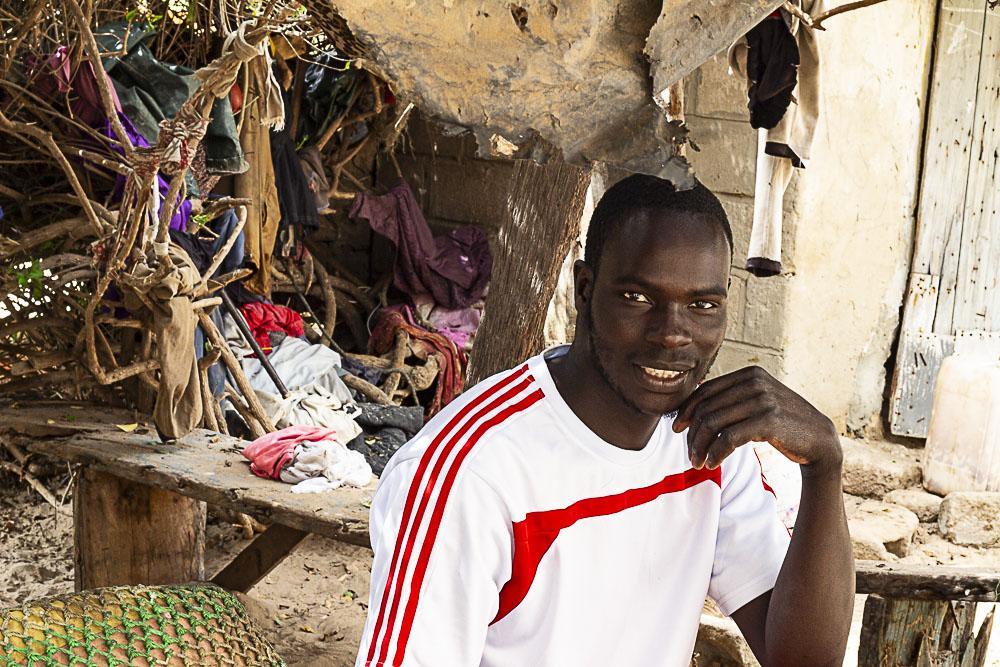
Shaking his head and frequently staring into space, Samba’s eyes reddened and filled with anger and frustration as he described hunger, thirst, and exhaustion during that failed trip. “I was so thin,” Samba added.
He is determined to keep trying even though several of his family members – including his older brother and several uncles – died on a similarly risky journey several years ago.
When times were a little bit better, Samba had five crewed boats, but it was increasingly difficult to find traditional standbys like sardines, mackerel, squid, dentex, and grouper.
Senegalese fishermen, with their traditional small wooden boats, nets and hoods, didn’t stand a chance competing against sophisticated modern vessels from countries like Russia, China, and Mauritania, according to
Samba. Those industrial trawlers could use sonar to find fish even as warming temperatures and shifting ocean circulation patterns caused fishing areas to change from what local fishermen like Samba were used to. The result: Empty nets.
Stories like the ones told by 63-year-old Ndongo Iaye are what drive people like Samba to keep taking extreme risks to reach wealthy countries. Iaye, who also lives in Fass Boye, talks about his son, who made it to the United States and is now sending money home, allowing his family to build a house.
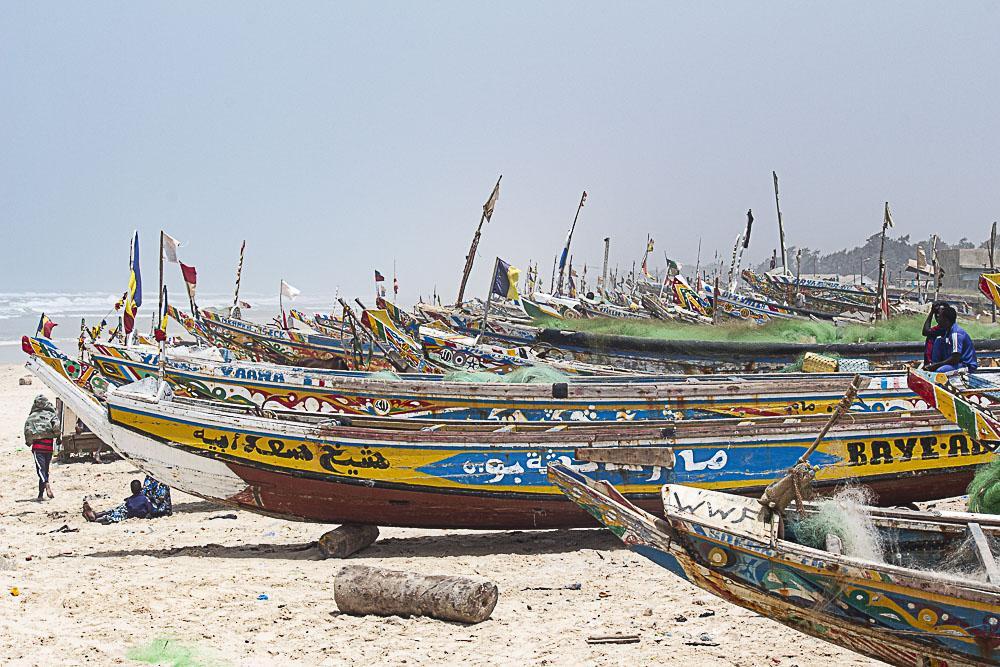
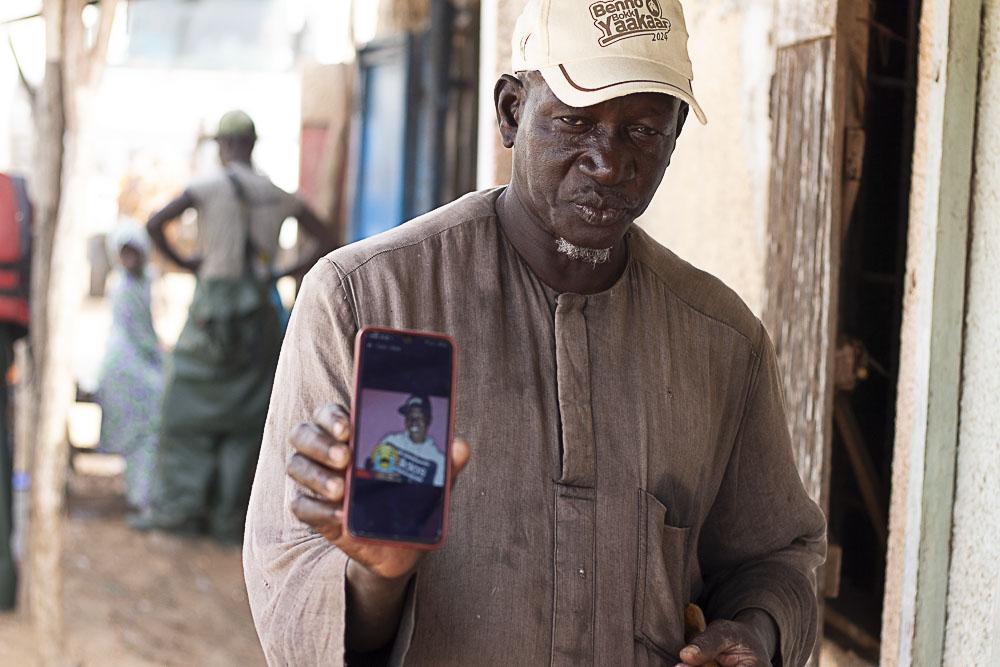
Stories like these are not uncommon, but so are the stories of trauma and death in the vast wilderness of the ocean. Abdou Aziz Sene is still mourning the death of his 25-year-old son Marcel Abdou Aziz. He was among the 63 who died on the nightmare journey last summer. His father still keeps his photos on his mobile phone, with a crying emoji added to the image.
“It is a terrible time for us here, no fish, no money and our children are dying in the ocean, trying to get abroad,” Sene said. “But I put my trust in God.”
While overfishing by factory trawlers off the West African coast is well documented, the role of climate change is murkier. “The fact that we have to rely on Western scientists for research in African countries has made it difficult to prove years of climate change,” said Adams Tidjani, a Senegalese scientist and the founder of the Institute of Environment and Metrology. He worries that climate change has not gotten enough attention in Africa, despite its impact on the health, food, and lives of millions of people.
Tidjani has worked to build awareness of the catastrophic impact of climate change on the region. He has built an environmental school that teaches communities and institutions to recycle and adopt other greener practices. “But our voices are hardly heard, because the level of ignorance and government refusal to accept climate change as the leading cause of poverty in the country is frustrating”, he added.
In the past presidential elections in Senegal, only one candidate showed any interest in climate and made it part of his political campaign platform, but that was a long time ago in 2012 and he never won against former President Macky Sall, since then Tidjani said it was hard to discuss climate problems affecting fishermen and farmers with politicians.
Senegal’s government is now trying to build up its oil and gas industry, which has increased fears of what is going to happen to the environment, says Tidjani.
During the tenure of former president Macky Sall Senegal, who was then, the president of the African Union, he openly opposed international efforts to limit financing for fossil fuel development, saying that “Africa must be able to exploit its large gas reserves for another 20 or 30 years to further its development”.
Meanwhile, record-high ocean temperatures have coincided with the deadliest-ever year for migrants. Some of those refugees died in ocean storms stirred up by the warming temperatures.

Scientists have documented how climate changes are transforming weather conditions in Senegal, including altered ocean currents and rising sea levels that are damaging infrastructure and making coastal communities like Fass Boye vulnerable to storm surge floods.
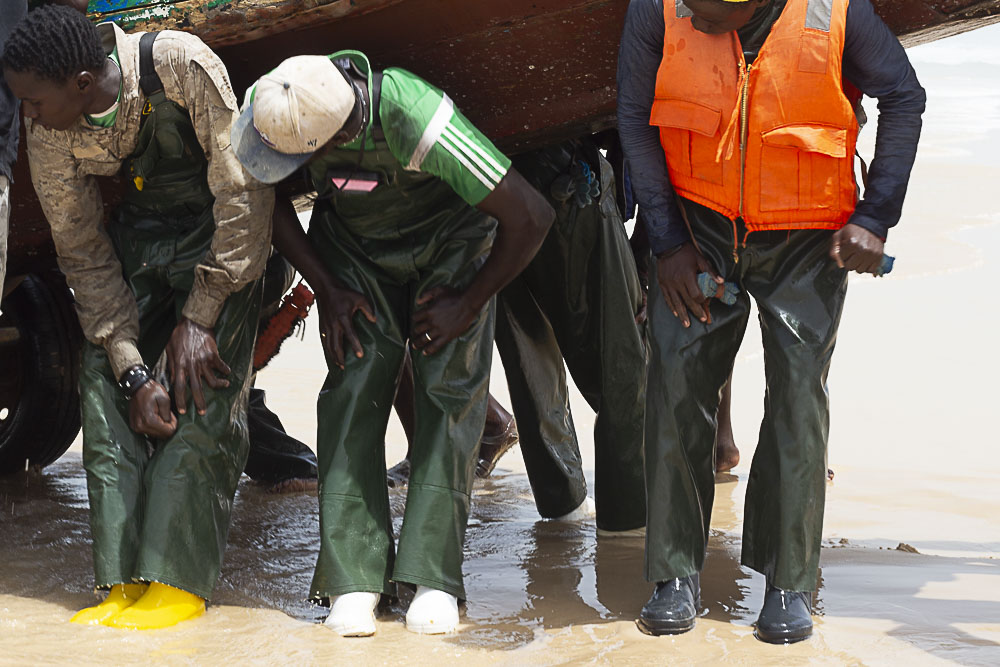
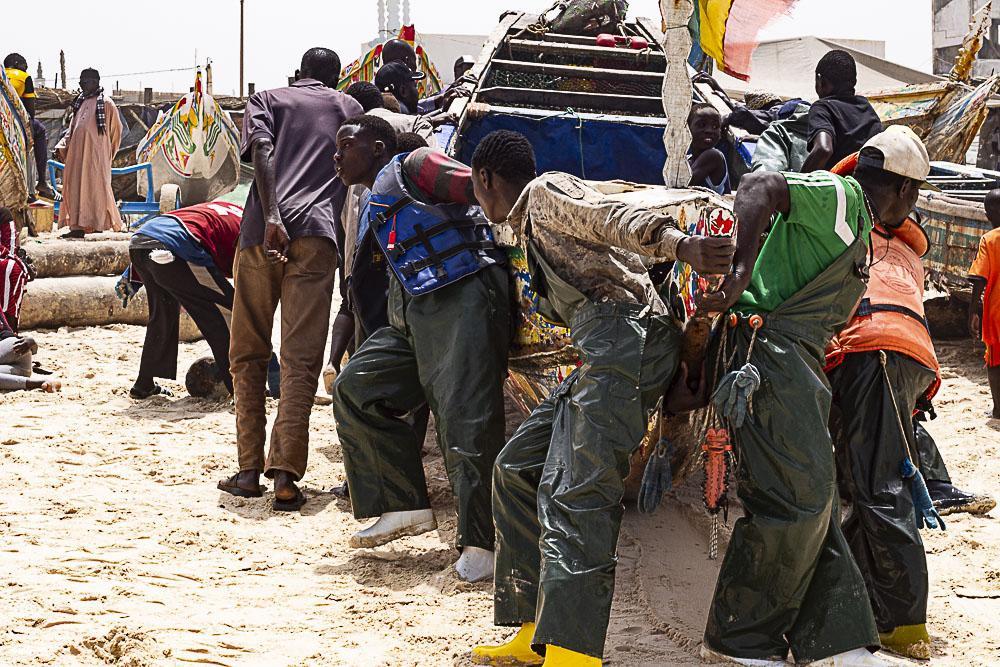
Despite the desperate economic conditions for local fishermen, there are still dozens of colourful wooden boats, called pirogues, docked close to the shore. A crew of young men and boys still saw their nets and prepared their boats for fishing, while women sat under the shade provided by boats and children ran on the sand.
Samba still watches all the activity along the shore but his mind is far away, imagining a new life in Spain.
Even as hundreds of Senegalese fishermen continue to die in the sea, climate change means little or nothing to many local people. They see the sea as a mystery that defines itself, says Delthie Njalloh, president of the fishermen’s association in Soumbedioune, a neighbourhood in Dakar. “The sea is mystical, and as believers, we cannot question what causes death there,” Njalloh says.
As he spoke, it was the week of Senegal’s presidential election and the country was tense with politics, with loud music and boisterous demonstrations from different groups showing support for their preferred candidate. The military and police were on alert and visible with guns in every corner, especially after the popularity of the leading opposition candidate had earlier prompted the government to postpone the election.
Along the beach, far from the craziness of central Dakar, Njalloh gathered his fisherman colleagues to discuss who to vote for. They wanted a president who would end what they see as one-sided deals allowing European and Chinese vessels to fish in Senegalese waters. Many of those agreements were made in the 1970s before many of the men were even born. Now they want change.
With the subsequent election of a new, reform-minded president, Diomaye Faye, they may eventually get it – though it’s too early to know. But even if the trawlers from China, Russia and Mauritania leave, the effects of overfishing will last for years, worsened by ongoing climate change.
Though Faye has not specifically said much about climate change, the fishermen’s deaths on the sea and climate migration, during his acceptance speech, he did promise one thing, for a “systematic change”, he emphasized the need to end corruption and vowed to preserve peace and national cohesion as he promised to improve the management of natural resources of Senegal.
Desperate former fishermen like Der Samba are not willing to keep waiting for improvements. They want out now. Even as they anticipate change, time is of the essence for young people who want to get married and start a decent family of their own.
Not everyone is ready to give up, however. In Soumbedioune, Delthie Njalloh and his fellow association members keep trying. As the evening sun began to set, a group of fishermen put on their water jackets and picked up their ice collars and spare containers of gasoline, ready to venture again into the wilderness of the ocean, hoping their luck would change.
