


The Federal Government has renewed its commitment to addressing the interconnected challenges of climate change, biodiversity loss and pollution.
The commitment was made at the closing of the 18th National Council on Environment (NCE) meeting, hosted by the Federal Ministry of Environment in Katsina State.
The three-day meeting, held at the Katsina State Secretariat, brought together commissioners, environmental experts, policymakers and development partners from across the country.
With the theme “Tackling the Triple Planetary Crises of Climate Change, Biodiversity Loss and Pollution for Sustainable Development in Nigeria,” the council meeting served as a high-level platform for discussions on strengthening environmental governance and promoting sustainable development nationwide.
Speaking at the event, the Minister of Environment, Mr Balarabe Lawal, described the theme as timely and imperative.
“This is collectively known as the triple planetary crisis, which is critical to Nigeria’s sustainable development, economic resilience and environmental security,” he said.
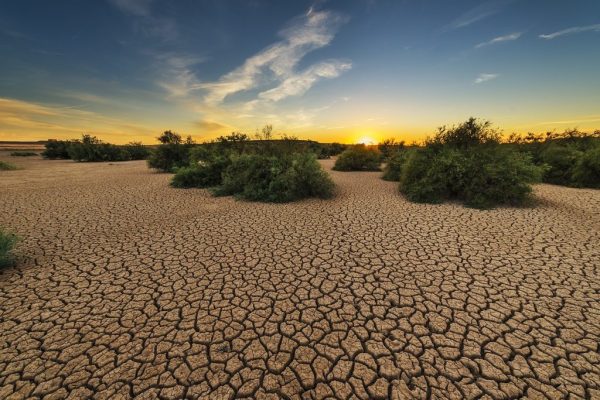
Lawal warned that rising temperatures, desertification, flooding, pollution and ecosystem degradation were already undermining livelihoods across the country, stressing that the crises were deeply interlinked and required an integrated, science-driven and multi-sectoral response.
The minister commended Katsina State for its leadership in climate governance, noting its second-place ranking in the 2025 Subnational Climate Governance Performance Ranking.
He highlighted the state’s Green Economy Roadmap, which prioritizes renewable energy, dryland agriculture, eco-tourism, waste-to-energy solutions and climate-smart development, alongside plans to establish a Green Investment Fund and implement a 2025–2030 Climate Action Plan.
Lawal urged other states to replicate Katsina’s approach by transforming challenges such as desertification and soil degradation into opportunities for economic growth and job creation.
He cited ongoing national initiatives, including the Nigeria Energy Transition Plan, the Great Green Wall Programme, the National Policy on Plastic Waste Management, as well as renewable energy and clean cooking policies.
The minister also called for innovative financing mechanisms such as public-private partnerships, green bonds, climate funds and carbon markets.
He further urged stronger private-sector engagement, identifying corporate organizations such as the Dangote Group and Nigeria Bottling Company as potential partners in environmental restoration and sustainability efforts.
Earlier, Gov. Dikko Radda of Katsina State reaffirmed the state’s commitment to environmental sustainability.
Radda, who was represented by the Deputy Governor, Mr Faruk Jobe, highlighted the state government’s early approval of funding and sustained support, which ensured the successful hosting of the council meeting.
He described the NCE as a vital platform for policy harmonization, collaboration and coordinated action in addressing Nigeria’s pressing environmental challenges.
