


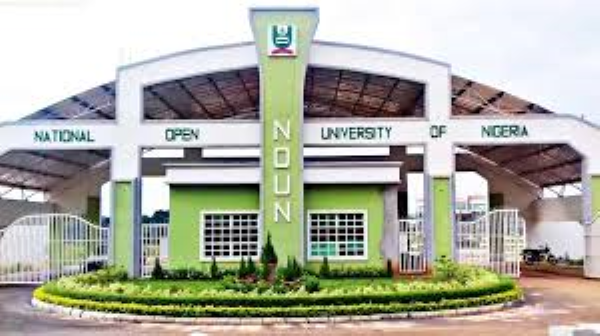
The National Biosafety Management Agency (NBMA) and the National Open University of Nigeria (NOUN) have entered into a partnership to strengthen bioscience education and build public confidence in modern biotechnology.
The partnership was formalized during the Train-the-Trainer Capacity Building Programme on Biosafety, Biosecurity, Biorisk Management, Waste Management, and Community Engagement, held in collaboration with NOUN in Abuja on Monday.
Mr Bello Bawa-Bwari, Director-General of NBMA (represented by Dr Agha Ukpai Agha, Director of Biosecurity), said the training comes at a critical time when advances in biotechnology and life sciences are rapidly transforming research, agriculture, medicine, and environmental management.
“The Train-the-Trainer model is particularly significant,” he noted. “It equips participants with the technical knowledge and skills to disseminate what they have learned within their institutions, professional networks, and communities.
“While these innovations offer tremendous opportunities for national development, they also require robust systems to ensure safety, responsibility, and public confidence in the technologies being deployed.
“As the national regulatory authority for biosafety and biosecurity in Nigeria, NBMA remains firmly committed to strengthening national capacity to manage potential biological risks effectively.
“Over the next three days, participants will engage in insightful sessions covering biosafety principles, biosecurity practices, biorisk management systems, and effective community engagement strategies. These areas are essential for ensuring compliance with national regulations and international best practices, while safeguarding public health, protecting the environment, and promoting responsible research and innovation,” the DG assured.
Prof. Uduma Uduma, Vice-Chancellor of NOUN (represented by Prof. Christine Ofulue, Deputy Vice-Chancellor, Technology, Innovation and Research), said NBMA plays a vital regulatory and advisory role in ensuring that modern biotechnology practices are conducted safely, responsibly, and in line with international standards.
“This occasion represents more than a formal engagement between two national institutions,” he said. “It symbolizes a strategic partnership built on shared values of scientific integrity, environmental sustainability, public safety, and national development.
“NOUN, as the largest Open and Distance Learning institution in West Africa, is committed to expanding access to quality education while promoting research that addresses national priorities.
“In an era of rapidly advancing biotechnology, genetic research, and modern agricultural innovations, biosafety has become a critical national and global concern. It helps prevent harm to human health, protect biodiversity, and safeguard ecosystems from unintended consequences.”
Uduma added that NBMA’s commitment to safeguarding human health, biodiversity, and the environment aligns perfectly with NOUN’s academic mission.
“As a university dedicated to flexible learning, NOUN is well-positioned to support nationwide awareness through online courses, professional development programmes, and community engagement initiatives.
“Together, we can bridge the knowledge gap and empower scientists, regulators, farmers, and students with accurate information about biosafety practices.
“Biotechnology holds immense promise for food security, healthcare advancement, and environmental sustainability. We are prepared to deploy our academic expertise, research infrastructure, and nationwide study centres to support joint initiatives that will strengthen biosafety and biosecurity governance in Nigeria,” the Vice-Chancellor said.
Prof. Andrew Agbon, Chairman of the Joint Working Group for the training, said the workshop fulfils key terms of the Memorandum of Understanding (MOU) signed between NOUN and NBMA on October 29, 2025. The MOU establishes a collaborative framework between the two institutions.
He explained that the workshop would enhance the capacity of NOUN students, academic staff, and NBMA personnel through faculty internship opportunities, professional development programmes, and joint biosafety and biosecurity initiatives.
Agbon noted that the workshop aims to build institutional capacity in areas such as environmental safety and security, waste management, pollution control, service assessments, community engagement, and curriculum development.
“For us in NOUN, this capacity building is essential to strengthen the quality of training we provide to our students across the country,” he said.
