


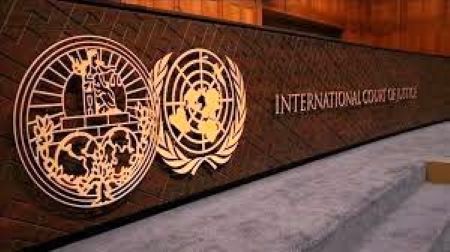
A ruling that could transform the global climate fight has been delivered by the International Court of Justice (ICJ), which declared that countries are under clear legal obligations to address the climate crisis, warning that failure to do so could amount to a breach of international law.
The advisory opinion, requested by the United Nations General Assembly and driven by advocacy from small island states and youth coalitions, signals a landmark moment in international environmental jurisprudence. Although not legally binding, such opinions from the ICJ carry significant moral and political weight and are frequently cited in courtrooms and policy debates worldwide.
Describing climate change as “an urgent and existential threat,” the Court held that countries must prevent environmental harm, protect human rights, and cooperate internationally to combat rising global temperatures. The judges also affirmed the right of all people to a clean, healthy, and sustainable environment — a statement hailed as a major boost for environmental justice movements globally.
“The scientific evidence is clear. States cannot plead ignorance,” the Court said in its opinion, emphasizing that greenhouse gas emissions are primarily caused by human activity and have devastating cross-border effects.
Critically, the Court concluded that states must align their climate actions with the best available science and ensure their national targets — known as Nationally Determined Contributions (NDCs) — are ambitious enough to keep global warming within the 1.5°C threshold set by the Paris Agreement.
Legal analysts say the opinion will strengthen the hand of courts worldwide in holding governments accountable for inadequate climate action. It could also pave the way for future legal claims, including demands for compensation from countries suffering the worst effects of climate change, many of which have contributed least to the crisis.
The judges made it clear that high-emitting nations have a heavier burden to act due to their historic emissions and greater capacity to finance climate solutions. They warned that continued failure to meet international commitments could expose countries to reputational harm and potential reparations.
Reactions have been swift and celebratory from climate-vulnerable countries, civil society groups, and legal experts. Small island nations — particularly those in the Pacific — described the opinion as a breakthrough in their decades-long struggle for climate justice.
“This is not just a legal victory, it’s a moral turning point,” said one diplomat from a low-lying island state. “The world’s highest court has acknowledged what we’ve long known: inaction is not neutral — it’s dangerous and unlawful.”
While some industrialized countries may downplay the advisory opinion, experts say the ruling will have ripple effects far beyond the courtroom. Governments may now face greater pressure from domestic courts, investors, and citizens to scale up emissions cuts and phase out fossil fuels more aggressively.
The ICJ’s advisory opinion also reinforces recent trends in global environmental law, including similar declarations by the Inter-American Court of Human Rights and mounting youth-led climate litigation worldwide.
The ruling is expected to be a major topic of discussion at upcoming international climate summits and is likely to inspire a new wave of activism and litigation centered on the principle that the climate crisis is not just a policy issue — it’s a legal one.
