


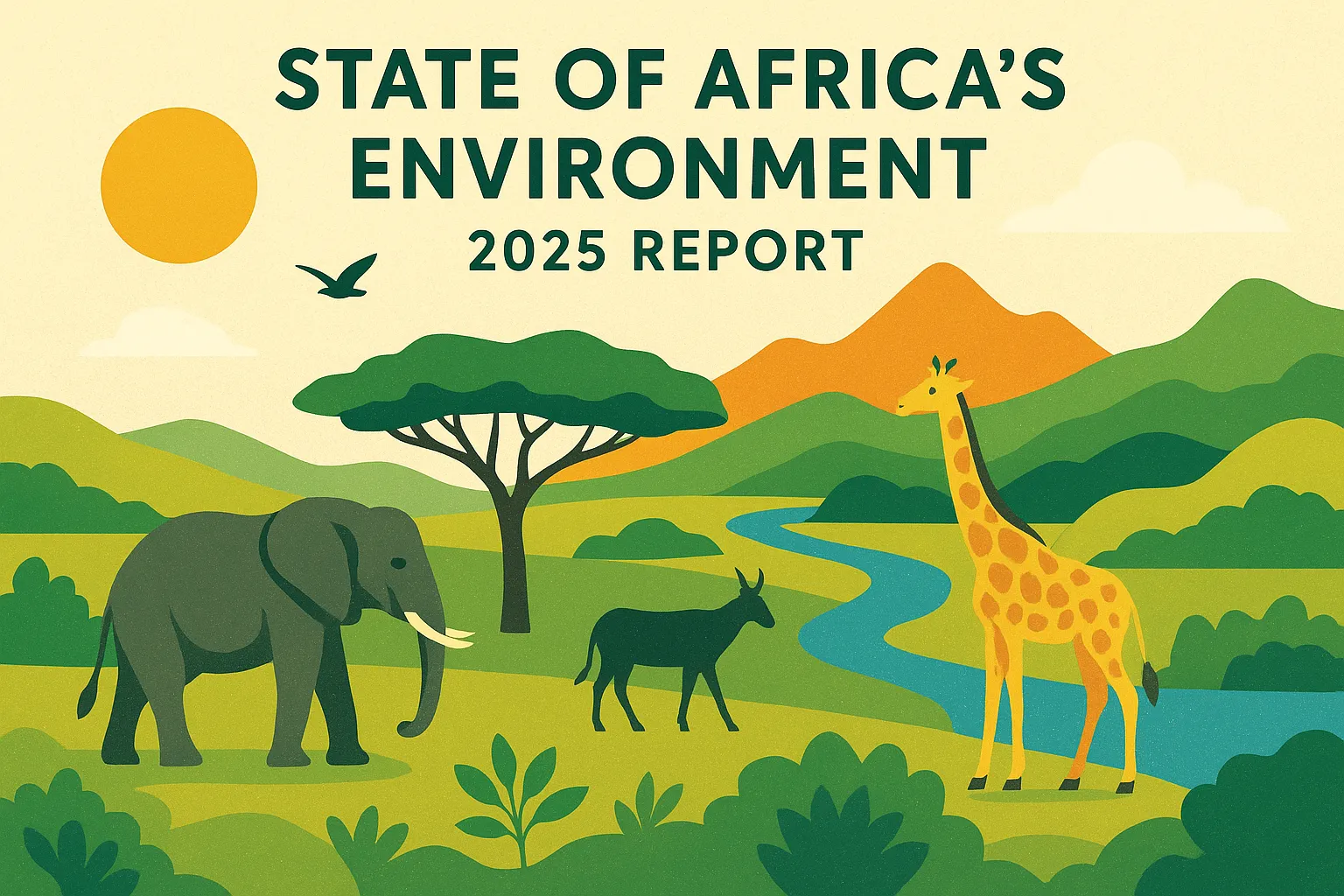
Africa is at a critical point in the climate crisis. The State of Africa’s Environment 2025: Africa and Climate Change report, set for launch in Addis Ababa, highlights the continent’s mounting risks—and opportunities—in the face of global warming.
The report, produced by India’s Centre for Science and Environment (CSE) in collaboration with Down To Earth magazine, the Alliance for Science-Ethiopia, and the Media for Environment, Science, Health and Agriculture (MESHA) in Kenya, will bring together journalists and climate communicators from across Africa to unpack the findings and discuss how best to tell Africa’s climate story.
Here are the five biggest takeaways:
- Africa is warming faster than the global average
Although the continent contributes less than 3% of global emissions, its temperatures are rising more quickly than in many other regions. This is intensifying droughts, heatwaves, and floods that hit the most vulnerable communities hardest.
- Water insecurity is spreading
More than 20 major African cities face the threat of severe water shortages by 2050. Climate change, combined with population growth and poor infrastructure, is pushing water stress to critical levels.
- Food systems are under pressure
Unpredictable rainfall and soil degradation could slash crop yields in Sub-Saharan Africa by up to 15% within the next 25 years. Farmers are already being forced to adapt—shifting crops, changing livestock, and rethinking farming practices.
- The energy transition is complex
Solar and other renewables are expanding fast, but fossil fuels still power much of Africa’s growth. Leaders insist the shift to clean energy must be just, affordable, and balanced with development needs—especially since 600 million people still lack electricity.
- Climate finance is falling short
Africa is only receiving about one-quarter of the money it needs to meet its climate action pledges. Without a major boost in global funding, adaptation and mitigation efforts will struggle to match the scale of the crisis.
The bigger picture
The report’s message is clear: Africa may be on the frontline of climate change, but it can also lead in solutions. What’s needed now is urgent action, stronger storytelling, and fair support from the global community.
