


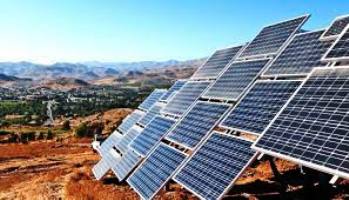
The Niger State Government has reached an agreement with the Islamic Development Bank (IsDB) for the implementation of the Niger Solar Electrification Project.
The project, described as the first of its kind in Sub-Saharan Africa, will cover 200 hectares of land and cost about $163 million. It is expected to provide an alternative source of power to many communities across the state.
Governor Mohammed Umar Bago, who received the IsDB Preparation Mission team for the project, code-named NGA1063, said the state had invested heavily in agriculture and that the solar electrification project would complement efforts in food production and industrialisation.
Bago acknowledged the vital roles the Islamic Development Bank had played in the state through various intervention projects. He said the bank’s decision to build a 100-megawatt solar power plant in the state was a major investment that would boost productivity and revenue generation, and ultimately pay for itself.
He added that the project would address multi-sectoral challenges and reaffirmed the state’s commitment to maintaining all projects, noting that Niger State remains well-positioned to harness its renewable energy potential.
In his remarks, the Task Team Lead, Daniyar Abylkhan, said the bank was relying on the abundance of sunlight in the state to generate solar power. He commended the governor for diversifying energy sources to meet the needs of the people.
Abylkhan noted that IsDB has a long-standing development partnership with Niger State, recalling its involvement in the reconstruction of the Minna–Bida Road. He said the success of previous projects was one of the reasons the bank continued to seek further partnerships with the state.
The Secretary to the State Government, Usman Abubakar, said the meeting was to kick-start IsDB’s project preparation process for the State Solar Electrification Project, which will be funded by the bank.
He explained that the primary purpose was to review what the state had developed with relevant stakeholders to produce a document that would enable the bank to conduct an appraisal and grant the necessary approvals.
Making a presentation on the project, one of the consultants, Umar Faruk-Batagarawa, said Niger State was uniquely positioned because it has complementary power generation sites. He added that the solar project would help stabilise the national grid, as it would add to the over 2,000 megawatts already being produced from the state.
Another consultant, Mohammed Mahdi-Abubakar, who presented an overview of the Environmental and Social Impact Assessment, said research and community engagement were critical to the successful implementation of the project.
He stressed that community buy-in must be secured before embarking on any major development project.
