

• Home
  • Agric
  • Sci & Tech
  • Health
  • Environment
  • Hausa News
  • More
    • Business/Banking & Finance
    • Politics/Elections
    • Entertainments & Sports
    • International
    • Investigation
    • Law & Human Rights
    • Africa
    • ACCOUNTABILITY/CORRUPTION
    • Hassan Gimba
    • Column
    • Prof. Jibrin Ibrahim
    • Prof. M.K. Othman
    • Defense/Security
    • Education
    • Energy/Electricity
    • Entertainment/Arts & Sports
    • Society and Lifestyle
    • Food & Agriculture
    • Health & Healthy Living
    • International News
    • Interviews
    • Investigation/Fact-Check
    • Judiciary/Legislature/Law & Human Rights
    • Oil & Gas/Mineral Resources
    • Press Freedom/Media/PR/Journalism
    • General News
    • Presidency
  • About Us
    • Contact Us
    • Board Of Advisory
    • Privacy Policy
    • Ethics Policy
    • Teamwork And Collaboration Policy
    • Fact-Checking Policy
    • Advertising
  • Media OutReach Newswire
    • Wire News
  • The Stories
Facebook Twitter Instagram
Trending
  • NDPC leads Abuja roadshow to promote data protection awareness
  • Group urges NAFDAC to sustain enforcement of sachet alcohol ban
  • Plateau integrates NTD prevention into school health programme
  • Alleged ₦80.2bn fraud: Witness says ₦3.1bn LG funds lodged into e-traders account
  • Niger sustains NTD elimination drive as 11 suspected Buruli ulcer cases emerge
  • Court voids Ibadan PDP national convention
  • UN urges cultural change to end violence against women
  • France to abolish conjugal rights in marriage
Facebook Twitter Instagram YouTube
AsheNewsAsheNews
  • Home
  • Agric

    ActionAid empowers 12,000 FCT farmers with agroecology skills

    January 30, 2026

    FAO: How Tanzania’s vaccination campaign is driving Africa closer to pest eradication

    January 29, 2026

    Kenya to host Gulfood360 Africa

    January 29, 2026

    [VIEWPOINT] Africa’s farm mechanization needs a new approach to succeed, By Beth Bechdol

    January 29, 2026

    Agricultural inputs distributed to boost food production in Kwara

    January 29, 2026
  • Sci & Tech

    NDPC leads Abuja roadshow to promote data protection awareness

    January 30, 2026

    NOTAP backs Nigerian developers to $1m sales

    January 29, 2026

    NIEEE, NDPC move to embed privacy in engineering projects

    January 29, 2026

    NCC clamps down on telcos with N12.4bn penalties over QoS breaches

    January 28, 2026

    Meta to unveil paid subscription plans across Instagram, Facebook, and WhatsApp

    January 28, 2026
  • Health

    Plateau integrates NTD prevention into school health programme

    January 30, 2026

    Niger sustains NTD elimination drive as 11 suspected Buruli ulcer cases emerge

    January 30, 2026

    Fidson Healthcare records huge performance in 2025

    January 30, 2026

    Anaemia crisis: CS-SUNN tasks Governors to unlock child nutrition fund

    January 30, 2026

    Salako urges collective action to end NTDs in Nigeria

    January 30, 2026
  • Environment

    Group urges NAFDAC to sustain enforcement of sachet alcohol ban

    January 30, 2026

    MTN, Lagos govt partner on Obalende bus park redevelopment

    January 30, 2026

    LAWMA threats of legal action against attacks on staff

    January 29, 2026

    ACReSAL sensitizes Kawo residents ahead of erosion works

    January 29, 2026

    Japan backs UNESCO flood resilience initiative in Niger

    January 29, 2026
  • Hausa News

    Anti-quackery task force seals 4 fake hospitals in Rivers

    August 29, 2025

    [BIDIYO] Yadda na lashe gasa ta duniya a fannin Ingilishi – Rukayya ‘yar shekara 17

    August 6, 2025

    A Saka Baki, A Sasanta Saɓani Tsakanin ‘Yanjarida Da Liman, Daga Muhammad Sajo

    May 21, 2025

    Dan majalisa ya raba kayan miliyoyi a Funtuwa da Dandume

    March 18, 2025

    [VIDIYO] Fassarar mafalki akan aikin Hajji

    January 6, 2025
  • More
    1. Business/Banking & Finance
    2. Politics/Elections
    3. Entertainments & Sports
    4. International
    5. Investigation
    6. Law & Human Rights
    7. Africa
    8. ACCOUNTABILITY/CORRUPTION
    9. Hassan Gimba
    10. Column
    11. Prof. Jibrin Ibrahim
    12. Prof. M.K. Othman
    13. Defense/Security
    14. Education
    15. Energy/Electricity
    16. Entertainment/Arts & Sports
    17. Society and Lifestyle
    18. Food & Agriculture
    19. Health & Healthy Living
    20. International News
    21. Interviews
    22. Investigation/Fact-Check
    23. Judiciary/Legislature/Law & Human Rights
    24. Oil & Gas/Mineral Resources
    25. Press Freedom/Media/PR/Journalism
    26. General News
    27. Presidency
    Featured
    Recent

    NDPC leads Abuja roadshow to promote data protection awareness

    January 30, 2026

    Group urges NAFDAC to sustain enforcement of sachet alcohol ban

    January 30, 2026

    Plateau integrates NTD prevention into school health programme

    January 30, 2026
  • About Us
    1. Contact Us
    2. Board Of Advisory
    3. Privacy Policy
    4. Ethics Policy
    5. Teamwork And Collaboration Policy
    6. Fact-Checking Policy
    7. Advertising
    Featured
    Recent

    NDPC leads Abuja roadshow to promote data protection awareness

    January 30, 2026

    Group urges NAFDAC to sustain enforcement of sachet alcohol ban

    January 30, 2026

    Plateau integrates NTD prevention into school health programme

    January 30, 2026
  • Media OutReach Newswire
    • Wire News
  • The Stories
AsheNewsAsheNews
Home»Column»Prof. Jibrin Ibrahim»January 15th 1966 and the legacy of the military, By Prof. Jibrin Ibrahim
Prof. Jibrin Ibrahim

January 15th 1966 and the legacy of the military, By Prof. Jibrin Ibrahim

EditorBy EditorJanuary 16, 2026No Comments6 Mins Read
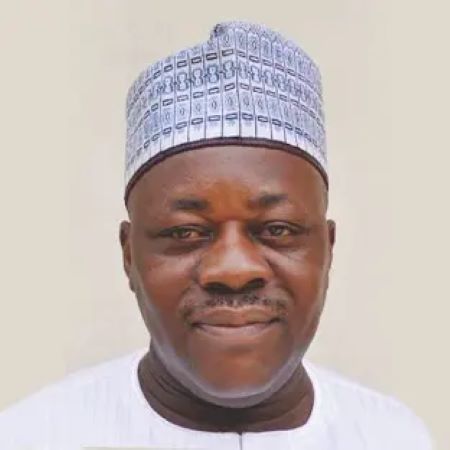
Prof. Jibrin Ibrahim
Share
Facebook Twitter LinkedIn Pinterest Email

Yesterday was Armed Forces Remembrance Day signalling the emergence of the military sixty years ago. On the 15th of January 1966, to be precise, a certain Major Chukwuma Nzeogwu addressed Nigerians through Radio Kaduna, announcing martial law and the takeover of power by the Supreme Council of the Revolution. The aim of their action, he said, was to “establish a strong, united and prosperous nation free of corruption and internal strife. Our method of achieving this is purely military”, he arrogantly said. By the end of the day, a significant part of the political class in the North and the West had been wiped out, and the military had taken over the political system.

In his column in Daily Times (3/2/1966), the late anti-corruption crusader, Tai Solarin, blasted the civilian political class for destroying Nigerian politics through their twin evil practices of corruption and election rigging. He confidently boasted that: “Now we have been saved – and we want to stay saved”. Eight years later, on 4th October 1974, Tai Solarin returned to the theme in his famous declaration: “The Beginning of the End”. The occasion was the announcement by General Yakubu Gowon that the armed forces were no longer ready to hand over power back to civilians in 1976 as had been programmed. Tai Solarin, seething with anger, wrote that: “There was nothing whatsoever today to justify the elongation by a single day, of the army regime over this federation.” His reason was simple; the military had become more corrupt than the civilians they overthrew for corruption.

ALSO READ Nigeria in Trump world: The dangers ahead, By Prof. Jibrin Ibrahim

At the time of the coup, the African military had a good reputation. Following the publication of Samuel Huntington’s book “The Soldier and the State” in 1957, the political science establishment in the United States and Europe had been pushing the idea of the military as the most modern, disciplined and organised institution in Africa that could play the modernising role that the Turkish military had played in their own country. Huntington, who died in 2009 after a long career of supporting militarism, was very influential in creating the ideological basis for supporting military rule. He created the myth of the military as the African Cincinnatus. In Roman mythology, Cincinnatus was the model par excellence of human selfless service and civic consciousness. He had been invited by the representatives of the people in a period of national decay to carry out a fundamental civic responsibility – repair and reconstruct the decomposing political institutions and structures. Having brilliantly carried out his civic duty, he scorned the glory of power and the appeals for him to remain as ruler and left the scene.

In contrast to the mythical Roman hero, the soldiers in power in Nigeria and elsewhere were unwilling to relinquish power. In January 1966, General Aguiyi Ironsi declared that he was a temporary impartial arbiter accepting the responsibility of power only for a short time. He promised that his sojourn in power was necessary to reorganise the world of civilian politics, which would then take back the power that belongs to it.  It was the memory of the betrayal of that promise that pushed Tai Solarin to make the declaration of the beginning of the end.

As successive military regimes were transforming themselves into “natural rulers”, the responsibility fell on what we now call Nigerian civil society to oppose military rule and fight for a return to democratic rule. Those in the forefront were anti-corruption crusaders, human rights activists and their organisations. Tai Solarin, Bala Usman, Gani Fawehinmi, Wole Soyinka, S G Ikoku, Usman Bugaje, Alao Aka Bashorun, Baba Omojola, etc., were part of the first generation of such activists, and many others followed them. The struggle against military rule was not completely unproblematic. It appeared that a certain form of political ethical code was thus imposed on the Nigerian military by civil society in the 1970s and 1980s. That the military could organise occasional coup d’états for the resolution of acute political crises, the reorganisation of structures and institutions and the organisation of elections, but they should not try to perpetuate their rule. That code has been broken since the commencement of the Fourth Republic, and there can be no excuse for the return of military rule.

Nonetheless, the Military had ruled Nigeria for almost thirty years and had a strong impact on the country’s culture and institutions. As we reflect on the meaning of January 15th 1966, for our political system, it is clear to me that military rule ultimately impacts negatively on society by generalising its authoritarian values, which are in essence anti-social and destructive of democratic politics. Politics, in this sense, is understood as the art of negotiating conflicts related to the exercise of power. Military regimes have succeeded in permeating civil society with their values – both the formal military values of centralisation and authoritarianism and the informal lumpen values associated with “barrack culture” and brutality that were derived from the colonial army. If today, our political class are as crass, crude, violent and corrupt as they are, it is not unrelated to the fact that they have been acquiring a lot of “barrack culture” over the past few decades. Sadly, the exercise of “barrack culture” by politicians of the Fourth Republic has become a threat to the sustenance of our hard-fought democracy.

Unlike previous Republics, the Fourth has endured for 26 years, but the quality of governance has declined considerably. After two retired generals and three civilian elected presidents, the result is that corruption remains the winner. Corruption-anchored poor governance has led to the erosion of state authority and competence, and the outcome is the spread of small arms and light weapons among a young civilian generation that is using them to kill, kidnap and attack both security agencies and their civilian neighbours. Violence has become the order of the day as insurrectionist movements, Jihadi groups, secessionists and bandit-terrorists define a life for the people that is “brutish, nasty and short.” For two decades, the armed forces have been called upon to re-establish state authority, peace and order. This task has been difficult because the governing class has been losing legitimacy due to its endemic corruption. Fewer people are ready to FIGHT FOR Nigeria as self-service becomes the new ethos. In this context, both the military and the civilian governing class need to change their ways and rededicate themselves to public service. Are they ready to do that?

Are citizens able to activate an all-inclusive combat to ensure that all public officers with a corrupt past and/or present are prosecuted and appropriately punished if found to be guilty? Can we clean up the political process? If we can, we would need to note that contrary to Nzeogwu’s belief, the method cannot be military; it must be based on democratic principles and the rule of law.

January 15th 1966 Major Chukwuma Nzeogwu Military coup
Share. Facebook Twitter Pinterest LinkedIn WhatsApp Reddit Tumblr Email
Editor
  • Website

Related Posts

Another “betrayal” in Kano: Kwankwasiyya and its aftermath, Prof. Jibrin Ibrahim

January 30, 2026

Framing a political philosophy for Nigeria, Prof. Jibrin Ibrahim

January 23, 2026

Nigeria in Trump world: The dangers ahead, By Prof. Jibrin Ibrahim

January 9, 2026

Leave A Reply Cancel Reply

NDPC leads Abuja roadshow to promote data protection awareness

January 30, 2026

Group urges NAFDAC to sustain enforcement of sachet alcohol ban

January 30, 2026

Plateau integrates NTD prevention into school health programme

January 30, 2026

Alleged ₦80.2bn fraud: Witness says ₦3.1bn LG funds lodged into e-traders account

January 30, 2026
About Us
About Us

ASHENEWS (AsheNewsDaily.com), published by PenPlus Online Media Publishers, is an independent online newspaper. We report development news, especially on Agriculture, Science, Health and Environment as they affect the under-reported rural and urban poor.

We also conduct investigations, especially in the areas of ASHE, as well as other general interests, including corruption, human rights, illicit financial flows, and politics.

Contact Info:
  • 1st floor, Dogon Daji House, No. 5, Maiduguri Road, Sokoto
  • +234(0)7031140009
  • ashenewsdaily@gmail.com
Facebook Twitter Instagram Pinterest
© 2026 All Rights Reserved. ASHENEWS Daily Designed & Managed By DeedsTech

Type above and press Enter to search. Press Esc to cancel.