


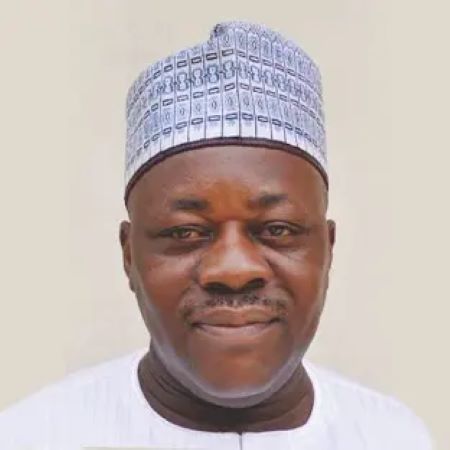
January 23 should be declared World Betrayal Day, says godfather Kwankwaso, as his godson and Kano State Governor, Abba Kabir Yusuf, made his unilateral declaration of independence, abandoning NNPP for the ruling APC party. The bitterness is deep, and the drama has been intense as Abba’s emancipation bid has been fueling the rumour mill for over one year. There have been intense political manoeuvres since he became governor, with his entourage urging him to stand on his own feet. The relationship between the two had spanned more than four decades, dating back to their years as civil engineers at the Water Resources and Engineering Construction Agency (WRECA) in the 1980s and involved the godson’s marriage to the godfather’s daughter.
The problem of godfatherism is simple. Power players will always fight against the risk of sliding into political irrelevance, and people who have come into power will always seek to deepen their power base. The feeling is so strong that it defies logic. One of the most serious criticisms of the godfather phenomenon I have heard is from Nyesom Wike, when he was governor of Rivers State. He was asked whether he planned to be a godfather after his tenure as governor, and he responded in the negative. He explained that he had a lot of power as governor and knows that the power comes from the office. If he imposes a governor and tries to impose his will on the said governor, within a short time, the new governor will realise that the powers are inherent to the office, and the godson will successfully emancipate themselves from the control of the godfather. This is solid political science. What happened in reality is that Wike imposed a godson as governor, who tried to emancipate himself as predicted. Wike did not accept the predicted outcome from his own analysis, and a titanic battle broke out that is still raging as Wike tries to maintain his powers as godfather. He has forgotten his own political science analysis. Recall Saraki, the father who imposed his own son as governor after a series of godsons he had previously imposed, and they all sought the path of emancipation. To his shock, Saraki the son sought emancipation from Saraki the father when he became governor. Poor Kwankwaso, giving his daughter to Abba to keep him on a leash did not work.
Governor Yusuf was one of the closest members of Kwankwaso’s inner circle. Indeed, he was popularly known as “Abba PA”, a reference to his long years as Kwankwaso’s personal assistant. Yusuf’s loyalty to his mentor spanned over 40 years, from bureaucratic service to partisan politics. When Kwankwaso resigned from WRECA to join politics, Yusuf followed him. During Kwankwaso’s first tenure as governor between 1999 and 2003, Yusuf served as his personal assistant and continued in that role when Kwankwaso became Minister of Defence during the administration of former President Olusegun Obasanjo. Upon Kwankwaso’s return as governor in 2011, Yusuf was appointed Principal Private Secretary and later Commissioner for Works, one of the most influential portfolios in the state government. After Kwankwaso left office in 2015, Yusuf remained his private secretary before being handpicked as the Kwankwasiyya Movement’s governorship candidate in 2019; an election he won but was rigged out.
There is an iron law of godfatherism, a la Robert Michels iron law of oligarchy. The godfather will lose control as the godson seeks emancipation. Did Governor Abubakar Rimi not emancipate himself from the political control of Aminu Kano during the Second Republic. In 1999, Kwankwaso himself became governor with strong support from his own godfather, Senator Hamisu Musa. On winning the gubernatorial race, Kwankwaso did not waste time and soon liberated himself from his own godfather. There are lots of narratives on YouTube and TikTok describing how Governor Kwankwaso disgraced Hamisu Musa, who had helped him overcome Ganduje in the primaries for the 1999 elections. Kwankwaso, after considerable hesitation, supported Ganduje to be his successor, and Ganduje did not waste time in not only emancipating himself but actually chased Kwankwaso out of Kano for years. Governor Abba Kabir Yusuf is just another layer confirming the iron law of godfatherism. The dynamics are straightforward. The godfather’s expectation of unquestioned loyalty, rooted in the belief that the godson’s political rise and survival are owed entirely to him, and the godson’s growing insistence on autonomy, driven by a conviction that he has come of age politically, always produce a clash and a clear outcome. The fact that the power of a governor is enormous then determines the outcome, except if there is countervailing power directly from the President.
One of the main reasons Abba Kabir Yusuf had to decide to emancipate himself from Kwankwaso was that it was not clear that Kwankwaso would have allowed him be nominated for a second term in NNPP, as he was already being suspected of disloyalty. He had been severely accused of committing the capital crime of godfatherism – seeing a call from your godfather and not answering immediately. That is the evidence of moving towards the emancipation tendency, which calls for immediate sanction.
I read last week’s lecture by my good friend, Prof Ibrahim Bello Kano, on Kwankwaso’s 69th birthday: “Ruminations on the Kwankwasiyya Movement and Its Future Prospects.” He argued that Kwankwaso still maintains a strong and dedicated base of support from young people and enlightened citizens. He is, by all accounts, he adds, the most charismatic political leader in recent history, able to draw support from a significant part of the population, especially the youth and progressive intellectuals, and who see in him a symbol of progressive leadership, and who has, more than any leader before him, made progressive contributions in education at all levels, the empowerment of women and the youth, and social and economic development of Kano State since his first tenure as the Governor of Kano State. He concludes that he is thus the grand master of Kano politics with a significant presence in national politics. There is not one modern or living politician today who can attract a huge crowd of enthusiastic supporters and admirers at a moment’s notice, other than RMK the Jagora (leader). His charisma and charismatic mien are naturally given, a gift from Allah, his creator. His charisma has also been vindicated by his unalloyed commitment, demonstrated since 1999, to better the lot of his people, Kano State and Nigeria as a whole. The Kwankwasiyya Movement may therefore continue to play a major role in Kano politics.
Abba Kabir Yusuf will find Kano’s political terrain difficult if not treacherous. Now he will be with Ganduje, who is deeply unpopular in Kano. He will now have to consider dropping the red Kwankwasiyya cap and putting on the Asiwaju cap at a time when the president, too is becoming very unpopular. Kwankwaso may still have the opportunity to fabricate another political godson in power. We wait and see.
