


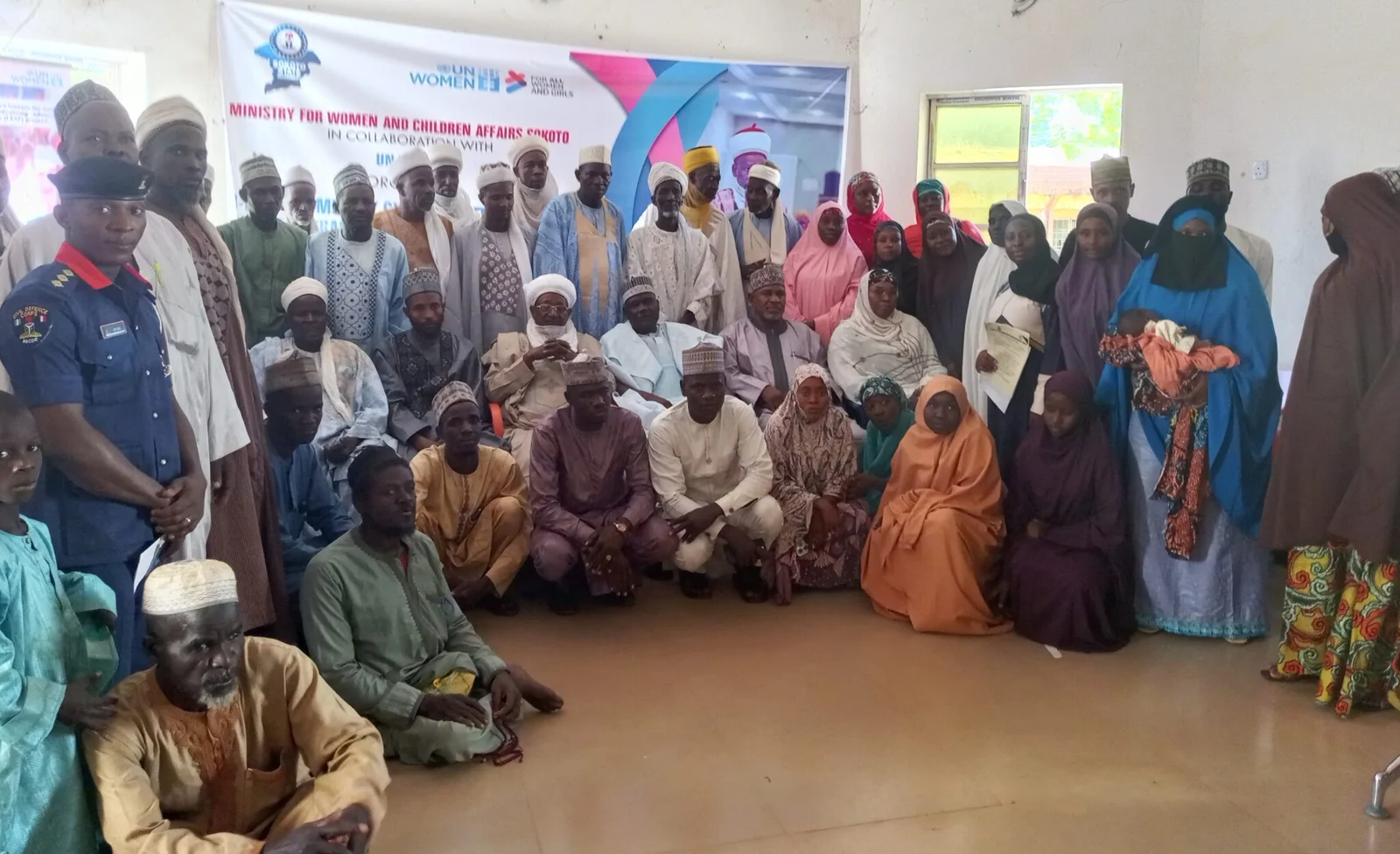
Bodinga community in Sokoto State has ratified Gender-Based Violence (GBV) and Harmful Practices prevention guidelines to support the implementation of the Violence Against Persons (Prohibition) (VAPP) and Child Protection laws.
The document was signed by the District Head, Alhaji Bello Abdulrauf, and Chairman of Bodinga Local Government Area, Alhaji Shehu Dingyadi, following a three-day Community Guideline Development meeting on GBV and Harmful Practices on Friday.
At least 60 religious and community leaders, civil society representatives, law enforcement officials, youth, and women groups reviewed the document before agreeing on its contents, ensuring broad community ownership.
The programme, organised by UN Women in collaboration with the Sokoto State Ministry of Women and Children Affairs, aims to champion campaigns against GBV and harmful cultural practices in the society.
Speaking at the ceremony on Friday, Abdulrauf said the community stood on principles of justice, compassion, and dignity in Islam and local culture, binding all members to uphold the guidelines.
He noted the document was developed through consultations with traditional leaders, religious scholars, women leaders, youth representatives, and other community members, examining cultural practices that undermine the rights and wellbeing of women and girls.
Abdulrauf said the community formally abolished wife battery, domestic and sexual violence, forced marriage, emotional abuse, child hawking, and all forms of impunity related to GBV, citing violations of both Islamic teachings and Sokoto State laws.
Council Chairman Dingyadi warned that individuals or groups supporting or practicing those harmful acts would face traditional and legal sanctions, including prosecution under the VAPP and Child Protection laws.
He stressed the community’s commitment to working with the state government, UN Women, religious institutions, and other stakeholders to implement the guidelines, describing them as a practical roadmap rooted in culture, faith, and law.
Dingyadi added that sanctions might include public reprimand, suspension from community privileges, withdrawal of titles, and denial of participation in cultural festivals or leadership roles.
UN Women Programme Officer Ms. A’isha Sani emphasised the role of religious leaders in appealing to public consciousness, noting that preventing GBV was easier than finding solutions after it occurred.
Hajia Hauwa’u Umar-Jabo, Director of Women in the Ministry of Women and Children Affairs, commended UN Women and community leaders for their commitment, promising continued support to ensure effective implementation.
The guidelines, prepared under lead consultant Ms. Hafsat Maina, were expected to protect women, children, and elders from violence, promote education, prevent exploitative child labour, and strengthened families through peaceful homes, responsible fatherhood, and mutual respect.
