


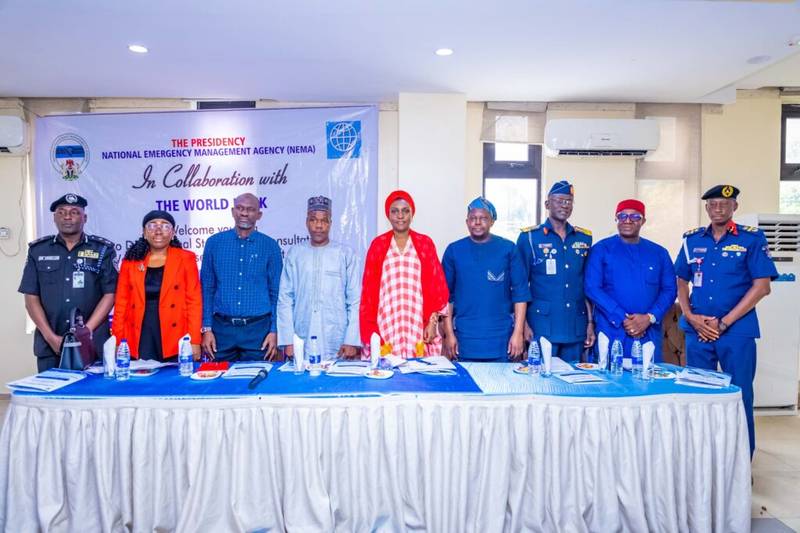
The National Emergency Management Agency (NEMA) and the World Bank, in collaboration with global partners, are finalising a new national policy to protect disaster victims and restore livelihoods across Nigeria.
The Director-General of NEMA, Mrs. Zubaida Umar, disclosed this at a national stakeholders’ workshop held on Monday in Abuja to deliberate on the National Policy for Relief and Rehabilitation Intervention (NPRRI).
According to her, the policy is expected to bring relief to millions of Nigerians, especially farmers and vulnerable groups affected by recurrent environmental disasters.
Umar said the policy aims to close existing implementation gaps and ensure that direct victims of flooding, climate crises, and displacement remain the primary beneficiaries.
She added that the policy introduces a guaranteed minimum intervention standard to ensure equity, accountability, and timely delivery of assistance without political or bureaucratic bottlenecks.
“Today’s engagement is not merely a presentation of a draft document but an opportunity to collectively shape a policy framework. This framework will influence how relief and rehabilitation interventions are planned, coordinated, implemented, monitored, and evaluated in Nigeria,” she said.
The resource person at the workshop, Mr. Abdullahi Usur, explained that the policy would translate into tangible support for affected communities. Instead of short-term food distribution alone, affected families would receive structured tools, seeds, and alternative economic support to rebuild their farms and businesses.
Usur added that the policy also provides protocols for rebuilding destroyed houses and restoring critical community infrastructure such as rural health clinics and clean water facilities.
“Special safeguards are built into the framework to prioritise the safety, nutrition, and medical needs of women, children, and persons with disabilities during emergencies. By setting standard activation timeframes, communities will know exactly what level of help to expect from local, state, or federal authorities, thereby eliminating delays,” he said.
The Enugu State Commissioner for Agriculture, Dr. Patrick Ibru, said climate-related disasters were threatening smallholder farmers with food insecurity.
“Prevention and structured rehabilitation are coming at a critical moment for our nation. We are confronted year-on-year with climate-related emergencies that affect our crops, farmers, livelihoods, and food security. Everyone is feeling the pain. I urge states to vigorously implement the policy to safeguard the rural economy,” Ibru said.
Mr. Akeem Ajibola, who represented the World Food Programme (WFP) and the UN system, said Nigeria was facing “disasters within disasters,” ranging from economic pressures to climate shocks.
He noted that the NPRRI would link immediate humanitarian relief with long-term peace and development, enabling communities to recover stronger.
Also speaking, the World Bank Disaster Risk Management Specialist, Mr. Francis Nkoka, said an effective national policy must guide victims from initial shock to full and independent recovery.
The Defence Headquarters (DHQ) said its specialised Military Disaster Response Units remain on standby nationwide to secure and assist citizens during emergencies under NEMA’s coordination.
