


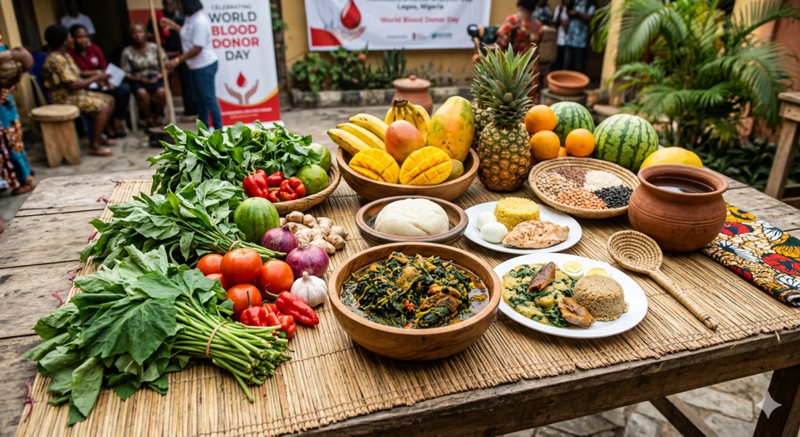
Nutrition is the foundational pillar for maintaining a healthy pool of voluntary, unpaid blood donors, nutritionists emphasize as Nigeria joins the world in marking World Blood Donor Day on Sunday.
World Blood Donor Day is observed annually on June 14.
The global campaign for 2026, with the theme “One Drop of Humanity. Give Blood. Save Lives.”, highlights that humanity is at the heart of every blood donation.
According to the WHO, each donation is more than a medical act; it is a powerful expression of solidarity, compassion, and collective responsibility.
However, donor eligibility heavily depends on proper nutrition, which directly influences crucial iron levels and hemoglobin production.
Medical stakeholders warn that widespread nutrient deficiencies can lead to donor deferrals.
Therefore, incorporating iron-rich foods into local diets is essential to ensure donors can safely provide vital blood products.
While transfusion safety has improved, low-income settings still face acute blood shortages. Experts stress that combining nutrition education with regular donor drives is vital to saving lives.
Mrs. Ifeoma Onuoha, CEO of MIC Food and Wellness Ltd., advises blood donors to prioritize hydration, and consume iron-rich foods, vegetables, and vitamin C before and after donation.
She told reporters in Lagos that proper nutrition is vital for healthy blood levels, as the body depends on good nutrition for survival, immunity, and disease prevention.
To replenish blood after donation, she recommends vegetables like fluted pumpkin, spinach, skinless poultry, lean beef, and shrimp.
“Beyond eating iron-rich foods, individuals must also consume foods rich in vitamin C; without it, the body cannot absorb iron properly,” she explained.
“Proper hydration is also crucial, as blood is partly made of water. To have energy, donors must stay well-hydrated,” she added.
The nutritionist emphasized that vitamins B12 and B9 are key for blood formation, especially red blood cells and hemoglobin.
She noted that lean beef is a rich source of B12, essential for blood production.
Onuoha mentioned that most Nigerian foods are suitable for people with low iron levels, including fluted pumpkins (“ugu”), legumes, and local soups like Edikang Ikong, Afang, and Efo Riro.
He also highlighted that heme iron, found in protein sources such as chicken, liver, fish, and egg yolk, helps correct low iron levels.
Unripe plantains and grains like millet are affordable sources of iron.
She stressed the importance of paying attention to the body’s signals to identify when someone lacks blood-building nutrients, indicating a need for blood.
She advised donors to visit hospitals for blood level checks and to maintain proper nutrition.
Donors should avoid alcohol, fatty foods, fried foods, and iron blockers like caffeinated drinks and overly processed foods before and after donation.
Prof. Wasiu Afolabi, a former President of the Nutrition Society of Nigeria (NSN), pointed out that increased consumption of foods high in salt, saturated fats, and trans fats is harmful.
He warned that such diets contribute to cardiovascular diseases and urged Nigerians to adopt healthy eating habits to take charge of their health.
