


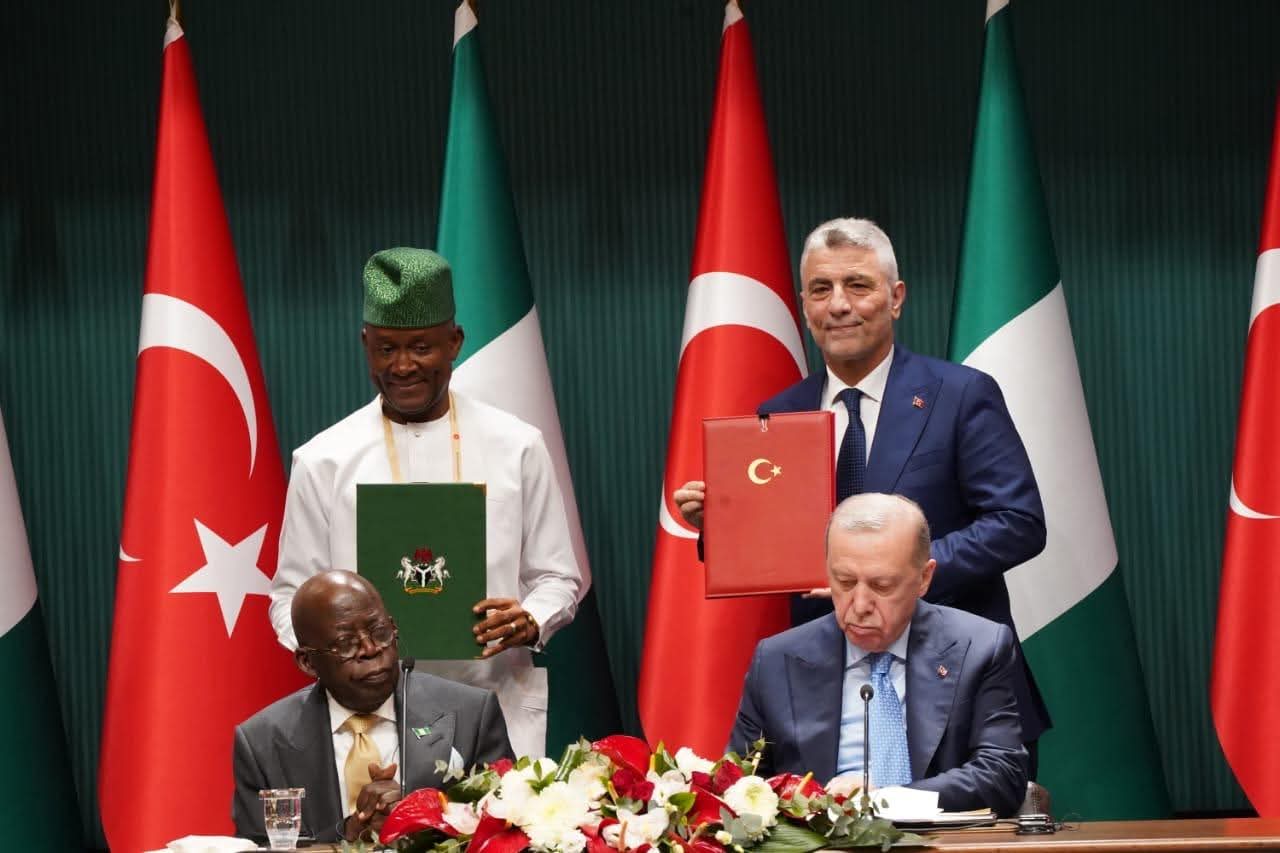
The Minister of Defence, retired Gen. Christopher Musa, announced that Nigeria and Türkiye have agreed to immediately deploy 200 Nigerian Special Forces personnel for training in Türkiye.
Musa made the disclosure during an interview on the sidelines of the 5th Antalya Diplomacy Forum (ADF2026) in Antalya, Türkiye, on Saturday, following discussions with his Turkish counterpart, Yasar Guler.
The three-day forum, themed “Mapping Tomorrow, Managing Uncertainties,” began on Friday and is attended by world leaders, ministers, diplomats, and other stakeholders.
The minister explained that Türkiye had allocated a training quota of 200 Nigerian Special Forces personnel, who will be deployed as soon as he returns to Nigeria.
“We have a Special Forces training agreement. Türkiye has agreed to train 200 of our Special Forces personnel, so we will send them there immediately upon my return.
“We will continue to collaborate extensively, including joint exercises. The first exercise is planned for later this year. We will work together in many areas of defence,” he said.
Musa also revealed that Nigeria and Türkiye had agreed on joint defence equipment production and the transfer of military technology.
He emphasized the long-standing relationship between the two countries, noting, “Since 1960, Türkiye has been like family to Nigeria.”
According to Musa, Nigeria can benefit from Türkiye’s extensive defence experience through shared knowledge and cooperation.
“I met with the Turkish Minister of Defence to discuss improving our defence relationship. Türkiye has made significant advancements in military hardware production. Nigeria is still developing in this area, and we have agreed to co-produce some equipment together,” he said.
The minister highlighted that while Nigeria has been combating insurgency for about 17 years, Türkiye has been fighting terrorism for 40 years.
“Because of that shared experience, we will focus on training, production, and enhancing our defence industrial capacity, including exchanges of officers and soldiers,” he added.
The forum featured panel discussions and sessions covering contemporary global defence and security, political, economic, environmental, and technological issues. Participants included representatives from around 150 countries, 5,000 decision-makers, 20 heads of state and government, 40 foreign ministers, 60 invited foreign media, and numerous diplomats.
