

• Home
  • Agric
  • Sci & Tech
  • Health
  • Environment
  • Hausa News
  • More
    • Business/Banking & Finance
    • Politics/Elections
    • Entertainments & Sports
    • International
    • Investigation
    • Law & Human Rights
    • Africa
    • ACCOUNTABILITY/CORRUPTION
    • Hassan Gimba
    • Column
    • Prof. Jibrin Ibrahim
    • Prof. M.K. Othman
    • Defense/Security
    • Education
    • Energy/Electricity
    • Entertainment/Arts & Sports
    • Society and Lifestyle
    • Food & Agriculture
    • Health & Healthy Living
    • International News
    • Interviews
    • Investigation/Fact-Check
    • Judiciary/Legislature/Law & Human Rights
    • Oil & Gas/Mineral Resources
    • Press Freedom/Media/PR/Journalism
    • General News
    • Presidency
  • About Us
    • Contact Us
    • Board Of Advisory
    • Privacy Policy
    • Ethics Policy
    • Teamwork And Collaboration Policy
    • Fact-Checking Policy
    • Advertising
  • Media OutReach Newswire
    • Wire News
  • The Stories
Facebook Twitter Instagram
Trending
  • [VIEWPOINT] Why FG Should halt the persecution of Ozekhome, By Echika Ejido
  • Taraba: NAPTIP intercepts trafficker with 10 children
  • FG empowers 40 cooperatives with farm inputs in Yobe
  • PenCom launches online platform
  • Katsina to host 3,750 housing units, aquaculture project financed by COSMOS
  • Sokoto governor signs 2026 appropriation bill into law
  • Minister calls for strengthened collaboration to protect Gashaka-Gumti national park
  • Bus crash En route to Bayelsa deputy gov burial leaves 2 dead
Facebook Twitter Instagram YouTube
AsheNewsAsheNews
  • Home
  • Agric

    FG empowers 40 cooperatives with farm inputs in Yobe

    January 30, 2026

    Katsina to host 3,750 housing units, aquaculture project financed by COSMOS

    January 30, 2026

    ActionAid empowers 12,000 FCT farmers with agroecology skills

    January 30, 2026

    FAO: How Tanzania’s vaccination campaign is driving Africa closer to pest eradication

    January 29, 2026

    Kenya to host Gulfood360 Africa

    January 29, 2026
  • Sci & Tech

    Nigeria, KOICA partner to drive digital transformation in public service

    January 30, 2026

    NDPC leads Abuja roadshow to promote data protection awareness

    January 30, 2026

    NOTAP backs Nigerian developers to $1m sales

    January 29, 2026

    NIEEE, NDPC move to embed privacy in engineering projects

    January 29, 2026

    NCC clamps down on telcos with N12.4bn penalties over QoS breaches

    January 28, 2026
  • Health

    Bus crash En route to Bayelsa deputy gov burial leaves 2 dead

    January 30, 2026

    Awka south chairman urges grassroots sensitization ahead of measles-rubella vaccination

    January 30, 2026

    Plateau integrates NTD prevention into school health programme

    January 30, 2026

    Niger sustains NTD elimination drive as 11 suspected Buruli ulcer cases emerge

    January 30, 2026

    Fidson Healthcare records huge performance in 2025

    January 30, 2026
  • Environment

    Minister calls for strengthened collaboration to protect Gashaka-Gumti national park

    January 30, 2026

    Tudun Biri resettlement signals shift to structured post-conflict recovery — NEMA

    January 30, 2026

    Low awareness fuels spread of neglected tropical diseases — Stakeholders

    January 30, 2026

    Group urges NAFDAC to sustain enforcement of sachet alcohol ban

    January 30, 2026

    MTN, Lagos govt partner on Obalende bus park redevelopment

    January 30, 2026
  • Hausa News

    Anti-quackery task force seals 4 fake hospitals in Rivers

    August 29, 2025

    [BIDIYO] Yadda na lashe gasa ta duniya a fannin Ingilishi – Rukayya ‘yar shekara 17

    August 6, 2025

    A Saka Baki, A Sasanta Saɓani Tsakanin ‘Yanjarida Da Liman, Daga Muhammad Sajo

    May 21, 2025

    Dan majalisa ya raba kayan miliyoyi a Funtuwa da Dandume

    March 18, 2025

    [VIDIYO] Fassarar mafalki akan aikin Hajji

    January 6, 2025
  • More
    1. Business/Banking & Finance
    2. Politics/Elections
    3. Entertainments & Sports
    4. International
    5. Investigation
    6. Law & Human Rights
    7. Africa
    8. ACCOUNTABILITY/CORRUPTION
    9. Hassan Gimba
    10. Column
    11. Prof. Jibrin Ibrahim
    12. Prof. M.K. Othman
    13. Defense/Security
    14. Education
    15. Energy/Electricity
    16. Entertainment/Arts & Sports
    17. Society and Lifestyle
    18. Food & Agriculture
    19. Health & Healthy Living
    20. International News
    21. Interviews
    22. Investigation/Fact-Check
    23. Judiciary/Legislature/Law & Human Rights
    24. Oil & Gas/Mineral Resources
    25. Press Freedom/Media/PR/Journalism
    26. General News
    27. Presidency
    Featured
    Recent

    [VIEWPOINT] Why FG Should halt the persecution of Ozekhome, By Echika Ejido

    January 30, 2026

    Taraba: NAPTIP intercepts trafficker with 10 children

    January 30, 2026

    FG empowers 40 cooperatives with farm inputs in Yobe

    January 30, 2026
  • About Us
    1. Contact Us
    2. Board Of Advisory
    3. Privacy Policy
    4. Ethics Policy
    5. Teamwork And Collaboration Policy
    6. Fact-Checking Policy
    7. Advertising
    Featured
    Recent

    [VIEWPOINT] Why FG Should halt the persecution of Ozekhome, By Echika Ejido

    January 30, 2026

    Taraba: NAPTIP intercepts trafficker with 10 children

    January 30, 2026

    FG empowers 40 cooperatives with farm inputs in Yobe

    January 30, 2026
  • Media OutReach Newswire
    • Wire News
  • The Stories
AsheNewsAsheNews
Home»Food & Agriculture»Saving Nigeria’s food system through agribusiness reform, by Kabir Ibrahim
Food & Agriculture

Saving Nigeria’s food system through agribusiness reform, by Kabir Ibrahim

EditorBy EditorJanuary 25, 2026Updated:January 25, 2026No Comments4 Mins Read
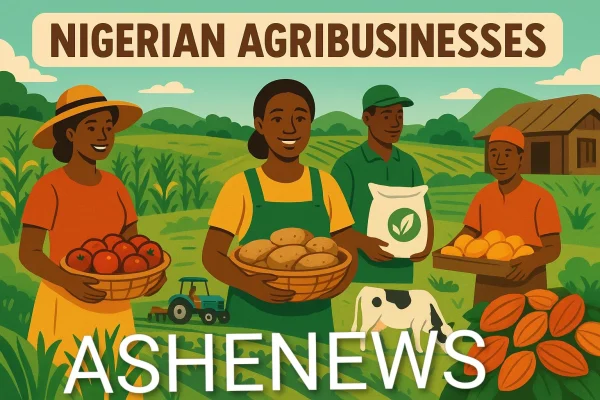
Nigerian Agribusinesses
Share
Facebook Twitter LinkedIn Pinterest Email

The persistent cries over widespread insecurity and rising input prices by Nigerian smallholder farmers (SHFs) and small-scale producers (SSPs) call for decisive and coordinated action by government and the organised private sector. Without urgent intervention, Nigeria risks severe stress in its food system in 2026 and beyond. It is true that Nigerian consumers are currently experiencing relative relief in food prices.

However, this apparent stability masks the deep distress of producers, who are increasingly constrained by insecurity that limits access to farmlands and by the ever-rising cost of critical inputs such as fertiliser, seeds and agrochemicals.
In agribusiness, fair pricing is fundamental. Rapid and predictable return on investment is a sine qua non for sustainability. Smallholder farmers must be able to sell surplus produce at remunerative prices in order to finance the next production cycle. Where this becomes impossible, it portends systemic risk to the entire food system.

A pragmatic way to safeguard the system is to properly calibrate the economics of production and secure agricultural investment in all its ramifications. This requires that government institutions function effectively and that key policy instruments be reappraised along the following lines:

Government as buyer of last resort

Government should revive and strengthen the Guaranteed Minimum Price (GMP) mechanism to serve as buyer of last resort. Excess produce should be purchased directly from farmers and released to the market during periods of inflationary pressure. Extreme care must be taken to prevent the emergence of middlemen and rent seekers that could undermine the credibility of this intervention.

Consumer protection through scientific pricing

Consumer protection should be ensured by analysing the economics of production of regional staples and making scientific assessments to guide retail price calibration. This is not a call for price control, but for market sanity, stability and transparency.

Reduction of transportation costs

The cost of transportation must be deliberately lowered by deploying dedicated food distribution vehicles, abolishing unnecessary roadblocks, and eliminating multiple taxation along major food corridors to enable seamless distribution.

Incentives for value addition

To maximise returns on agricultural investment, government must create an enabling environment for sustainable value addition through tax holidays, energy rebates, processing equipment support, long-term credit facilities and low-interest loans to properly vetted enterprises.

Promotion of inclusive agribusiness models

Businesses should be encouraged to build strong outgrower schemes, guarantee offtake, and grant incentives such as equity participation in value-add programmes to create a loyal and productive supply base.

Consolidation of commercial and investment partnerships

Commercial and investment partnerships among credible agricultural stakeholders should be strengthened, with guarantees provided to collaborative ventures to de-risk private investment.

Deployment of alternative energy for agriculture

Regulatory institutions in the energy sector must be streamlined to prioritise the national interest by accelerating the deployment of alternative energy solutions to agricultural enterprises and rural agro-industrial clusters.

Community-based security architecture

National security efforts must be reinvigorated to actively involve traditional institutions and high-net-worth individuals in communities, who are themselves major beneficiaries of a genuinely secure environment.

Macroeconomic stability and Naira strengthening

The Central Bank of Nigeria’s efforts to strengthen the naira should be given maximum support to ensure that citizens derive real income value from hard work in an increasingly challenging economic environment.

Zero tolerance for corruption

The fight against corruption must be escalated to a level of national self-preservation, with zero tolerance across all sectors. Nigerians must be encouraged to actively deprecate corruption in all its forms.

Revalidation of agricultural institutions and associations

Genuine agricultural stakeholders with verifiable investments must be deliberately carried along. A government-backed Partner Institution Viability Assessment (PIVA) should be conducted to reform or abrogate dysfunctional and fraudulent associations.

These eleven policy pillars can be expanded into a coherent national framework for implementation, given the necessary political will and institutional coordination.

This is the essence of the United States experience, which explains its enduring food security and low levels of food-related insecurity.

Arc. Kabir Ibrahim, FNIA is the President, Nigeria Agribusiness Group (NABG)

Agribusiness Food security
Share. Facebook Twitter Pinterest LinkedIn WhatsApp Reddit Tumblr Email
Editor
  • Website

Related Posts

FG empowers 40 cooperatives with farm inputs in Yobe

January 30, 2026

Katsina to host 3,750 housing units, aquaculture project financed by COSMOS

January 30, 2026

ActionAid empowers 12,000 FCT farmers with agroecology skills

January 30, 2026

Leave A Reply Cancel Reply

[VIEWPOINT] Why FG Should halt the persecution of Ozekhome, By Echika Ejido

January 30, 2026

Taraba: NAPTIP intercepts trafficker with 10 children

January 30, 2026

FG empowers 40 cooperatives with farm inputs in Yobe

January 30, 2026

PenCom launches online platform

January 30, 2026
About Us
About Us

ASHENEWS (AsheNewsDaily.com), published by PenPlus Online Media Publishers, is an independent online newspaper. We report development news, especially on Agriculture, Science, Health and Environment as they affect the under-reported rural and urban poor.

We also conduct investigations, especially in the areas of ASHE, as well as other general interests, including corruption, human rights, illicit financial flows, and politics.

Contact Info:
  • 1st floor, Dogon Daji House, No. 5, Maiduguri Road, Sokoto
  • +234(0)7031140009
  • ashenewsdaily@gmail.com
Facebook Twitter Instagram Pinterest
© 2026 All Rights Reserved. ASHENEWS Daily Designed & Managed By DeedsTech

Type above and press Enter to search. Press Esc to cancel.